Suzuki Ignis 1.2 GLX MT (2020) Review
Characterful, frugal, honestly equipped — the Ignis earns its spot by being clear about what it is and crushing rivals on total running costs.
Summary
Here’s your straight-up Suzuki Ignis Suzuki Ignis 1.2 GLX MT review South Africa style. I’ve clocked real kilometres on Gauteng tar, packed it for a weekend out towards Dullstroom, and put up with Joburg’s potholes and taxi dodging. What do you actually get for R227 600? How does it hold up against the Renault Kwid and Citroen C3, and is Suzuki Ignis finance in South Africa even a clever move? This article cuts through the spec sheet to cover what matters: practicality, running costs, and how the Ignis fits real SA roads - not just a test track somewhere overseas.
Introduction
Right, so the Suzuki Ignis 1.2 GLX MT is for buyers who want more character than a Polo Vivo, trust Suzuki reliability, and don’t mind rowing their own gears - even crawling up the N1 in peak-hour traffic. In 2024, the Ignis sits in a unique spot: not really a full hatch, not quite a proper SUV. Most rivals either gulp fuel or feel built to a price. That’s the rub, because so many budget cars force you into turbo-triples that crave 95-octane and need expensive maintenance. The Ignis? It just gets on with the job.
Key takeaway: Light, honest, frugal, and genuinely useful for city errands or a couple on the move. Fill it with four adults and a week’s groceries, and you might miss the extra power - but for fuss-free urban life under R250k, nothing else really touches it.
Design & Exterior
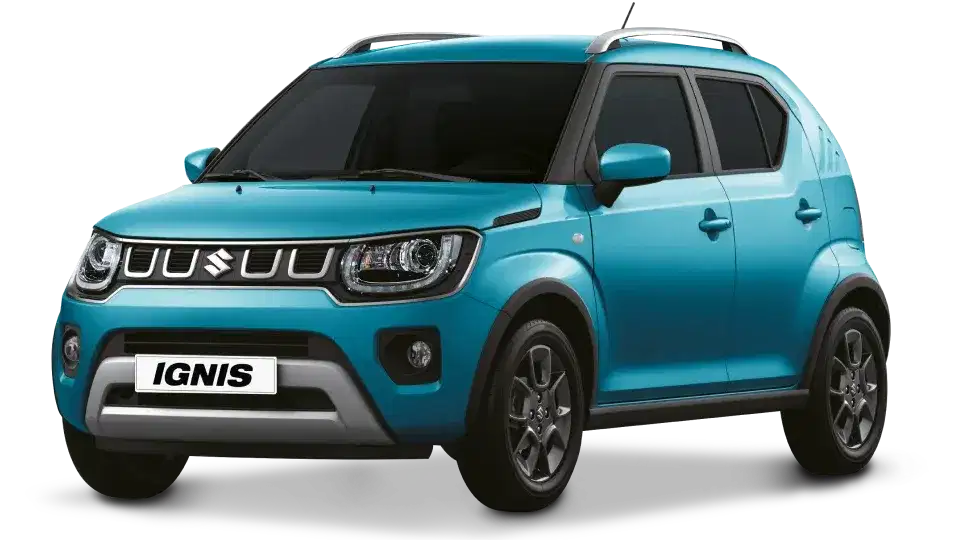
Want to stand out in a parking lot full of grey blobs? The Ignis still does the trick. Parked next to a Renault Kiger at Sandton City, it’s clear the Suzuki actually has a point of view. Clamshell bonnet, upright glass, and those unmistakable slashes on the C-pillar - a nod to the old SC100 coupe. If you’re into Suzuki’s history, that detail matters.
Proportions that punch above the footprint
At 3700 mm long and 1660 mm wide, the Ignis is shorter than a Polo Vivo but towers over the average hatch at 1605 mm tall. The 2435 mm wheelbase is where the magic happens - four adults fit without drama. On battered tar in Germiston, ground clearance actually comes into play. Short overhangs mean you’re not scraping the nose on every parking ramp. After a week of mall runs at Eastgate, not a single scrape or clunk.
The facelift did just enough
Suzuki’s 2020 update brought a new grille, revised bumpers, and LED projector headlights to the GLX. Not shouty - and that’s exactly the point. Suzuki didn’t erase the old model, so resale on older Ignis cars is still decent. If you’re planning to keep it for a few years and trade up, that’s a win.
Cabin & Practicality
Jump inside and you know what you’re in for. Hard plastics everywhere, chunky fabric on the seats, and big old-school climate dials you can adjust with a gloved hand. No soft-touch here, but honestly, if you find soft-touch at this price, something else got left out. At least here, you see where your money went.
What works
- 7-inch touchscreen with Apple CarPlay and Android Auto on GLX.
- Physical knob climate control - no hunting through menus.
- Push-button start and keyless entry on higher trims.
- Six airbags and ESC, standard. That’s rare below R250k.
- 50:50 split rear bench that slides. Genuinely handy for packing.
Suzuki Ignis boot space and rear-seat reality
Boot space is 267 litres with seats up, 501 litres with them folded. Slide the rear bench forward and you eke out a bit more - I managed cooler box, two duffels, and a camera kit for a long weekend, if you pack smart. Two adults can easily do a four-day trip without resorting to a roof box. Rear knee room is impressive, thanks to scooped front seatbacks, and there’s more headroom than most cars this size.
On the Road
That 1.2 Dualjet gives you 62 kW and 107 Nm. On paper at least, it’s not a powerhouse, but the Ignis weighs just 895 kg. In town, it’s eager enough, and the light five-speed manual paired with a forgiving clutch means you won’t resent the daily grind on the M1. Properly quick? No. Lively around the city? Absolutely.
Highway and high-altitude behaviour
Take the N1 north at altitude and the Ignis will hold 120 km/h, but you’ll hear it working. With only five gears, it’s sitting at about 3500 rpm at the limit, and overtaking up Hammanskraal Hill means dropping to third. Suzuki’s claimed 0-100 km/h time is 12.7 seconds; in Gauteng, it’s closer to 13.5 seconds. Wind noise kicks in above 100 km/h, a side effect of that upright glass. NVH is better than the 2017 model, but this is still a city car first, highway commuter second. Daily Durban-Jozi runs? Pick something else.
Suzuki Ignis fuel consumption in the real world
Official claim is 5.1 L/100 km combined, 5.2 in town, 5.1 highway. I averaged 5.7 L/100 km over a busy week - not bad at all, considering I didn’t hold back. Push hard on the open road and you’ll see 6.4 L/100 km. Most will get 600 km out of a tank, so you’re not chained to the local Engen.
Ride and steering
Softer than you’d expect. It soaks up Joburg potholes better than some so-called crossovers at double the price. There’s body roll if you’re hasty, but the steering is feather-light at parking speeds - exactly what you want in a city runabout. No one’s entering an Ignis in the Simola Hillclimb, and that’s not the point.
Data & Comparison
Suzuki Ignis price South Africa and ownership maths
You’ll pay R227 600 for the Suzuki Ignis Suzuki Ignis 1.2 GLX MT price South Africa, and just R2 500 more for the CVT. Five years in, your total outlay is R354 950 - that’s just under R6 000 per month if you add up fuel, insurance, and services. That monthly payment puts you into nearly-new B-segment territory, not new - so the Ignis is a clever buy if you care more about long-term costs than flashy badges. Suzuki Ignis finance South Africa is straightforward through mainline dealer groups like Suzuki Auto SA, and you won’t get stung on balloon payments.
How it stacks up
| Model | Power (hp) | Avg price (R) | Price diff vs Ignis MT |
|---|---|---|---|
| Suzuki Ignis 1.2 Dualjet CVT | 61 | 230 100 | +2 500 |
| Citroen C3 1.2 PureTech | 61 | 224 325 | -3 275 |
| Renault Kwid 1.0 Auto | 50 | 204 975 | -22 626 |
The Citroen C3 packs more power and slips just under the Ignis on price, but you get fewer airbags and finding a dealer outside the big metros can be a headache. The Kwid wins on price, but it’s smaller, and safety kit is thin. Only the Ignis ticks the boxes for six airbags, sliding rear seats, decent ground clearance, and a proper rep for reliability. That matters.
Spec callout
- 62 kW is about 25% below the class average (83 kW). Not quick, but honest.
- 895 kg kerb weight. It feels lighter than the numbers suggest.
- 5.1 L/100 km combined claim - few petrol rivals top that.
Suzuki Ignis service plan South Africa and aftersales
Standard kit: a 2-year/30 000 km service plan and a 5-year/200 000 km warranty (promo applies to current stock). 15 000 km service intervals are generous for a small petrol, and Suzuki Auto SA dealers keep parts costs low. Here’s a fact: a Polo Vivo cambelt job will cost you more than a comparable Ignis service. If you’re keeping your car past the warranty, that’s a big deal.
Suzuki Ignis 2017 common problems and fixes
Very little goes wrong. The usual complaints? Door rubbers can perish on the coast (hello, Durban humidity), and the touchscreen sometimes needs a restart to pair your phone. Early 2017 models were noisier and had fragile reverse cameras - both sorted after the 2020 facelift with improved insulation and a new camera supplier. No known issues with engine or gearbox longevity, which isn’t something you can say about every rival. Search Suzuki Ignis 2017 common problems and you’ll mostly find minor niggles, not horror stories.
People Also Ask
Is the Suzuki Ignis reliable in South Africa?
Absolutely. The Ignis keeps topping reliability charts overseas, and the 1.2 naturally-aspirated engine skips the turbo headaches you’ll find in some rivals. Suzuki’s parts are cheap, and 15 000 km service intervals help you budget for running costs - especially as prices keep creeping up.
What is the Suzuki Ignis fuel consumption in real driving?
Official number is 5.1 L/100 km. My Gauteng commute saw 5.7 L/100 km, and 120 km/h highway runs push it closer to 6.4 L/100 km. Over 600 km from a tank is very doable - rare for a petrol crossover under R250k.
How much boot space does the Suzuki Ignis have?
267 litres with seats up, 501 litres folded. That sliding rear bench means you can pick legroom or luggage as needed - something few rivals even try at this price. Once, that sliding trick let me stash my tripod out of sight for a shoot, so it’s not just a marketing gimmick.
Is the Suzuki Ignis safe enough for SA roads?
Local GLX spec ships with six airbags, ESC, ABS, ISOFIX, and hill-hold. Way better than the two-airbag setup you still find in some sub-R250k rivals. Euro NCAP rates it mid-pack at three stars, but you get more protection here than most budget hatches.
Should I buy the manual or CVT Ignis?
If you don’t hate clutch pedals, stick with the manual - it’s more responsive, slightly thriftier, and you skip any long-term CVT question marks. But for R2 500 more, the auto is hard to ignore if you do loads of stop-start. The manual just suits the Ignis’s lively vibe.
Verdict
If you’re racking up N3 miles weekly, regularly carrying four adults and their luggage, or want a plush interior, look elsewhere. But if you want a five-door crossover that costs peanuts to run, fits into tight city spaces, and treats you like an adult who still enjoys driving, the Ignis just makes sense. It’s what the Ignis should have been from the start: honest, clear, and crushing rivals on real-world costs.
Heads-up: the next-gen Suzuki Ignis is coming, with a stronger hybrid system in the pipeline. If you can wait, it might be worth holding out. But if you need a car today, this one is sorted, mature, and genuinely affordable.
Rating: 7.5/10
Quirky, frugal, and honest about its strengths - the Ignis earns its keep by being upfront about what it is and why that matters in South Africa.
Summary
Here’s a South African take on the Suzuki Ignis 1.2 GLX MT, launched back in 2020 and still quietly plugging away. This review covers what it’s like to drive, how much you can actually fit inside, what you’ll pay to run it, and how this quirky little Suzuki holds up against the Renault Kwid and Citr