Suzuki S-Presso 1.0 GL+ MT (2026) Review
It delivers exactly what it promises for a price almost nothing else matches. The GL+ is the S-Presso variant you can recommend without any fine print…
Summary
This is a full, no-spin review of the Suzuki S-Presso 1.0 GL+ MT for South Africans who actually care about real-world fuel spend, cabin trade-offs, and whether the GL+ is the spec to buy - right between the bare-bones GL and the pricier S-Edition. If you want the truth about what works for your wallet and on your street, keep reading.
Introduction
Right, so you’re after the cheapest new car that isn’t a total penalty box and you don’t mind shifting your own gears. Here comes the Suzuki S-Presso 1.0 GL+ MT. Sits dead in the middle of the range, and for 2025, it finally gets the touchscreen, phone mirroring, and reverse camera the base GL skips - without the S-Edition’s unnecessary price jump. Whether you’re buying your first car, hustling Bolt/Uber, or just need a spare runabout that won’t bankrupt you at the Engen, this is the one to look at. This review is for you.
Key takeaway: The GL+ MT hits the S-Presso’s sweet spot: essential features, real 4.6 L/100 km consumption, and 180 mm clearance that laughs at Joburg potholes.
Design & Exterior
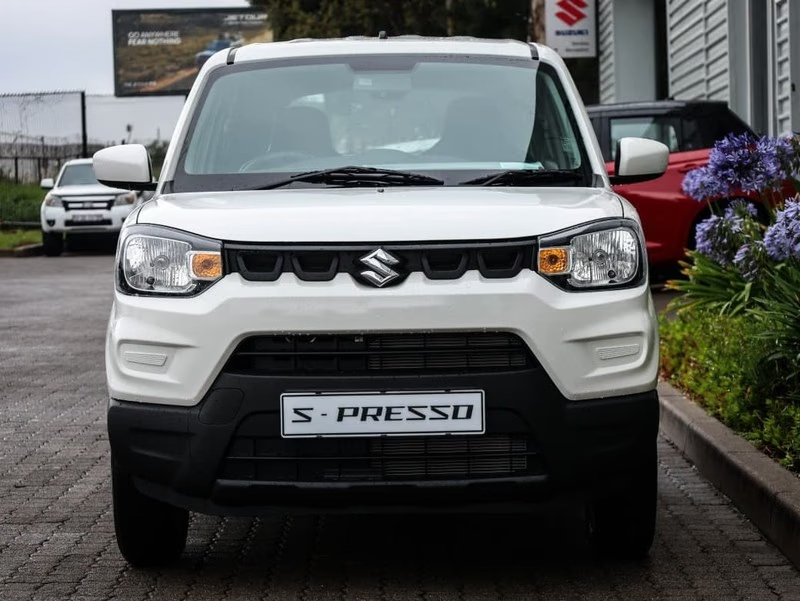
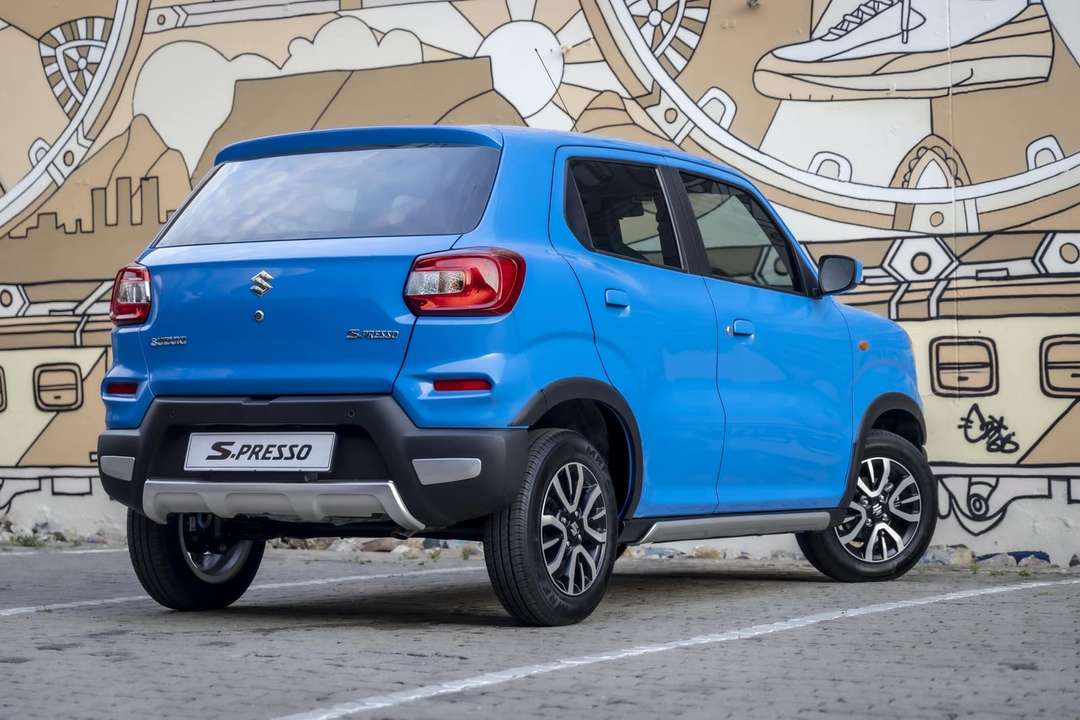
S-Presso still looks like a Casspir that shrank in the wash. The upright, boxy stance isn’t a mistake - Suzuki wants everyone from Edenvale to Khayelitsha to see a baby SUV, not a cheap hatch. It’s cartoonish, but you won’t lose it in a mall lot.
Dimensions that matter on SA roads
- Length: 3 565 mm
- Width: 1 520 mm
- Height: 1 565 mm
- Ground clearance: 180 mm
That 180 mm of clearance? It’s more than most so-called “crossovers” at your local dealer. I took it down a battered dirt road - never once worried about crunching the sump. Park next to a Kwid, and the S-Presso looks a bit taller, chunkier. You can spot the cost cuts in the panel gaps, but so what at this price?
What the GL+ adds visually
Honestly, not a lot - and that’s fine. You get body-coloured handles, a slightly tweaked grille, and 14-inch steel wheels with plastic covers. No black cladding or shouty bits like the S-Edition. It’s deliberately plain, and if you only want the touchscreen, that’s perfect.
Cabin & Practicality
First thing you’ll notice? The weird centre-mounted speedo pod. Suzuki says it’s for cost-cutting between left- and right-hand drive versions, but trust me - after 90 minutes up the N3 towards Harrismith, my eyes were tired from glancing sideways all the time. Not a dealbreaker, just annoying.
Materials, controls and ergonomics
Plastics? Hard, shiny, and you won’t confuse it with a Swift. But you get proper climate knobs and real buttons - no fiddly touch menus. In a Maluti winter, you can adjust the fan with gloves on. That counts. But there are compromises: no seat height adjustment, and the steering wheel only moves for rake, not reach. If you’re over 1.9 m, sit in one at the dealer before buying. I’m 1.78 m and was fine; my 1.92 m mate bailed after ten minutes.
Space and the boot
- Seats: 5 (realistically, 4 adults)
- Doors: 5
- Boot: 239 litres
- Rear legroom: usable for the size
Boot space sits at 239 litres. Enough for a week’s Checkers run or a big suitcase plus soft bags. If you pack smart, a weekend away for two works fine. Family shop with prams? Not happening. Rear bench fits two adults for a 40-minute trip - better than a Kwid, honestly.
The GL+ tech upgrade
This is why you skip the GL and buy the GL+:
- 7-inch touchscreen
- Apple CarPlay and Android Auto (wired)
- Reverse camera with sensors
- Steering wheel audio controls
- Front power windows (auto-down for driver)
CarPlay and a real screen transform the cabin. Suddenly, you’ve got Google Maps and Spotify in plain view. If you drive for work, that matters.
On the Road
Under the bonnet: Suzuki’s 1.0L three-cylinder K10C DualJet - 49 kW at 5 500 r/min, 89 Nm at 3 500 r/min, five-speed manual, front-wheel drive. On paper at least, those numbers look feeble. But the S-Presso weighs so little, it feels eager in town.
City driving
Pulling off at a robot, the S-Presso feels nippy up to 60 km/h. Light clutch, crisp gearshift, fingertip steering. Squeezing into a parallel bay on Bree Street? Easy. Big side windows give great visibility - this is where the S-Presso shines.
Highway and open road
Out on the N1, it’s a different story. Light kerb weight means big trucks push you around, and you’re always making steering corrections. At 120 km/h with the air-con going, overtaking means dropping to fourth and hoping for a long enough gap. Top speed is about 145 km/h - plan every pass.
Real-world economy
Claimed average: 4.6 L/100 km. After a week and 540 km of mixed driving, my trip read 4.9 L/100 km. Most tests land between 4.5 and 4.7. That’s honest. With a 27-litre tank, you’re good for 540 to 570 km per fill if you drive gently.
Data & Comparison
The Suzuki S-Presso specs at a glance
| Item | Suzuki S-Presso 1.0 GL+ MT |
|---|---|
| Engine | 1.0L 3-cylinder petrol (K10C DualJet) |
| Power | 49 kW @ 5 500 r/min |
| Torque | 89 Nm @ 3 500 r/min |
| Gearbox | 5-speed manual |
| Drive | FWD |
| Fuel consumption (claimed combined) | 4.6 L/100 km |
| Length / Width / Height | 3 565 / 1 520 / 1 565 mm |
| Ground clearance | 180 mm |
| Seats / Doors | 5 / 5 |
How it stacks up against SA rivals
| Spec | Suzuki S-Presso 1.0 GL+ MT | Renault Kwid 1.0 | Hyundai Grand i10 1.0 | Suzuki Celerio 1.0 GL |
|---|---|---|---|---|
| Power | 49 kW | 50 kW | 49 kW | 49 kW |
| Torque | 89 Nm | 91 Nm | 95 Nm | 89 Nm |
| Ground clearance | 180 mm | 184 mm | 165 mm | 170 mm |
| Height | 1 565 mm | 1 490 mm | 1 520 mm | 1 555 mm |
Ownership and total cost
Every S-Presso includes a 2-year/30 000 km service plan (extendable at any Suzuki dealer) and a 5-year/200 000 km mechanical warranty. My 5-year running cost estimate is around R342 700 - depreciation, fuel, service, tyres, insurance at 15 000 km/year. Stacks up well for this class. Insurance stays cheap because repairs and parts are everywhere - something Suzuki gets right.
Suzuki S-Presso accessories: South Africa price list
Want to kit it out? Suzuki S-Presso accessories are widely available. Dealers stock rubber mats, boot trays, mudflaps, side strips, chrome grille garnishes, and dashcams. Prices: R350 to R3 200 each. My tip: skip the chrome, get the mats and tray, and a dashcam if you’re running Bolt or Uber. Priorities, right?
Suzuki S-Presso reliability
Reliability is a hidden strength here. The K10C engine is proven in millions of Suzukis in India - often running with minimal maintenance. Locally, the only real Suzuki S-Presso common issues are small stuff: budget tyres, wiper blades, or a compact battery - nothing mechanical. The basics are sorted.
Suzuki S-Presso problems worth knowing
Owner gripes? Sometimes the infotainment freezes and needs a reboot. Road noise is high, thanks to skinny door seals and little sound insulation. The 14-inch tyres wear out quicker than a Polo’s, but they’re cheap to replace. None of this is a dealbreaker.
People Also Ask
Is the Suzuki S-Presso good for highway driving in South Africa?
It’s competent, not confident. Sits at 120 km/h on the N1 or N3 and keeps close to 4.6 L/100 km, but you will feel trucks pass and crosswinds. For mostly town and the odd Joburg-to-Durban trip, it’s fine. If it’s N3 every day, you’ll want something heavier.
What is the Suzuki S-Presso's ground clearance, and does it matter?
It’s 180 mm - higher than most little hatches. That extra height means you don’t have to worry about potholes or gravel. It’s a big plus for bumpy farm roads or old suburb speed bumps, compared to a Grand i10 or even the Celerio.
How much does the Suzuki S-Presso 1.0 GL+ MT cost in South Africa?
Suzuki S-Presso 1.0 GL+ MT price in South Africa? It’s among the cheapest new cars, sitting between the entry GL and the S-Edition. Always check your local Suzuki dealer or Suzuki Auto SA for the latest deals - Suzuki S-Presso specials are common and can really drop your monthly payment.
Is the Suzuki S-Presso GL+ worth buying over the base GL?
Definitely. The GL+ gives you a 7-inch touchscreen, CarPlay/Android Auto, and a reverse camera with sensors for a small step up. Better resale, better daily life. It’s what the S-Presso should have been from the start.
How reliable is the Suzuki S-Presso for ride-hailing drivers?
Very reliable. The K10C three-pot is under-stressed, and with a kerb weight under 800 kg, brake pads, tyres, and clutch last longer than in heavier cars. Add the 5-year/200 000 km warranty and cheap spares, and S-Presso makes sense for ride-hailing.
What are the Suzuki S-Presso's biggest weaknesses?
Three things: no height adjustment for the seat, steering only for rake, and that centre speedo never feels natural - always looking sideways. Two airbags are poor for 2026, but that’s where Suzuki cut costs.
Verdict
Suzuki S-Presso GL+ MT nails honest budget motoring. You get the features, fuel economy that matches the claim, and can ignore what load-shedding and potholes have done to your road. It’s noisy, and the interior is basic. I wouldn’t do a non-stop Cape Town-to-Joburg run in it. But that’s not why you buy one.
Buy it if you’re a first-timer, student, Bolt/Uber driver, or if you need a cheap second car. Skip it if you live on the highway or need a more adjustable seat. Wait, if you can stretch to a used Swift 1.2 GL - much nicer to drive for similar money.
Rating: 7.5/10
It does exactly what it says for a price few can beat. The GL+ is the Suzuki S-Presso you can recommend without fine print. On a side note, I once watched a driver reverse into a tight Braamfontein alley using just the camera and sensors - he didn’t even look back. That’s the job done…
Summary
A full review of the Suzuki S-Presso 1.0 GL+ MT, aimed at South African motorists weighing up real-world running costs, cabin compromises, and whether the GL+ spec nails the sweet spot between the entry GL and pricier S-Edition. This is about what actually works on local roads and wallets.
Ratings
Pros
- ✓You’re a first-time buyer, student, Bolt or Uber driver, or if your household needs a frugal second set of wheels.
Cons
- ✗You spend 80% of your time on the highway or need an adjustable driver’s seat.