Volkswagen Caddy Cargo 1.6i (81KW) F/C P/V (2022) Review
Rating: 7.5/10. Buy this if you’re a small business owner who wants comfort, a trusted badge, and a chassis that won’t break your back over 40 000 km a year.
Introduction
Right, so if you’re running a small business in South Africa and need a van that doesn’t ride as if it belongs at a horse show, the Volkswagen Caddy Cargo 1.6i lands squarely in your sights - but only if you’re prepared to pay extra for comfort. That’s the rub: van or car? It’s a question you have to answer honestly before you sign anything. With the NP200 now a memory and the Polo Vivo Xpress about to make a comeback, the Caddy Cargo sits somewhere in the middle. Too civilised to feel cheap, too pricey to be the auto-choice for every fleet. Let’s break down where your money actually goes.
Key takeaway: The Caddy Cargo drives like a Polo, hauls like a real van, and is priced in its own category - best for operators who want their drivers comfortable, not just chasing cents per kilo.
Design & Exterior
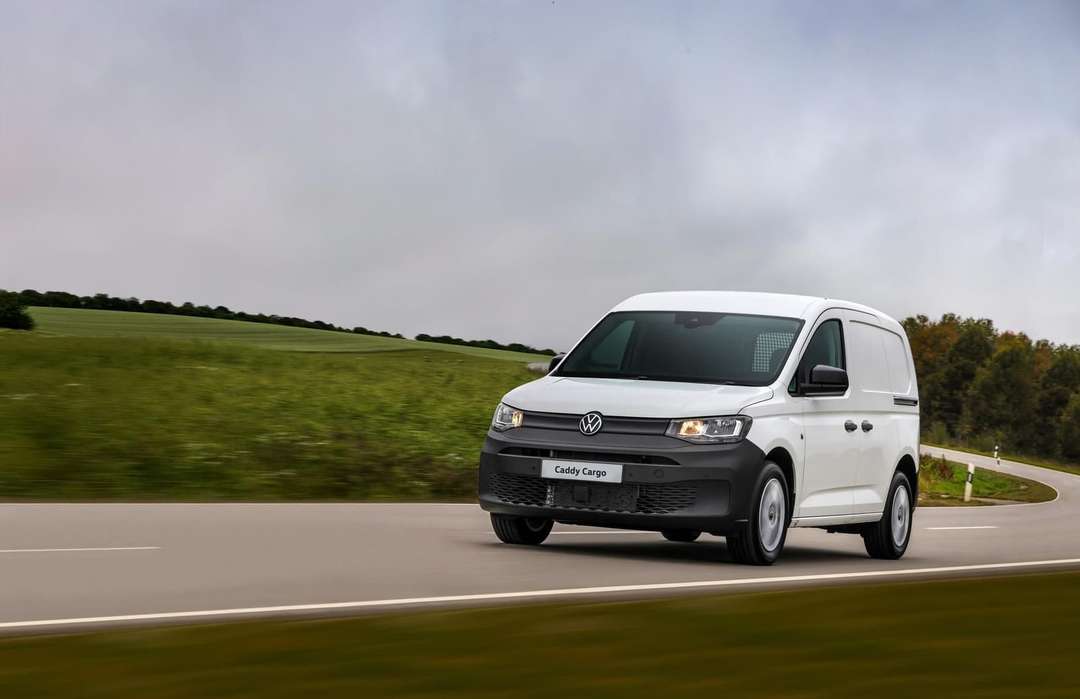
Volkswagen finally put the Caddy on the MQB platform, and it shows. The nose is sharper, the headlights are properly modern, and the whole side profile looks deliberate - not like something stretched together in a rush. Cargo spec means no rear side glass, which is good for security but a pain for rearward vision.
At a loading bay, I watched a courier wedge one of these between two bakkies, depending entirely on the standard reverse camera and sensors. He made it, though just barely. Those solid rear flanks create proper blind spots, so if you’re hiring temp drivers, expect some panel-bashing learning curves.
Stance and styling cues
No nonsense here. No fake vents or “adventure cladding” - just a clean, slab-sided van with a Polo face. It’s a rare moment where you remember there’s Golf 8 DNA under all that sheet metal.
Cabin & Practicality
Inside, the Caddy Cargo is as close to car-like as any panel van you’ll find in SA. The dashboard is straight from the passenger Caddy: 6.5-inch touchscreen, wireless Apple CarPlay and Android Auto, and digital instruments if you stretch to the top trim. But then VW deleted the physical climate dials and stuck in annoying touch sliders. For someone wearing gloves in winter, that’s a daily frustration.
Load bay reality
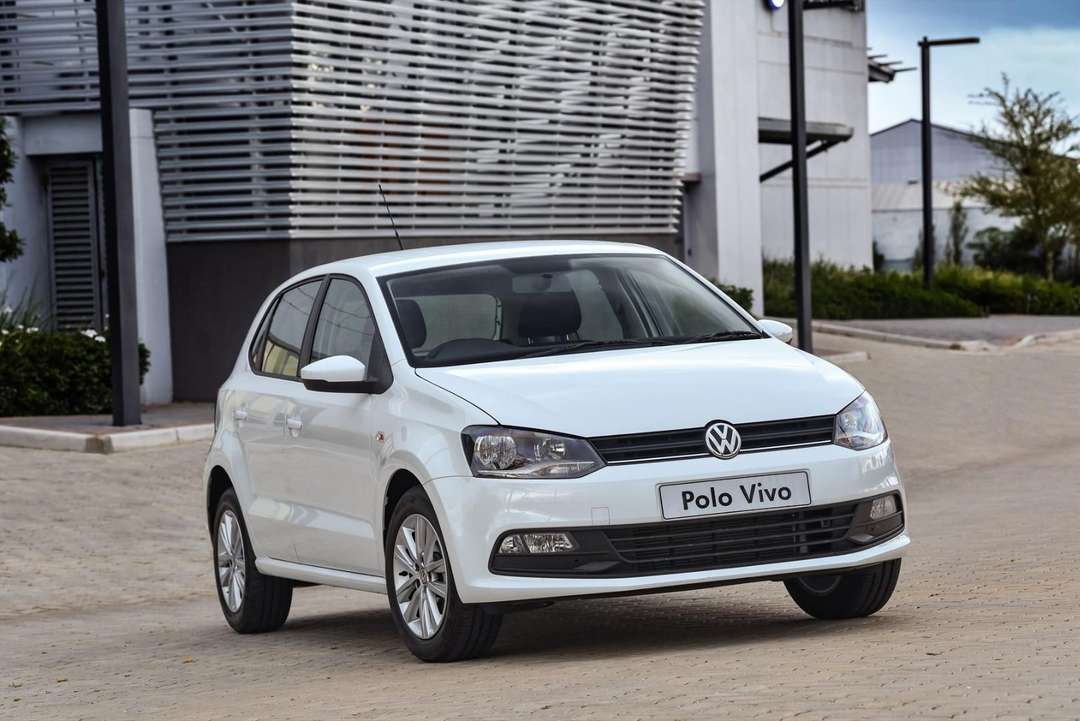
There’s around 3.1 cubic metres of load space in the SWB version, plus six lashing eyes on the floor and a payload of around 700 kg. Does the job, but both the Kangoo and Berlingo squeeze in a bit more. Comparing Volkswagen Caddy boot space to a Polo Vivo hatch with the seats down? You get about four times the usable volume and, crucially, a steel wall between you and the flying toolbox.
Driver environment
The seat is sorted for long hauls. I managed 380 km in one stretch and hopped out without that familiar van-induced back ache - H1 drivers, you know what I mean. Storage is decent, though prepare to lose pens and slips behind the infamous gap at the centre console.
- Load volume (SWB): approximately 3.1 m³
- Payload: around 700 kg
- Lashing eyes: six
- Braked towing: 1 300 kg
- Infotainment: 6.5-inch touchscreen, wireless CarPlay/Android Auto
On the Road
Here’s where the Caddy justifies its price tag. The 1.6-litre naturally aspirated petrol makes 81 kW, driving the front wheels via a 6-speed manual. On paper at least, those numbers don’t scream power. They don’t. But the MQB platform transforms the ride - it feels more Polo than panel van.
Performance and powertrain
Measured 0-100 km/h comes in at 12.32 seconds, with 80-120 km/h done in 9.55 seconds. No one’s calling it quick, and the engine needs revs to get moving. The old 1.0 TSI returned about 5.6 L/100 km in mixed driving; this 1.6 NA sits closer to 7.2 L/100 km officially, and I saw between 6.5 and 8.3 L/100 km depending on payload and route. That’s a step backwards for efficiency - high-mileage operators will feel that at the pumps.
Ride and handling
Out on the N1, between Centurion and Polokwane, the Caddy cruises at 120 km/h with a composure that other panel vans just can’t match. There’s wind noise off those big mirrors, and more road noise than a passenger Caddy - blame the stripped sound insulation in the load bay. But the chassis is excellent. It corners flat, the steering is honest, and the brakes are more reassuring than I expected.
Empty, you can get a bit of lean in the corners - a reminder this isn’t a hot hatch. Put 400 kg in the back, and it settles nicely. Regarding the Volkswagen Caddy's ground clearance, nothing special: good for tar and most farm roads, but if your route is all dongas and ruts, better look at a Hilux.
Data & Comparison
Specs at a glance
| Spec | Detail |
|---|---|
| Engine | 1.6L petrol, naturally aspirated |
| Power | 81 kW |
| Gearbox | 6-speed manual |
| Drive | Front-wheel drive |
| Doors | 4 |
| Generation | Caddy 5 (MY22+) |
| 5-year TCO estimate | R230 000 |
How it stacks up against rivals
| Model | Payload (approx.) | Load volume | Powertrain |
|---|---|---|---|
| VW Caddy Cargo 1.6i | ~700 kg | ~3.1 m³ | 1.6 petrol, 6MT |
| Hyundai H1 Panel Van | ~1 100 kg | ~4.4 m³ | 2.5 diesel |
| Ford Transit Custom | ~1 000 kg+ | ~6.0 m³ | 2.0 diesel |
| Suzuki Super Carry | ~740 kg | compact tray | 1.2 petrol |
The Volkswagen Caddy vs Berlingo debate isn’t as simple here as in Europe. Berlingo stocks are patchy, but when you can find one, it’s usually cheaper and carries more. Inside VW’s own stable, the Volkswagen Caddy vs Caddy Maxi choice is easy: Maxi for Euro pallets or long stuff, standard SWB Cargo for parcels and mixed loads. Simple.
Ownership and running costs
Service intervals sit at 15 000 km - about right for a working van. The Volkswagen Caddy service plan in South Africa covers 3 years or 45 000 km, with an unlimited-km warranty and a 12-year anti-corrosion guarantee. Total cost over five years? Figure on R230 000, which is better than an H1 but more than a Polo Vivo Xpress.
- 5-year TCO estimate: R230 000
- Service interval: every 15 000 km
- Service plan: 3 years / 45 000 km
- Warranty: unlimited-km mechanical, 12-year anti-corrosion
Reliability watch-outs
Let’s be real about common Volkswagen problems if you’re spending fleet money. Old Caddys had their issues - DSG mechatronics, water pumps, dual-mass flywheels. The 2016 TDI versions especially had EGR and timing chain headaches. This new 1.6 NA petrol with a manual gearbox avoids most of those. Now, the main gripes are infotainment freezes and tailgate latch niggles - annoying but not business-ending.
Editorial Focus
Van or Car? SA Verdict
Here’s the thing. The Caddy Cargo is a van that drives like a car, priced right in between. If you’re a sole trader doing 30 000 km a year in urban deliveries, a Polo Vivo hatch with the seats folded will save you more than R150 000 and run cheaper - but you give up the bulkhead, space, and theft-proof panels. That’s not a small trade-off.
For a small electrical contractor hauling tools, cable drums, and geysers, the Caddy fits. That MQB chassis means your apprentice won’t arrive at Sani Pass with a stiff back. The 700 kg payload covers what most bakkie-averse operators need. After a week with the Volkswagen Caddy Cargo 1.6i (81KW) F/C P/V review in South Africa, you’re clearly paying for the comfort and badge - not raw numbers.
Stacked up against a real one-tonner like a Hilux S or Ranger XL single cab? It’s not your van - those bakkies carry more, tackle real gravel, and sell easier second-hand. The Caddy’s niche is wedged between hatchbacks and bakkies. If that’s your business sweet spot, you’ll get your money’s worth. If not, keep shopping.
Safety rating
ANCAP · tested 2021
★★★★★ 5/5 adult occupant
Australian-market RHD rating — indicative for SA only where the SA derivative matches the tested safety spec (airbags/ESC/AEB). Official factsheet.
Verdict
Rating: 7.5/10.
Buy this if you’re a small business owner who wants comfort, a trusted badge, and a chassis that won’t break your back over 40 000 km a year. The 1.6i petrol with a 6-speed manual is the safe pick for anyone wary of DSG repairs - and any VW dealer in South Africa can keep you rolling. It’s what the Caddy Cargo should have been from the start: honest, simple, well thought out.
Give it a miss if your business is all about price per kilo. The Polo Vivo Xpress, Mahindra XUV300 Xprez, or a used Hyundai H1 will shift more cargo for less. And if your routes run through dongas and axle-twisters, the Caddy’s clearance and front-drive layout will trip you up before the motor does.
The Caddy Cargo isn’t the cheapest, biggest, or toughest van you can buy in South Africa. But it’s easily the most pleasant to drive - and for a tool you’ll spend 200 hours a month inside, that matters.
Summary
Rating: 7.5/10. Buy this if you’re a small business owner who wants comfort, a trusted badge, and a chassis that won’t break your back over 40 000 km a year. The 1.6i petrol with a 6-speed manual is the safe pick for anyone wary of DSG repairs — and any VW dealer in South Africa can keep you rolling. It’s what the Caddy Cargo should have been from the start: honest, simple, well thought out. Give it a miss if your business is all about price per kilo.