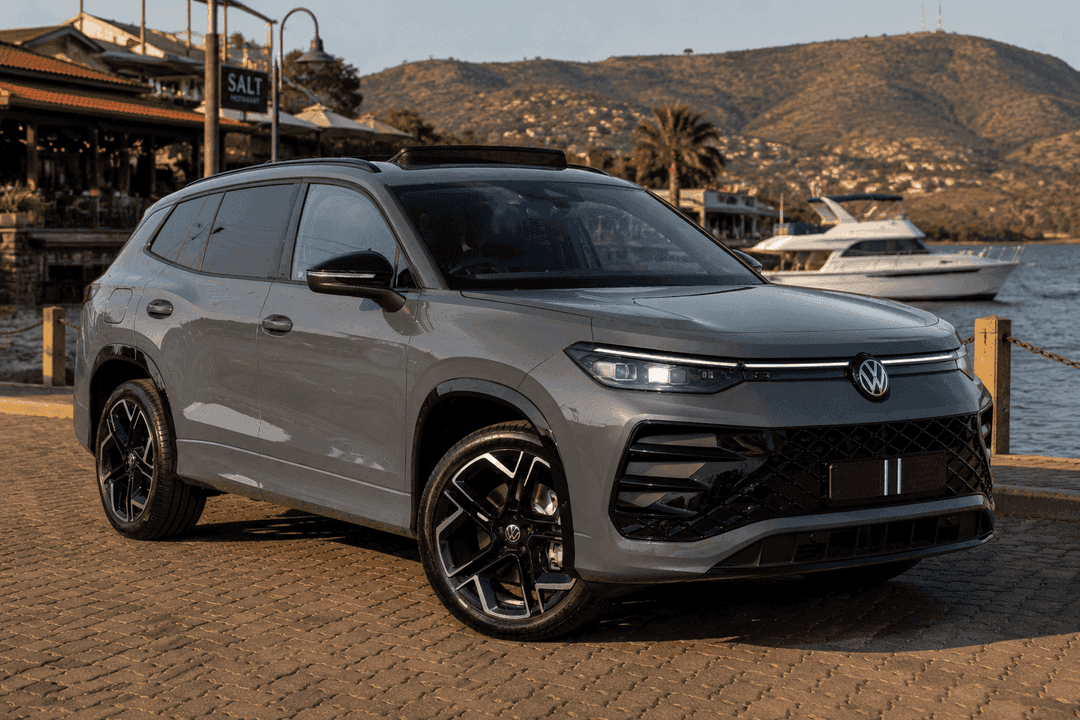
Volkswagen Tayron R-Line 1.4 TSI 110 kW 7-speed DSG (2026) Review
The bones are solid but the engine’s a letdown. The Tayron VW should have built from the start arrives with the 2.0 TSI in 2026. Until then, this is the seven-seat VW for those who already love the ba
Introduction
Right, so: the Volkswagen Tayron R-Line 1.4 TSI 110 kW 7-speed DSG is the sort of car that makes sense if you’re already deep in the VW ecosystem, need those extra seats, and appreciate a properly sorted cabin more than outright pace. But at R899,900, the price creeps uncomfortably close to the Touareg, and for everyone else? Best to hold out for the 2.0 TSI 4Motion due in 2026. VW’s new mid-size SUV sits between the Tiguan and Touareg, but the 1.4-litre engine is the big question mark. My drive revealed a picture that’s not as clear-cut as the launch fanfare would have you believe.
Key takeaway: A truly polished seven-seater from VW - but the launch engine’s short on punch, and the price tags it into Touareg territory.
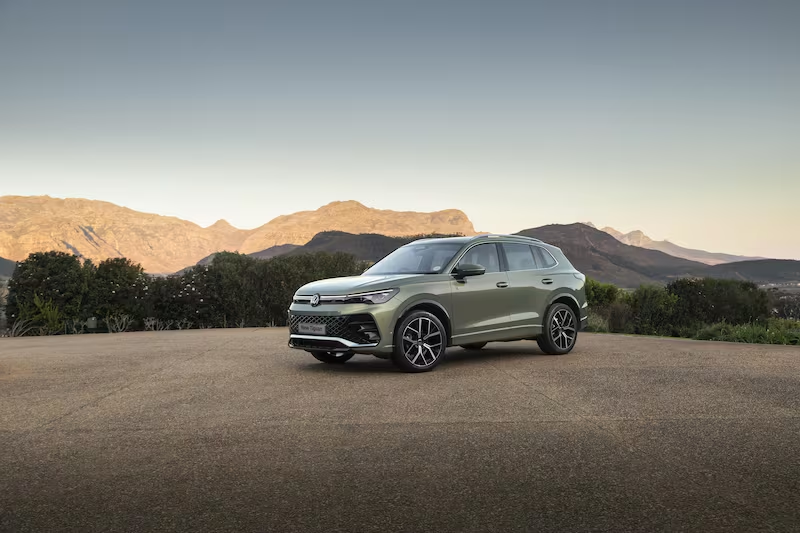
Design & Exterior
VW’s approach here is clever. The Tayron stretches out the Tiguan’s outline but doesn’t bloat into the ungainly shapes that usually plague seven-seat conversions. Designers added length where it counts - between the rear door and the tail - keeping the roofline sleek rather than lumpy for that third row.
R-Line cues that actually earn their badge
There’s substance to the R-Line trim, not just vinyl and badges:
- Standard 19-inch Coventry alloys
- Unique R-Line bumpers front and rear, with gloss-black detailing
- IQ.Light Matrix LEDs, including the glowing front badge and full-width light bar
- Optional Black Style pack with 20-inch York wheels - no extra charge over the 19s
Road presence at night
Nighttime is when the Tayron stands out. That light bar across the nose and the luminous VW badge genuinely give it a premium look after dark, especially rolling down the highway. In daylight, doing the school drop-offs, it’s understated - just what most buyers in this bracket want—no showboating, no Chery-esque bling, just classic German understatement.
Cabin & Practicality
Step inside, and the R-Line spec finally feels like it’s earning the price. Soft Varenna leather, 30-colour ambient lighting that swings from nightclub orange to hospital white, and those 10-chamber massage seats straight out of the Touareg. That matters because for the first time in a Tiguan-offshoot, the cabin feels like a real step up, not a bean-counter exercise.
The third row reality check
If you pack smart, the seven-seat setup works for short trips - school runs or airport lifts. Pack poorly, and you’ll regret it. After a weekend with two car seats and a surly teen in row three, a few truths emerged:
- 345 litres of boot with all seats up - that’s 115 litres more than a regular Tiguan
- 850 litres if you fold row three flat
- Over 2,000 litres with both back rows down
- No ISOFIX in the third row - Santa Fe and Peugeot 5008 do better here
- Row three’s low seat base means poor under-thigh support, so it’s only for kids or short trips
Ergonomics and physical controls
About time: VW’s fixed the infotainment mess from the original Mk8 Golf. The 15-inch touchscreen is sharp, the climate slider glows at night, and the steering wheel finally has proper buttons, not those infuriating haptic pads. It’s what the Tiguan should have been from the start.
On the Road
Here’s the thing: the 110 kW, 1.4 TSI is pulling around 245 kg more than a Tiguan, and you feel it. In a Golf, this engine’s lively enough. In the Tayron? It’s working overtime, and you will notice.
Around town
On the city trudge, the 7-speed DSG does its best. Early torque, slick shifts, and you’d almost forget you’re missing out on a bigger engine. Almost.
On the N1 climbing out of Pretoria
Load up with four adults and luggage, point it up Zambezi Drive, and the 1.4 TSI has no choice but to drop two gears and hang around 4,500 rpm to stay at 120 km/h. The DSG is quick, but the engine gets buzzy, and the effortlessness vanishes. If you’re towing a trailer or hauling the clan with bikes on the roof, wait for the 2.0 TSI 4Motion.
Ride and refinement
The chassis? That’s the pleasant surprise. There’s a sophistication to how the Tayron handles the M1’s expansion joints - a sort of secondary ride magic that Chery’s Tiggo 8 Pro Max can’t touch. Ground clearance lands in typical crossover territory, so gravel roads are fine, but real off-roading is out of the question. This is a tarmac family SUV, plain and simple.
Data & Comparison
Let’s talk about the Volkswagen Tayron price in South Africa. At R899,900 for the R-Line, you’re forking out R88,000 more than the base seven-seater, and if you add the Black Style pack, you’re nudging the Touareg’s entry price. That’s a tough pill for a 1.4-litre engine.
Five-year ownership snapshot
- Estimated 5-year TCO: R230,000 (fuel, service, consumables)
- Service plan: 5 years / 90,000 km
- Warranty: 3 years / 120,000 km
- Claimed combined Volkswagen Tayron fuel consumption: low-7s L/100km WLTP; but in real-world SA use, plan on 9.5–10.5 L/100km
Rivals worth cross-shopping
| Model | Power (kW) | Seats | Drive | Warranty |
|---|---|---|---|---|
| VW Tayron R-Line 1.4 TSI | 110 | 7 | FWD | 3yr / 120,000 km |
| Hyundai Santa Fe | 132 | 7 | AWD opt. | 7yr / 200,000 km |
| Chery Tiggo 8 Pro Max | 187 | 7 | FWD | 5yr / 150,000 km |
| Skoda Kodiaq | 110+ | 7 | FWD/AWD | 3yr / 120,000 km |
Segment trend signal
SUV interest held at 76.0 in November 2025, miles ahead of hatchbacks (41.1) and crossovers (35.9). Seven-seaters aren’t fading - and that’s exactly why VW needed the Tayron in showrooms before Chinese brands ran riot.
Editorial Focus
VW's New Mid-Size SUV Tested - Does it actually work?
VW’s playing for high stakes here. Tiguan Allspace is gone, the Touareg’s getting long in the tooth and expensive, and the budget-friendly onslaught from Chery, Haval, and Mahindra isn’t letting up. The R-Line 1.4 TSI is VW’s best for the volume seller.
Is the Tayron the answer? Only partly. The cabin and design are right up there, infotainment is finally fixed, and that 345-litre boot with all seats up gives it a real edge. But the 1.4 TSI just isn’t enough for a seven-seater. You’re asking a Golf motor to move 1.7 tonnes - it shows, especially when the family’s all in. On paper at least, it’s a launch engine meant to hit a price point, but that price still sits north of R899,000.
If the 2026 2.0 TSI 4Motion lands at a sensible premium - R60,000 to R80,000 more - it’ll make this 1.4 TSI feel like a stopgap, and that’s going to hurt early adopters and secondhand values.
Verdict
Here’s the rub: the Tayron R-Line 1.4 TSI is a 7/10 car with an 8.5/10 price tag. The interior is excellent, the design mature, and the ride is a step above anything Chery or Haval can muster. But that 1.4 TSI is a compromise too far for the money, and the warranty trails what Hyundai and Kia offer for less.
Summary
Here’s the rub: the Tayron R-Line 1.4 TSI is a 7/10 car with an 8.5/10 price tag. The interior is excellent, the design mature, and the ride is a step above anything Chery or Haval can muster. But that 1.4 TSI is a compromise too far for the money, and the warranty trails what Hyundai and Kia offer for less.
Ratings
Pros
- ✓You’re a VW loyalist moving up from a Tiguan or retiring a Touareg
- ✓Seven adults and heavy towing aren’t everyday requirements
- ✓You want a premium cabin but aren’t keen to stretch for an Audi Q5
- ✓Your driving is mostly city and highway, not Lowveld mountain passes
Cons
- ✗You need ISOFIX in row three for multiple child seats
- ✗You tow up Van Reenen’s Pass or regularly haul big loads
- ✗You’re willing to wait for the 2.0 TSI 4Motion
- ✗Running costs and warranty matter more than the badge — Santa Fe wins here