Hyundai Tucson (2026) Review: Facelift Brings R39,000 Price Cut

Cheaper and better equipped, with diesel power well matched to SA conditions. Thin safety equipment on lower trims and no hybrid keep it from scoring higher.
Introduction
Buy the facelifted Hyundai Tucson if family life means long Highveld runs, N3 tolls and regular stretches of gravel. Better yet, choose the 2.0D Executive. Hyundai cut the entry price by R39,000 while adding equipment, which is unusual for a mid-cycle update and significantly strengthens its value proposition. Our 2026 Hyundai Tucson review in South Africa looks at what this means for used values, the logic behind the three-trim range, and the conspicuous absence of a hybrid. Since the 2025 model-year update, the Hyundai Tucson range has become simpler and, on paper at least, considerably more appealing.
Key takeaway: Pick the 2.0D Executive. It’s a torquey, unflustered long-distance diesel with a 7-year/200,000km drivetrain warranty, now backed by an uncommon price cut.
Design & Exterior
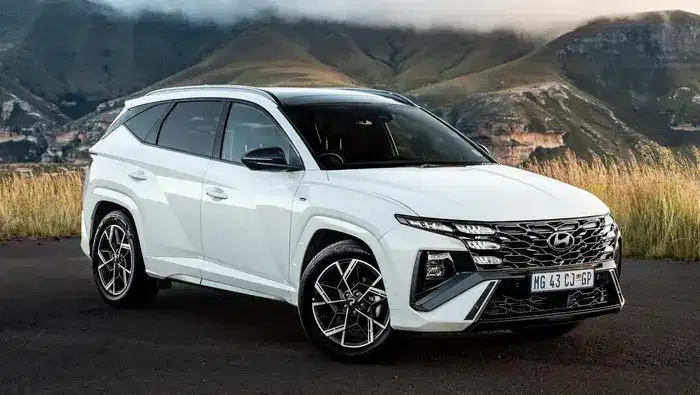
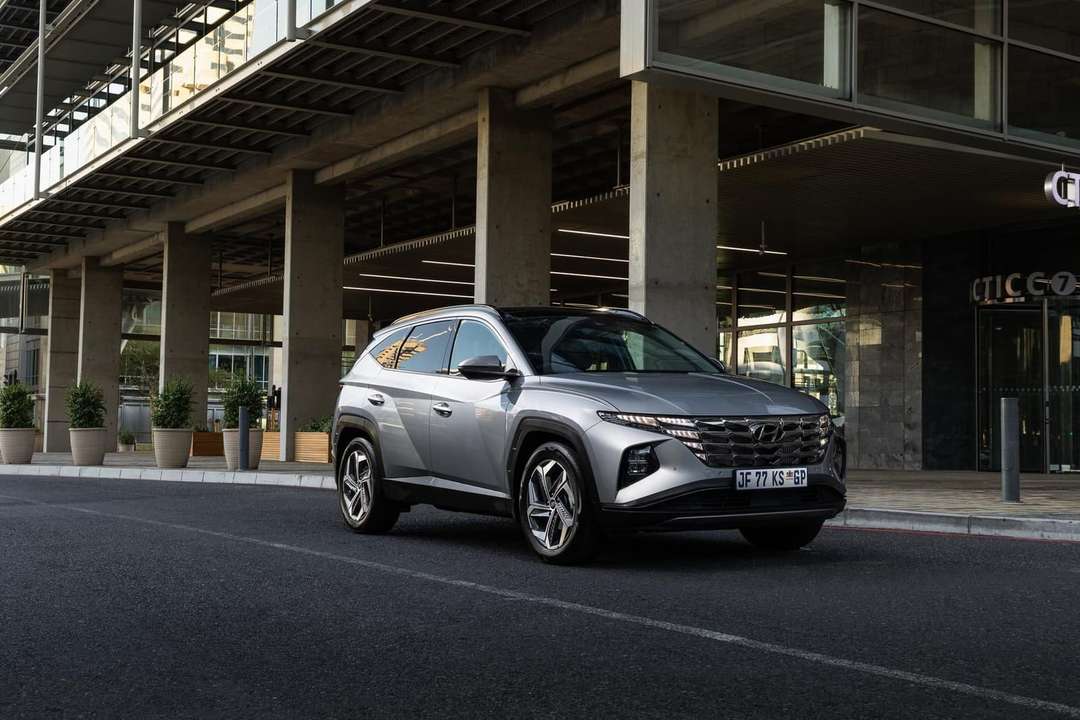
Few family SUVs are this easy to spot in a packed shopping-centre car park. Its parametric jewel headlights blend into the grille when switched off, while the facelift cleans up the front bumper and skid plate without disturbing the original design. Sensible. Parked beside the louder Sportage and more conservative RAV4, the Tucson occupies a confident middle ground.
N Line specification brings unique bumpers, darker trim and 19-inch alloys. Properly sharp. Much of its premium pays for visual drama, though, because styling remains the clearest reason for its substantial jump over the other derivatives.
Cabin & Practicality
Screens and physical controls
Cabin revisions bring curved twin 12.3-inch displays and, thankfully, proper physical climate controls instead of buried touchscreen menus. That matters when adjusting the temperature at 120km/h on the N1, particularly across rough sections where prodding a small icon becomes an unnecessary distraction. Apple CarPlay and Android Auto work properly, and startup is quick, although some rivals now offer sharper graphics and more polished interfaces.
Space and family use
Compared with its predecessor, the current Tucson provides noticeably more rear legroom. Two adults fit behind another pair without bargaining over kneecaps. There are ISOFIX points, a powered tailgate on higher trims and handy storage beneath the floating console. Five seats, five doors, plus room for one folded full-size pram and three soft weekend bags, if you pack smart.
- Curved 12.3-inch twin displays are standard across the range
- Physical climate controls remain within easy reach
- Smart key and push-button start come with Executive and N Line
- 181mm ground clearance is adequate for maintained gravel roads
On the Road
The petrol Premium
Entry-level 2.0 Premium derivatives use a naturally aspirated petrol engine that feels predictable but plainly sluggish. A measured run produced roughly 11.4 seconds to 100km/h, so treat it as an easy cruiser rather than a decisive overtaking tool. It’s acceptable in stop-start traffic. Load the cabin and boot before climbing Van Reenen’s Pass on the N3, though, and the shortage of low-rev pull is difficult to ignore.
The diesel that suits SA
Diesel makes more sense across South Africa’s long distances. With 416Nm available, the 2.0-litre turbodiesel pulls neatly from low revs and works comfortably with its eight-speed auto. HTRAC all-wheel drive and selectable terrain modes add confidence on wet gravel, where one launch route returned 6.8 l/100km against a 6.5 l/100km claim. Credible, not brochure fiction.
I once drove a diesel Tucson across corrugated Karoo dirt and heard the luggage shifting before the suspension lost composure. It just got on with it. Quiet over distance and settled on loose surfaces, this is the gravel-road and caravan-towing choice, and that’s the point.
Data & Comparison
Pricing and ownership numbers
Sensible money lands either the 2.0 Premium or diesel Executive. By comparison, the N Line AWD reaches R859,900, where the value argument starts falling apart. Viewed through the Hyundai Tucson price South Africa lens, the reduction moved the whole range down while outgoing NX4 stock remained at old money, immediately placing pressure on used Hyundai Tucson prices.
- Observed diesel economy: 6.8 l/100km recorded against a 6.3 l/100km claim
- Peak torque: 416Nm from the 1,999cc turbodiesel
- 0-100km/h estimate for the petrol Premium: around 11.4 seconds
- Drivetrain warranty: 7 years/200,000km (5yr/150,000km vehicle plus 2yr/50,000km powertrain)
- CO2 output: 169g/km on the diesel
Used Tucson price bands
Here’s the knock-on effect. Used NX4 Tucsons, particularly the discontinued 2.0 Elite, are being squeezed by a newer facelift that costs less and sits above them. Patient shoppers should watch Hyundai dealer listings and large retailers such as WeBuyCars rather than accepting the first trade offer. These typical asking prices by model year come from live listing data:
| Model year | Typical asking price (median) | Advertised range |
|---|---|---|
| 2016 | R242,200 | R198,900 - R259,900 |
| 2019 | R289,900 | R249,900 - R369,990 |
| 2020 | R289,900 | R234,890 - R342,500 |
| 2021 | R351,400 | R295,500 - R389,950 |
| 2022 | R379,000 | R359,900 - R439,900 |
| 2023 | R389,890 | R379,900 - R479,900 |
For this class, a three-year-old Tucson retaining around R416,000 average residual is respectable. Our ownership data puts the 5-year TCO near R230,000, although insurance, tyres and finance terms will shift the household total.
Tucson vs rivals
Shared underpinnings make the Hyundai Tucson vs Kia Sportage comparison unavoidable, but the used market deserves equal attention before you visit a Hyundai dealer:
| Specification | Tucson 2.0D | Kia Sportage | Toyota RAV4 |
|---|---|---|---|
| Torque | 416Nm | 416Nm (diesel) | Petrol/hybrid focus |
| Fuel choice | Diesel | Diesel/petrol | Petrol/hybrid |
| Driven wheels | AWD (HTRAC) | AWD available | AWD available |
| Drivetrain warranty | 7yr/200,000km | Unlimited km/5yr | 3yr/100,000km |
Warranty cover and the diesel-plus-AWD combination build a persuasive resale case, especially as several rivals abandon diesel. Buyers researching used Hyundai Tucson prices should still compare an equivalent Sportage, RAV4 and CX-5 before committing.
Safety, stated plainly
European-spec Tucson models scored 5 Euro NCAP stars in 2021, and that result carried over to the facelift. South African cars are Korean-built, use 6 airbags and omit the centre airbag, while AEB is reserved for the N Line AWD. Treat the rating as a useful reference, not a result directly applicable to Premium and Executive derivatives. No SA-spec Global NCAP test exists. Buyers wanting lane keep, forward collision assist and driver attention warning must choose the N Line.
Editorial Focus
Cheaper facelift, squeezed used market
Cutting a facelifted SUV’s price by R39,000 deserves scrutiny. Most brands see an update as permission to charge more, yet Hyundai went the other way, probably feeling pressure from Chinese brands crowding the mid-size SUV segment. Consequences arrive quickly. Once a newer, better-equipped Tucson costs less than the previous sticker price, outgoing NX4 stock and the discontinued Elite must be discounted to move. Compressed used Hyundai Tucson prices favour patient buyers prepared to bargain.
Where the money makes sense
Run the comparison many launch summaries avoid. Executive money also buys low-mileage examples of the Sportage, RAV4 and CX-5, while the N Line’s R859,900 price reaches serious used-premium territory. Your budget deserves an honest conversation. South Africa also misses the hybrid offered in the UK, although blaming load-shedding misunderstands a conventional hybrid, which doesn’t need home charging. No battery-size choice or DC charging speed applies here because Hyundai offers neither a plug-in hybrid nor a full EV Tucson locally. Still, the 416Nm diesel remains the simple long-distance option, supported by Hyundai’s broad dealer network and a 7-year/200,000km drivetrain warranty that should aid resale. It’s what the facelift should have been from the start.
Safety rating
Euro NCAP · tested 2021
★★★★★ 5/5 adult occupant
★★★★★ 5/5 child occupant
No SA derivative fully matches the tested spec. Official factsheet.
Verdict
Costing less makes the facelifted Tucson easier to recommend, particularly with a diesel drivetrain suited to South Africa’s distances, tolls and gravel roads. Missing the hybrid remains frustrating, but the diesel Executive is the pragmatic local choice.
- Buy it - the long-distance family: Choose the 2.0D Executive. It blends torque, economy, useful equipment and reassuring drivetrain cover without the N Line’s inflated price.
- Shortlist - the used bargain hunter: Pressure on NX4 values means low-mileage used Tucsons and discontinued Elites could offer excellent value beside the cheaper facelifted range.
- Wait - the safety-first buyer: Need AEB and lane keep? Only the N Line has them, so wait for a specification revision or increase your budget rather than compromise.
- Walk away - the R859,900 shopper: At N Line money, used premium SUVs and rival diesels demand a proper comparison before any paperwork gets signed.
Summary
Here’s the short version for South African buyers: the 2026 Hyundai Tucson is cheaper, sensibly trimmed and still at its best with diesel power. We cover the mid-cycle price cut, all three derivatives, real-world consumption, used NX4 values and its standing against the Kia Sportage, RAV4 and CX-5.
Ratings
Pros
- ✓Choose the 2.0D Executive.
- ✓It combines torque, economy, useful equipment and reassuring drivetrain cover without the N Line’s inflated price.