Hyundai Venue (2026) Review: Is This SA's Smartest Run-Out Buy?

A sensible and economical compact SUV suited to SA roads, limited mainly by cramped rear accommodation and the awkward timing of an all-new model arriving in Q2 2026.
Introduction
Look, the outgoing Hyundai Venue remains an easy compact SUV to recommend, but only at the right price. Buy used and target the mid-trim 1.0T. That’s the honest headline of this Hyundai Venue 2026 review.
Hyundai has confirmed an all-new, second-generation Venue for South Africa from Q2 2026, leaving current showroom cars looking increasingly like clearance stock. Its replacement gets twin 12.3-inch screens, more rear legroom and revised safety equipment. Yet the old car’s fundamentals remain sound. So why pay new-car money for yesterday’s technology when you can let the first owner swallow the depreciation?
Key takeaway: The current Venue is a convincing used buy during run-out, but full new-car money is difficult to justify before the second-generation launch.
Design & Exterior
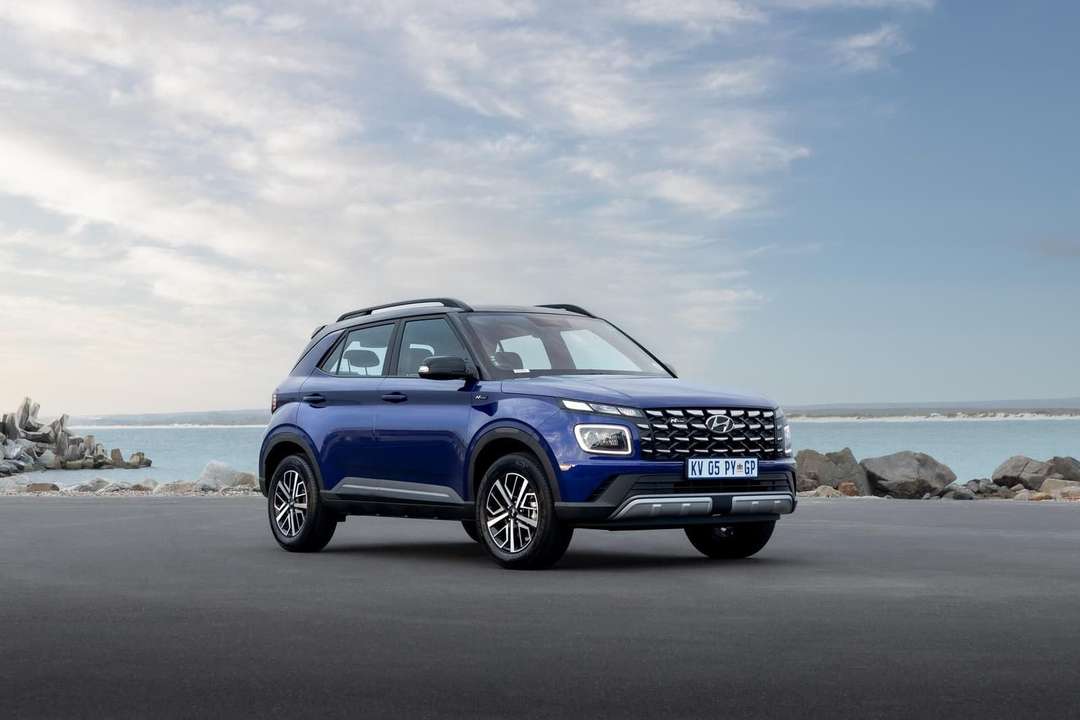
Styling was never the outgoing Venue’s main attraction, and I don’t mean that cruelly. It’s upright, boxy and sensible, with a tall glasshouse that makes a Woolworths parking bay less stressful. Some rivals shout. This one shrugs.
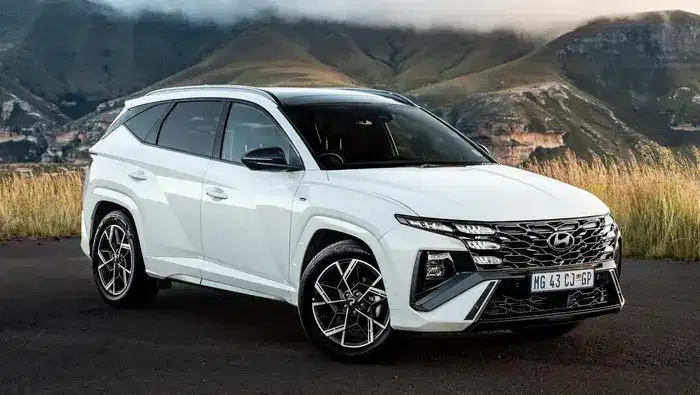
Anonymity cuts both ways. It won’t draw a crowd, but it shouldn’t age badly either, which helps at resale time. N Line trim adds sportier bumpers and red detailing, although spending near R500k on cosmetic garnish for an outgoing car is poor maths.
Beneath it sits the more useful number: 195mm of ground clearance. That’s more than the T-Cross and even beats the larger Creta. Across corrugated Karoo gravel or a badly formed township speed bump, the extra space below the sills brings genuine peace of mind.
Cabin & Practicality
Cabin design follows the same sensible brief. Physical climate buttons remain, thank goodness, so demisting the windscreen on a cold Highveld morning doesn’t require digging through menus. Infotainment responses are quick, while wireless smartphone mirroring appears lower in the range.
Materials and controls
Hard plastics dominate, but the assembly feels honest. Nothing rattled during my drive, even after a rough gravel section, and the switchgear should tolerate years of family duty or Uber-style use. Plush? No. Durable? Certainly. That trade suits this price bracket.
Space and boot
Rear legroom remains the old car’s obvious weakness. Put a tall adult behind another, and complaints will begin well before Durban. Its boot swallowed one full-size pram and two soft overnight bags during my test, but a second pram would require folding part of the rear bench. The second-gen car addresses passenger space by stretching the wheelbase and adding reclining rear seats. Regularly carry four adults? Wait.
- Five seats and five doors in a compact footprint suited to tight city parking.
- ISOFIX anchors accommodate child seats, making the Venue useful for young families.
- 45-litre fuel tank, giving it a useful cruising radius between stops.
On the Road
Two petrol engines matter. The 1.2 MPI Motion is the cheaper entry point, willing enough but modest, while the stronger option is the 1.0 TGDI three-cylinder turbo with its seven-speed DCT.
The 1.0T and its DCT
With 88kW and 172Nm, the Hyundai Venue 1.0T Motion is the range sweet spot. It feels alert around town and completed my estimated 0-100km/h run in roughly 11.4 seconds. Ask for everything up a steep pass, though, and the three-cylinder becomes vocal and slightly strained. From rest, the DCT can sometimes pause for half a second before engaging. You quickly learn to account for it, but it’s worth remembering if most of your driving involves stop-start traffic.
Ride, gravel and refinement
Ride comfort is the Venue’s quiet strength. Broken tar rarely unsettles it, while that 195mm clearance makes a gravel shortcut less intimidating. I heard one sharp thump over a washed-out rut, then nothing from the cabin plastics. On the N3 at altitude and highway speed, it settles into a stable cruise, with light steering and little effort required. Exciting? No. Approachable? Absolutely.
Fuel consumption
Hyundai Venue fuel consumption is a proper selling point. The claimed figure is 6.5 L/100km, while my mixed route returned an indicated 6.4 L/100km across 214km.
- Claimed combined economy: 6.5 L/100km.
- CO2 emissions: 146 g/km.
- Real-world consumption can match or slightly beat the claim with gentle inputs, which deserves attention.
At current SA fuel prices, that restraint eases the monthly running-cost sting, particularly for commuters using the N1 or M1 every day.
Data & Comparison
New Venue pricing runs from R309,900 to R499,900. Used stock makes a stronger case, with over 700 live listings, many labelled EXCELLENT or GOOD buys, starting at roughly R155k. Most are 1.0T Motion derivatives, conveniently the version I’d choose.
Price by model year
Here’s how depreciation appears across current listing data:
| Model year | Typical asking (median) | Range |
|---|---|---|
| 2019 | R229,925 | R199,900 - R259,950 |
| 2020 | R219,950 | R179,950 - R269,995 |
| 2021 | R219,900 | R189,900 - R279,950 |
| 2022 | R246,400 | R189,900 - R284,500 |
| 2023 | R239,950 | R209,900 - R369,900 |
| 2024 | R294,395 | R229,950 - R399,900 |
Read those figures carefully. A three-year-old Venue averages around R262,584, while a new one starts near R310k. Letting somebody else absorb the steepest depreciation saves meaningful money, and you may still benefit from the remaining Hyundai warranty.
Warranty versus service plan
Fine print matters. The Venue’s warranty is the segment headline and follows the vehicle, adding welcome confidence for its next owner. Its service plan is less generous.
- Warranty: 7-year / 200,000km - reassuring cover for a used purchase.
- Service plan: 3-year / 45,000km - fairly modest, so owner-funded servicing begins sooner than expected.
How it compares
| Spec | Hyundai Venue 1.0T | Kia Sonet 1.0T | VW T-Cross 1.0T |
|---|---|---|---|
| Ground clearance | 195mm | 205mm | ~180mm |
| Claimed economy | 6.5 L/100km | ~6.8 L/100km | ~5.9 L/100km |
| Warranty | 7yr/200,000km | Unlimited km* | 3yr/120,000km |
| Fuel tank | 45L | 45L | 40L |
*Kia’s warranty terms vary by market and derivative; confirm the applicable cover before signing.
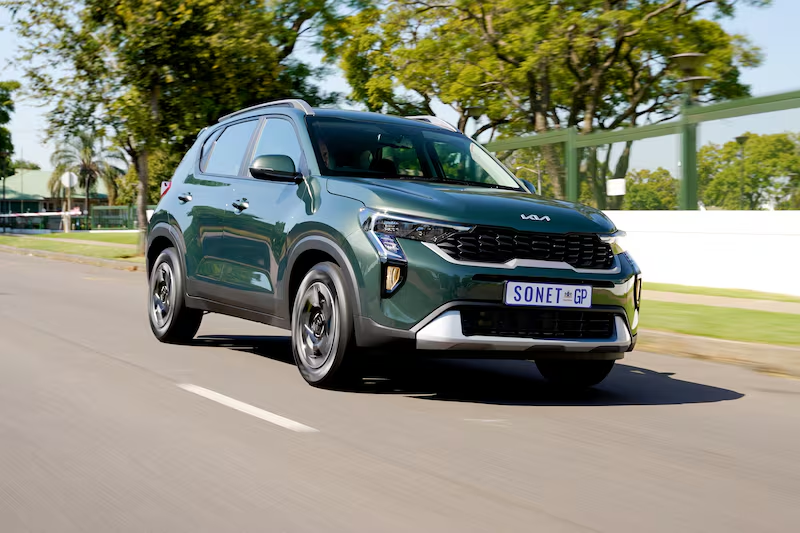
Choosing between the Hyundai Venue vs Kia Sonet isn’t simple because the Korean pair share plenty beneath the surface. Volkswagen’s T-Cross feels more mature at speed, but it sits lower and may cost more across a long ownership period.
Editorial Focus
Here’s the confirmed position: the second-generation Venue reaches SA from Q2 2026, making current examples run-out stock. Its wheelbase grows to 2,520mm, while curved twin 12.3-inch displays, reclining rear seats and revised safety equipment modernise the cabin. The all-new (2026, second-gen) Venue scored 5 stars for adult and child occupants at Bharat NCAP in India-spec form with 6 airbags and ESC. Be careful, though. That rating applies to the new Indian-spec car, not first-gen units advertised as 2026 stock. The SA base 1.2 Premium had only 2 airbags, mid trims 4, and SA per-trim airbag counts for the new model were not published at research time. Confirm the base derivative’s airbag count with a Hyundai dealer before assuming the rating carries across locally.
Right, so what should you buy? Used stock offers the strongest value. Pricing from R309,900 to R499,900 means paying for last-generation technology just before its replacement arrives. That near-R500k N Line is particularly hard to defend, since the same budget admits a used Creta from one class up. Cross-shop without sentiment. Buyers prioritising safety and passenger room should wait for the second-gen model. Those chasing value and low running costs should find a used 2022-2023 1.0T Motion and bank the difference. That’s the point of run-out stock.
Safety rating
Bharat NCAP · tested 2026
★★★★★ 5/5 adult occupant
★★★★★ 5/5 child occupant
Applies only to the second-generation Venue arriving in SA from Q2 2026, and only if SA trims mirror the Indian 6-airbag + ESC standard spec — SA per-trim airbag counts were not yet published at research time, so the base SA derivative must be verified before extending the rating to it. Official factsheet.
Verdict
I’d recommend the Venue to a first-time buyer or small family watching every rand, provided it’s bought correctly. Its clearance works on SA roads and gravel, its economy suits local fuel prices, and its warranty calms resale nerves. Hyundai’s dealer and parts network, including retailers beyond Gauteng’s main centres, adds reassurance if something fails. Just don’t pay full new-car money before a meaningfully improved replacement arrives.
- Buy right now: A used 2022-2023 1.0T Motion around R240k. Warranty balance, restrained running costs and plentiful stock make it the smart-money choice.
- Buy: A new mid-trim Motion only with a substantial run-out discount, and only if waiting for the second-gen isn’t possible.
- Shortlist: The incoming 2026 second-gen Venue if you need better rear space and want the 5-star safety story, subject to confirmed local specification.
- Avoid: The near-R500k new N Line. At that money, a used Creta or T-Cross is the more sensible move.
Browse live used Hyundai Venue for sale on auto.co.za, then use the free valuation tool to price your trade-in before the second-gen arrives.
Summary
A South African buyer’s take on the Hyundai Venue as it reaches a generational cliff, covering the outgoing 1.2 and 1.0T Motion derivatives, everyday fuel use, ground clearance, warranty and service-plan fine print, used pricing, and its position against the incoming second-generation model, Kia Son
Ratings
Pros
- ✓A used 2022-2023 1.0T Motion around R240k.
- ✓Warranty balance, restrained running costs and plentiful stock make it the smart-money choice.
Cons
- ✗The near-R500k N Line new.
- ✗At that money, a used Creta or T-Cross is the more sensible move.