Mahindra XUV 3XO 1.2T MX3 auto (2026) Review

A convincing value package with a properly judged mid-spec sweet spot. The cramped boot and unanswered long-term reliability questions prevent a higher score.
Introduction
The Mahindra XUV 3XO 1.2T MX3 automatic makes a compelling case for itself if you want a turbocharged crossover with a proper automatic transmission and plenty of useful equipment without moving into flagship pricing.
That is really the question behind this Mahindra XUV 3XO review: does the MX3 automatic currently offer one of the strongest features-per-rand packages in the budget crossover segment?
Mahindra has changed considerably over the past few years. What was once viewed as a value-focused outsider has become a far more credible player in South Africa, with products that no longer rely purely on price to attract buyers.
The MX3 sits roughly in the middle of the eight-derivative XUV 3XO range, and after spending time with it, I think this is where the range starts making the most sense.
You get most of the equipment buyers will actually use every day without paying for everything fitted to the flagship.
Key takeaway: The MX3 automatic sits in the sweet spot of the XUV 3XO range, combining a sunroof, wireless charging, strong safety equipment and a conventional automatic gearbox without the flagship price.
Design & Exterior
Mahindra design has come a long way.
Older products were usually chosen because they made financial sense rather than because somebody walked past one and turned around for another look.
The XUV 3XO is different.
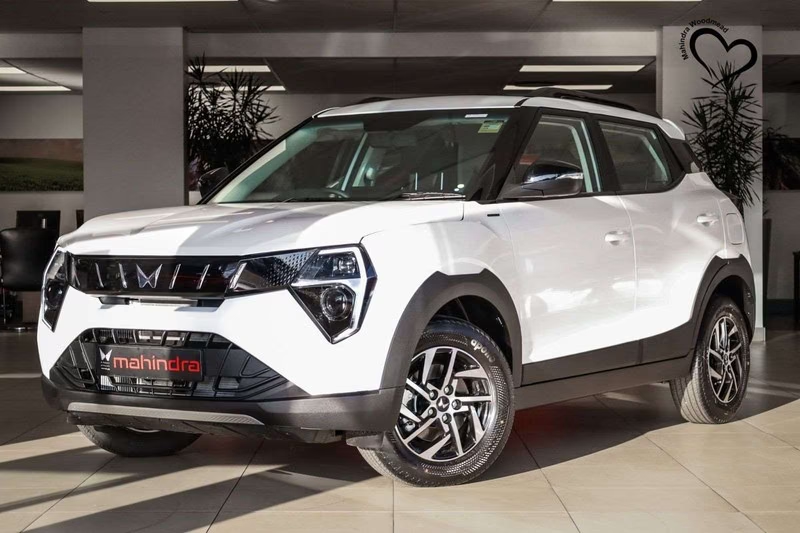
C-shaped LED lighting, connected light signatures and a fairly dramatic grille give it considerably more presence than you might expect at this price point.
Park it beside something like a Suzuki Fronx or Toyota Starlet Cross and the Mahindra certainly looks less anonymous.
Whether everyone will like the front end is another question.
There is quite a lot happening around the grille and lighting, but the important point is that the vehicle does not look cheap.
At this end of the market, that matters.
The longer wheelbase also improves the proportions, although its biggest benefit becomes more obvious once you climb inside.
Ground clearance is useful enough for potholes, speed humps and the occasional corrugated gravel road.
Nobody is pretending the XUV 3XO is a serious off-roader, but the crossover stance feels convincing rather than cosmetic.
Cabin & Practicality
Value becomes particularly obvious inside the XUV 3XO interior.
MX3 specification brings a large HD touchscreen, wireless Android Auto, a single-pane sunroof and wireless smartphone charging.
Those are not simply brochure fillers.
They are features owners are likely to use regularly, and matching the same combination in something like a Nissan Magnite or Renault Kiger often means moving considerably further up those ranges.
Materials and layout
The cabin is a noticeable improvement over the XUV300 that came before it.
There are softer materials in the areas where your hands and elbows regularly make contact, while the switches and controls feel more logically arranged.
The cabin no longer gives the impression that equipment was added wherever there happened to be space.
During my time with the vehicle, I found a comfortable driving position quickly, and the multifunction steering wheel is standard even lower down the range.
There are still harder plastics lower in the cabin, but at this price point that is hardly unexpected.
The important thing is that the areas you interact with most frequently feel suitably well finished.
Space and boot
Rear passengers are some of the biggest beneficiaries of the longer wheelbase.
There is enough legroom for adults to sit comfortably, and a family of five should manage everyday use without constantly negotiating for space.
The problem is the boot.
That short rear overhang, carried over from the basic architecture beneath the XUV 3XO, limits the amount of luggage space available.
- Rear legroom: One of the stronger points, comfortably accommodating two adults during my test.
- Boot capacity: Remains one of the weaker parts of the package. A full-size pram left around 180 mm of usable floor depth for shopping bags during my loading test.
- Safety: ISOFIX mounting points and six airbags are fitted across the range rather than being reserved for the expensive derivatives.
Pack for a long Drakensberg weekend and you will start playing luggage Tetris fairly quickly.
During my test, two soft weekend bags fitted alongside the pram, but a third eventually had to travel on the rear seat.
That is the packaging compromise.
On the Road
Power comes from a 1.2-litre turbocharged petrol engine producing approximately 82 kW, paired with a six-speed torque-converter automatic transmission.
The gearbox deserves some credit.
At this price point, buyers often find themselves choosing between a CVT, AMT or dual-clutch transmission.
Mahindra has gone with a conventional torque-converter automatic, and for everyday South African driving I think that was the right decision.
Powertrain manners
There is some noticeable turbo lag below roughly 2 000 rpm.
Pull away gently from a junction and there is a brief pause before the engine gathers itself and starts delivering stronger performance.
Once you understand that characteristic, though, the drivetrain becomes easy to live with.
On the N3 climb from Durban towards the Midlands, the XUV 3XO maintained highway speeds without feeling strained, while overtaking performance was perfectly acceptable once the turbo was working.
My estimated 0-100 km/h run took around 11.2 seconds.
That is not going to excite anybody buying on performance alone, but it is more than adequate for what this vehicle is designed to do.
Ride and refinement
This is where the XUV 3XO performs better than the price might suggest.
Across broken tar, patched surfaces and expansion joints, the suspension remains composed and gives the vehicle a more mature feel from behind the wheel.
The steering stays light enough for parking areas and suburban driving before gaining a little more weight at highway speeds.
It never becomes especially communicative, but that is unlikely to matter to the typical buyer.
Fuel consumption during my mixed highway and suburban route settled at around 6.4 L/100 km over 500 km.
That included toll-road cruising and stop-start traffic.
The official claim is lower, but the observed figure remains respectable for a turbocharged automatic crossover.
Data & Comparison
Pricing is where the Mahindra XUV 3XO MX3 automatic becomes particularly interesting.
It sits between the entry-level MX2 derivatives and the more lavish AX versions, but Mahindra has been clever about where it introduces the equipment most buyers actually want.
You therefore do not need to buy the flagship simply to get useful everyday technology.
Ownership numbers
- Warranty: 5-year/150 000 km mechanical cover.
- Estimated five-year total cost of ownership: Around R230 000 based on the supplied modelling.
- Service-plan caveat: MX derivatives receive less extensive service-plan coverage than AX models, which needs to be included in the ownership calculation.
How it stacks up
| Model | Engine | Gearbox | Standard airbags |
|---|---|---|---|
| Mahindra XUV 3XO MX3 AT | 1.2T petrol, ~82 kW | 6-speed auto | Six |
| Nissan Magnite | 1.0T petrol | CVT | Two to six depending on trim |
| Suzuki Fronx | 1.5 petrol | Automatic | Up to six |
| Chery Tiggo 4 Pro | 1.5T petrol | CVT | Up to six |
Safety is one of the XUV 3XO's strongest arguments.
Six airbags and electronic stability control are standard across the range rather than only being introduced when buyers move into the more expensive derivatives.
That gives even the lower-specification versions an important advantage.
Availability and depreciation
There appears to be plenty of XUV 3XO stock in the market, ranging from new vehicles to demonstrators and low-mileage used examples.
That is good news for buyers because it creates room to compare deals rather than simply accepting the first offer placed on the finance desk.
The number of nearly new vehicles available may also give patient buyers an opportunity to avoid some of the earliest depreciation.
For somebody not concerned with being the first registered owner, a lightly used MX3 automatic could therefore become an even stronger value proposition.
Is the MX3 automatic really the sweet spot?
This is where I think Mahindra has judged the range particularly well.
Look at what changes when you move from MX2 to MX3.
You gain the sunroof, wireless charging, cruise control, a larger HD touchscreen and wireless Android Auto.
These are features most buyers will actually use rather than equipment added purely to make the specification sheet longer.
Move further into the AX derivatives and the XUV 3XO gains more advanced driver-assistance systems, including features such as adaptive cruise control and lane assistance.
Those systems certainly have value, but they also push the purchase price higher.
For some drivers, particularly on poorly marked South African roads, they may not justify that additional spend.
That is why the MX3 automatic makes so much sense.
It gives you most of the equipment that improves everyday ownership while avoiding the cost of the flagship's more elaborate technology.
Compare it with similarly priced Magnite or Kiger derivatives and the Mahindra's specification becomes particularly difficult to ignore.
The conventional six-speed automatic also strengthens the case.
There are still compromises.
The shorter service-plan coverage on MX derivatives takes some shine off the long-term ownership proposition, while the brand still needs time to build the sort of high-mileage reliability history enjoyed by older competitors.
There have also been owner reports around rattles and occasional sensor-related issues, although these should be treated as individual reports rather than proof of a widespread defect.
For Mahindra, the bigger challenge now is consistency.
The products have improved enormously.
The ownership experience, parts supply and dealer response need to keep pace as sales volumes grow.
Judged purely on useful equipment, safety and drivetrain specification for the money, however, the MX3 automatic is difficult to dismiss.
Verdict
The Mahindra XUV 3XO MX3 automatic is probably the derivative that best explains how far the brand has come.
It feels more polished than Mahindra products of old, rides South African roads particularly well and gives buyers plenty of useful equipment without immediately forcing them towards the top of the range.
The boot remains the biggest packaging weakness, turbo lag takes some getting used to and the MX service-plan structure needs to be factored into the ownership calculation.
None of those completely undermines the package.
For buyers shopping in this part of the market, the MX3 automatic gets the balance right.
- Buy it - the value-focused family buyer: If you want a proper automatic, strong standard safety equipment and useful everyday features without paying flagship money, the MX3 automatic is the derivative I would look at first.
- Shortlist it - the safety-first shopper: Six airbags and stability control across the range mean even the less expensive XUV 3XO derivatives deserve consideration.
- Wait - the boot-space-dependent buyer: If luggage capacity is a priority, compare it carefully with roomier rivals or consider a lightly used example if the saving compensates for the compromise.
- Walk away - the long-term certainty seeker: If you place more value on a deeply established reliability and resale record than outright specification, a more established nameplate may still provide greater reassurance.
Summary
Here’s the short version: the Mahindra XUV 3XO 1.2T MX3 AT offers serious equipment for the money, agreeable road manners and manageable ownership costs. More importantly, this mid-spec automatic makes several budget crossover rivals feel stingy.
Ratings
Pros
- ✓Choose the MX3 auto if you want generous equipment, an easy-going automatic and standard safety without paying flagship money.