Mitsubishi Triton 2.4DI-D double cab 4x4 auto (2020) Review
— docked for dated cabin and average towing, rewarded for off-road hardware, comfort, and real-world value that stacks up where it counts.
Introduction
Look - the 2019–2023 Mitsubishi Triton 2.4 DI-D 4x4 auto is the bakkie for buyers who care more about real off-road gear than what’s stamped on the badge. Forget the badge snobs. If you can live with a cabin that felt old even in 2019, there’s proper value here. As of 2024, the facelifted Triton V is quietly the one to hunt in the used 4x4 double-cab pile. Priced comfortably below the Hilux and Ranger, it brings Super Select II to the game - something neither rival offers, no matter how much you throw at a dealer. That counts, especially up a greasy tar pass with the front diff actually working instead of just blinking a light. The Triton just gets on with the job.
Key takeaway: If you care more about off-road kit than touchscreen size, a used 2019-onward Triton 4x4 auto is the double-cab to buy in South Africa.
Design & Exterior
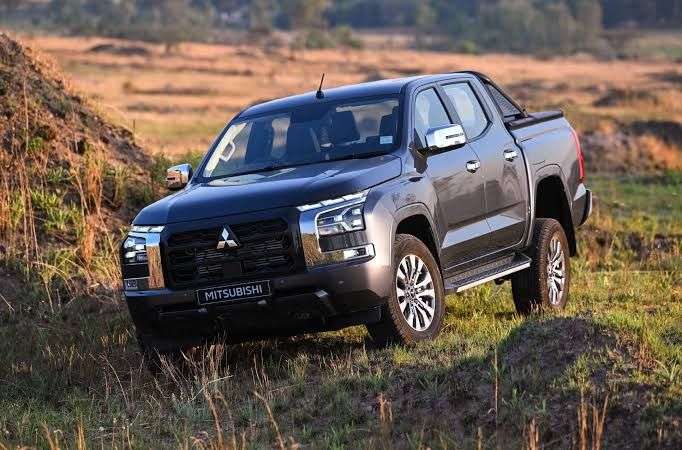
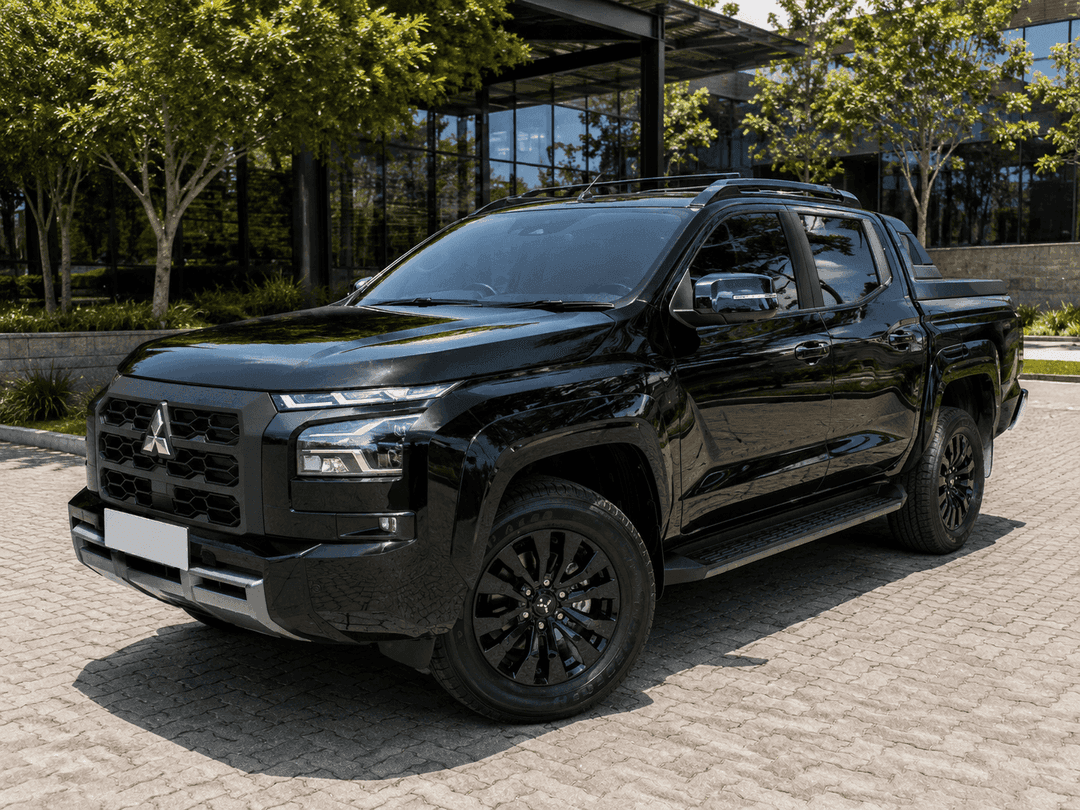
Mitsubishi’s facelift handed the Triton that aggressive Dynamic Shield nose - a black-trimmed Y-grille that splits opinion. In white, it looks the part; in silver, it fades into traffic. The Triton is shorter than the Ranger, a bit narrower, and noticeably easier to swing around tight spots. That turning circle? Magic in parking lots and even better when you’re threading past a gate post on a farm road.
Stance and segment placement
No, it’s not trying to play mini-Raptor. This is a genuine workhorse, but one that scrubs up pretty well from the rear three-quarter. Upper trims get proper side steps - low enough for kids, but easy to catch on a boulder when you’re inching down a rocky descent. I’ve heard the sound of side steps scraping granite and lived to regret it.
Wheels and ground clearance
Opt for the 18-inch wheels on higher trims, and you’ll get respectable Mitsubishi Triton ground clearance for SA’s battered district roads. Approach angles north of 30 degrees if you pick the right spec. The weak link? That long rear overhang. Departure angle isn’t great, and with a full load, the rear can get a bit floaty on gravel. Still, on Sani Pass gravel, it never felt nervous.
Cabin & Practicality
This is where the Triton’s years start to show. The dashboard, the analogue dials, the 7-inch infotainment - it’s all pure 2018, and not in a fun, retro way. Most surfaces are hard plastic, though there are a few stitched soft spots here and there. You get the sense someone in Okazaki cared, but didn’t fuss for long.
What works
- Steering column adjusts for both rake and reach - rare in this segment and a lifesaver for drivers of all sizes.
- Physical climate dials and real buttons for off-road modes - no touchscreen fumbling when you’re halfway through a tricky obstacle.
- Front seats are genuinely comfy for long hauls.
- The rear bench is fine for two adults or three kids. Three grown-ups? Only if you’re close friends or have a high tolerance for elbows.
Boot, tub and load space
Technically, it’s a load bay, but let’s talk Mitsubishi Triton boot space anyway. The tub is smaller than what you get in a Ranger or Hilux - payload sits at 900–945 kg for the 4x4 auto double-cab. High-mounted tie-downs are great for tall loads, less so for low stuff like rubble. No 12V socket in the tub - a real frustration if you’re camping. Small omission, big hassle.
On the Road
The 2.4-litre 4N15 turbodiesel puts out 135 kW in this auto 4x4, paired to a 6-speed Aisin auto that replaced the old 5-speed. That’s about 6.5% more power than the segment average, on paper at least. Torque peaks later than the Hilux 2.8 - 2,500 rpm versus 1,600 - so you’ll be working the gearbox harder when overtaking on the highway. It’s not lazy, just needs a bit of planning when loaded with five up and a boot stuffed with camping gear.
Ride and refinement
This is where the Triton quietly surprises. Loaded or empty, ride quality is near the top of the class. I’ve done long trps on battered tar - where a Hilux bounces, the Triton keeps its cool. Steering is light and accurate. At 120 km/h, wind noise is fine; tyre roar on coarse tar is the main offender.
Off-road behaviour
Super Select II is the trump card. You get 2H, 4H (centre diff open, so you can run 4WD on tar), 4HLc (centre diff locked), 4LLc. Higher trims add a rear diff lock and a terrain dial with four modes: Gravel, Mud/Snow, Sand, and Rock. I once took a GLS up a washed-out Jeep track - traction control gave up, but with the rear diff locked, it just walked up. The 700 mm wading depth? It’s real. I’ve seen Tritons charge through farm dam spillways that left Hilux drivers scratching their heads.
Gearbox quirks
The 6-speed auto generally behaves, but it will hunt between 4th and 5th on rolling hills. Some owners mention notchy shifts; usually, a transmission service or software tweak sorts it. Worth checking for on a used test drive.
Data & Comparison
Getting specific, most real-world tests peg Mitsubishi Triton 4x4 auto fuel consumption between 9.6 and 11.0 L/100 km. That’s not the claimed 8.6, but it’s honest for a bakkie this size. On a Sandton to Dullstroom run, two up with luggage, I logged 9.8 L/100 km at 115 km/h. That figure’s dead accurate.
Spec snapshot
| Metric | Mitsubishi Triton 2.4 DI-D 4x4 AT | Ford Ranger 2.0 EcoBlue 4x4 | Ford Ranger 3.2 TDCi 4x4 AT (2015–18) |
|---|---|---|---|
| Power (kW) | 135 | 125 | 150 |
| Gearbox | 6-speed automatic | Automatic | 6-speed automatic |
| Drive | 4x4 (Super Select II) | 4x4 | 4x4 |
| Indicative used price (ZAR) | ~R355 500 | R352 934 | R351 690 |
| Price delta vs Triton | - | −R2 566 | −R3 810 |
Ownership numbers that matter
- 5-year TCO estimate: R230 000 (fuel, servicing, tyres, consumables - finance not included).
- Mitsubishi Triton service plan in South Africa: 5-year/90 000 km service plan as standard, plus a 3-year/100 000 km warranty. Always check the service plan transfers on a used buy - most do, but insist on it in writing from the dealer.
- Segment trend: Double-cab search interest hovered between 62 and 66 points from June to November 2025. Bakkies aren’t going anywhere, so resale values hold steady.
Mitsubishi Triton price in the South African context
The last of the Heritage and Xtreme editions stickered well below Hilux Legend and Ranger Wildtrak prices, and the gap’s even wider used. A clean 2020 GLS 4x4 auto with 80–110 000 km and a full record trades in the same ballpark as a higher-mileage 2.0 BiT Ranger or a Hilux 2.4 GD-6. Only, you get a bigger engine and a 4WD system that rivals can’t touch. That’s the value case - plain and simple.
Known Mitsubishi Triton problems to inspect
- EGR and intake carbon build-up on the 4N15. If there’s a catch can fitted, that’s a sign the previous owner cared.
- DPF regeneration issues - city cars that never see the highway can have incomplete regens. Ask about regular highway runs.
- 6-speed auto shift quality - listen for harsh 2–3 upshifts. Typically, a transmission service sorts it.
- Side step damage - check for scrapes; those low steps get battered off-road.
- Rear suspension sag - bakkies used for heavy towing show it in the leafs. Consistent overloading? Rather walk away.
Mitsubishi Triton accessories in South Africa prices
Accessories are everywhere - the Triton’s been around long enough for local fitment shops and dealers to offer just about everything:
- Roll-top tonneau: R12 000–R22 000 installed.
- Colour-coded fibreglass canopy: R28 000–R45 000.
- Bull bar with winch: R15 000–R28 000.
- Tow bar with electrics: R6 500–R11 000 installed.
- Catch can kit: R3 500–R6 000 - money well spent, honestly.
- Snorkel: R7 500–R14 000 fitted - essential if you’re fording rivers often.
Verdict
Here’s the thing: the 2019–2023 Mitsubishi Triton 2.4 DI-D 4x4 auto is the clever buy for anyone who wants real off-road ability, a comfortable ride, and strong value - as long as you’re not fussed about a dated cabin, a 3 100 kg tow ceiling, or impressing the badge snobs at the braai. Perfect for overlanders, smallholding owners, contractors who use 4WD for work, and families who’d rather spend the savings on a rooftop tent than a bigger screen.
If you need to tow 3.5 tonnes, crave the latest dashboard, or want to trade up in three years for max resale, the Hilux is still your best bet. For everyone else, this is the smartest-money double-cab on South Africa’s used market - and that’s the point.
Summary
To sum it up, the 2019–2023 Mitsubishi Triton 2.4 DI-D 4x4 auto is a smart buy if you want real-deal off-road ability, a plush ride, and a sensible price — provided you’re not fussed about a cabin that looks a generation old, a 3 100 kg tow limit, or impressing badge snobs at the braai. It’s the perfect fit for overlanders, smallholding owners, contractors using 4WD for work, and families who’d rather spend the savings on a rooftop tent than a bigger screen.