Renault Kwid 1.0l Life 5-Dr ABS (2026) Review
The score says it all. As a car, the Kwid is mid-pack — outclassed on refinement, safety, and highway manners by just about everything else. But as a value-for-money city runabout for first-timers, it
Introduction
If you need the absolute cheapest new car in South Africa and spend most of your time in the city, the Renault Kwid 1.0 Life - now badged Evolution - still takes the crown. No, you won’t confuse it for a Polo or even a Grand i10, and the missing kit is obvious the moment you sit inside. But after Renault’s R18 000 price chop for 2025, the Kwid drops right to the basement of the new-car market. In a country where getting car finance feels like passing a Matric maths paper and sticker prices keep marching north, that’s a pretty big deal.
Key takeaway: Flawed, sure, but the Kwid’s honest pricing makes it a logical first car for city driving - just don’t expect to love it on long trips.
Design & Exterior
SUV looks, city-hatch budget
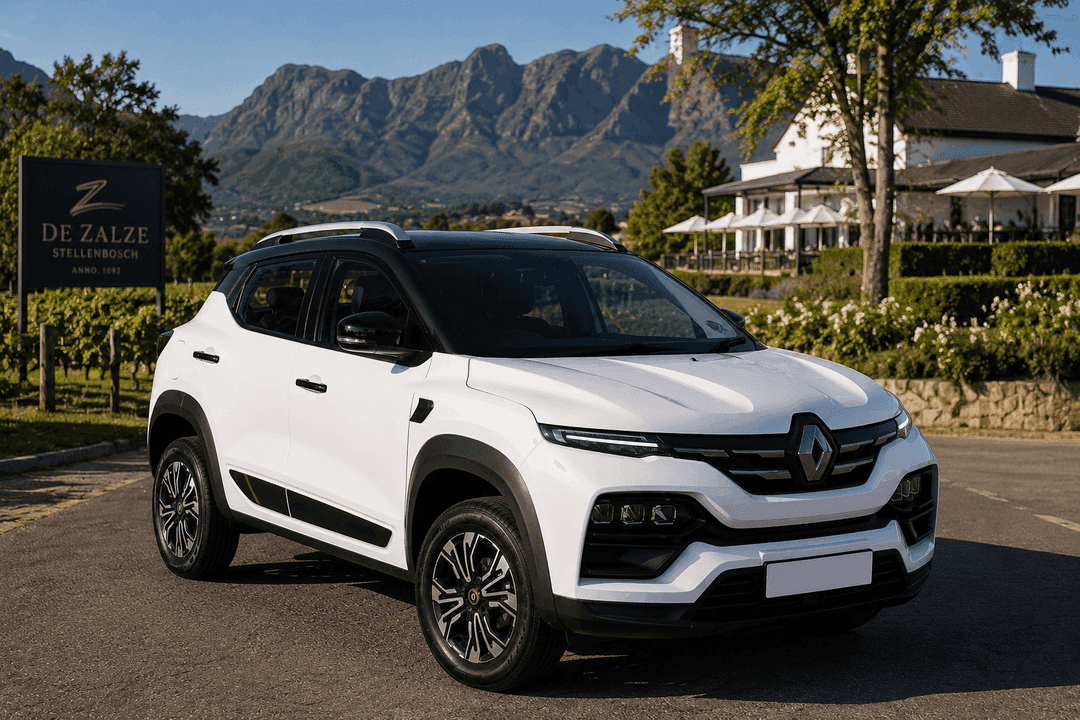
The Kwid’s faux-crossover style is half the appeal. Plastic arches, C-shaped DRLs, pretend skid plates - Renault knows first-time buyers want the baby-Duster vibe. I’ve watched more than one person at a dealer walk right past a Suzuki S-Presso, drawn to the Kwid's chunkier stance. Against a Toyota Vitz, the Kwid somehow pulls off a bigger look, even though it’s shorter and lighter on the tape measure.
Where the corners got cut
Step up close, and you’ll spot the economies. Three-stud wheel hubs. Door handles that flex if you yank too hard. Boot shutlines with that “good enough” finish. No one’s pretending this is a luxury car, and you need to know where Renault’s saved your rands before you sign that OTP.
- C-shaped LED daytime running lights - front and rear
- Black plastic wheel-arch cladding, side mouldings
- Roof rails on higher trims (purely for show)
- Three-stud wheel hubs - cost-cutting on display
- At least you get five doors as standard
Cabin & Practicality
Inside story
The 2025/2026 update finally sorted out the basics. That new 8-inch touchscreen with Apple CarPlay and Android Auto is a proper leap - before, you’d wedge your phone in the cupholder and hope it didn’t fly out on a pothole. Renault’s kept physical climate knobs (thankfully), so you can adjust the fan without digging into touch menus. After a week of city schlepping, I never once needed to jab at the screen just to cool down - and that matters in an entry-level car.
Materials and comfort
No luxury here: plastics are hard and grey everywhere. Steering adjustment? Forget it - no reach or rake, so you’ll sit where Renault puts you. Tall drivers will be wedged, knees up against the column. The seat is flat as Gauteng veld and forgets your lower back. On one run, I actually had to pull over to stretch out - a first for me in a compact hatch. The Kwid is fine for quick dashes, but there are comfier budget choices if you’re on the road all day.
What's the Renault Kwid's boot space and ground clearance
For city buyers, these figures matter:
- Boot space: 279 litres - generous for the class, beats most rivals if you pack smart
- Ground clearance: 180 mm - easily clears suburban speed bumps and won’t scrape on gravel near the Vaal
- Five seats on paper, but only four grown-ups will fit without complaints
- ISOFIX mounts for outer rear seats
With some Tetris skills, that 279-litre boot swallows a week’s groceries and a gym bag - just don’t expect to load four people and holiday luggage. That’s not what the KWID’s built for.
On the Road
City: where it belongs
With 68 hp from the 1.0-litre triple and only 700 kg to haul, the Kwid feels lively enough off the mark. The 5-speed manual is light, clutch action is effortless, and the turning circle makes city parking - try squeezing into Rosebank’s narrow bays - almost fun. In stop-go traffic, it’s honest and easy. That’s the point: the Kwid works where you need it most.
Highway: the compromise shows
Take the Kiwd onto the N1, and it’s a different story. My real-world fuel average landed at 5.4 L/100 km - about 0.7 higher than Renault’s claim of 4.7. That’s a couple of hundred bucks a year extra if you commute. The real worry is how it handles wind: on the stretch between Bloem and Colesberg, a gusty crosswind had me sawing at the wheel non-stop. And with no steering adjustment, you’ll feel it in your shoulders by the time you pass Trompsburg.
Refinement
The three-pot engine drones constantly, and above 110 km/h, conversation is a shout. Tyre roar on rough R21 tar can drown out the new touchscreen. For a 15 km city run, you’ll cope. On a long haul to Durban, by the time you hit Pinetown, you’ll be dreaming of a quieter car. I once did a Pretoria-to-Joburg airport dash with a mate, and we were both hoarse by the drop-off.
Data & Comparison
Spec splits that matter
With about 50 kW, the KWID sits roughly 24% below the segment average for power. That’s what you trade for the low price: less motor, fewer frills.
Renault Kwid price in South Africa and running costs
- 5-year/150 000 km warranty - solid for peace of mind
- 2-year/30 000 km service plan (with 15 000 km intervals) - shorter than Suzuki or Toyota rivals
- Estimated 5-year running cost: about R230 000, including fuel, servicing, and insurance for a typical urban user
- Parts support is strong - over 70 000 KWIDs sold locally since 2016, so spares aren’t an issue
The Renault KWID service plan South Africa is shorter than some rivals, so plan - either negotiate at purchase or budget for services after year two.
KWID vs rivals
| Model | Power (kW) | Avg price (ZAR) | Fuel | Notes |
|---|---|---|---|---|
| Renault KWID 1.0 | 50 | ~178 799 new | Petrol | Cheapest new passenger car in SA |
| Renault Captur 0.9 TCe (used) | 66 | 149 900 | Petrol | R4 368 cheaper, more cars, more risk |
| Renault Captur 1.2 TCe EDC (used) | 88 | 164 750 | Petrol | R10 482 cheaper, auto, EDC reliability question marks |
| Suzuki Ignis 1.2 Dualjet MHEV (used) | 61 | 139 900 | Petrol Hybrid | R14 368 is cheaper, mild-hybrid efficiency |
Here’s the trade: stretch for a used Captur or Ignis, and you’ll get more engine and refinement - especially the Ignis - but you’re also inheriting someone else’s risk and losing out on a new warranty. The KWID’s pitch is simple: brand-new, with a clean service history and no nasty surprises.
Segment trends
South Africans want crossover shape at base-model prices. Crossover demand has hovered between 34 and 42 points on rolling six-month stats up to November 2025; SUVs hit closer to 75. The KWID is aimed straight at that hunger, and nothing matches it for the money.
Verdict
Who should steer clear?
Pass if you do regular long-haul trips. Skip it if you often carry more than one passenger. If Global NCAP’s single-star safety bothers you, keep looking. And if a used Ignis or well-worn Polo Vivo fits your numbers, either will drive nicer for similar cash.
Summary
Buy the Renault KWID 1.0l Life 5-Dr ABS if you’re a brand-new buyer, live in the metro, do less than 30 000 km a year, and can’t stretch past R200 000. Buy it if you’ve looked at used cars and don’t want someone else’s headaches. Buy it if you value a new warranty over a more refined drive. More than 70 000 South Africans have already done the same — the formula works for real people.
Ratings
Pros
- ✓Buy the Renault KWID 1.0l Life 5-Dr ABS if you’re a brand-new buyer, live in the metro, do less than 30 000 km a year, and can’t stretch past R200 000.
- ✓Buy it if you’ve looked at used cars and don’t want someone else’s headaches.
- ✓Buy it if you value a new warranty over a more refined drive.
- ✓More than 70 000 South Africans have already done the same — the formula works for real people.