Suzuki Ertiga 1.5 GL (2026) Review
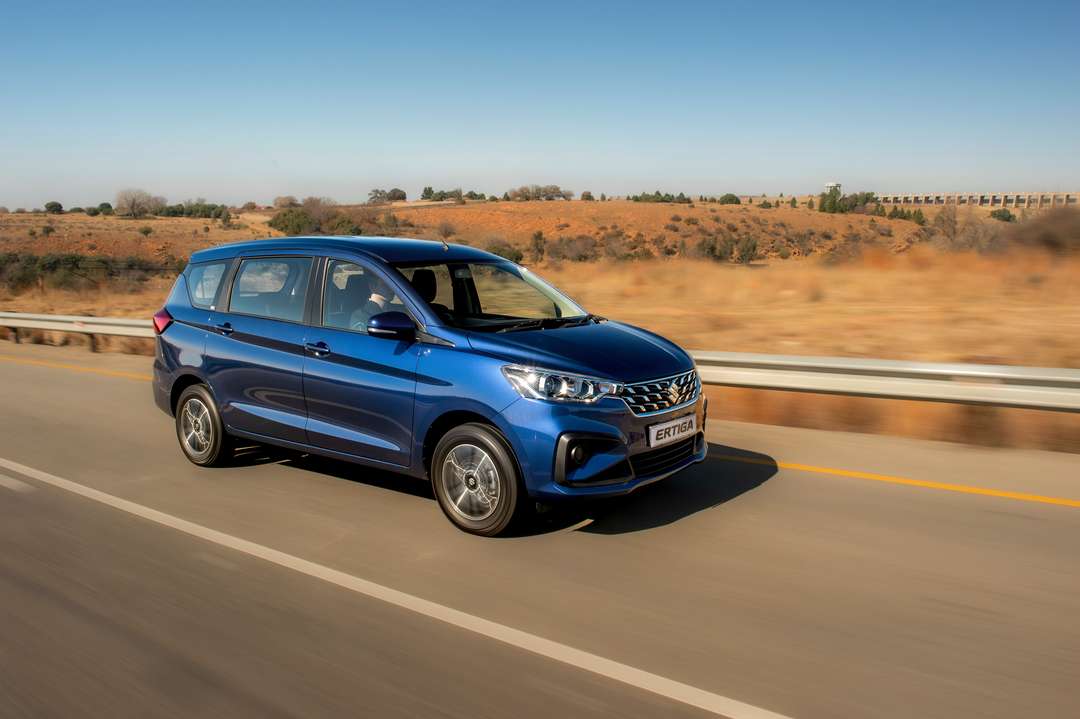
Affordable pricing, useful safety equipment and predictable ownership costs are the Ertiga’s strongest cards. Cramped third-row comfort over long distances and modest highway refinement keep it from scoring higher.
Introduction
Look, if a full-size seven-seat SUV sits beyond your budget but family duties, e-hailing work or a side hustle demand three rows, the Suzuki Ertiga makes a convincing case. Our suzuki ertiga review considers the 2026 line-up through South Africa’s affordable seven-seater debate, including the compromises you’ll notice and the essentials Suzuki hasn’t stripped away. To be honest, it isn’t the cheapest three-row car on our shores. One rival costs less. Yet this may be the cheapest option I’d willingly drive from Joburg to Durban with every seat occupied, even with the long climbs on the N3 along the way.
Key takeaway: Suzuki’s Ertiga is SA’s most affordable proper seven-seater, sacrificing outright pace and luggage room for useful safety equipment, good economy and manageable ownership costs.
Design & Exterior
Suzuki has never chased visual fireworks with the Ertiga, and the second-generation model remains refreshingly sensible. It looks like a tall, upright compact MPV rather than an SUV wearing borrowed hiking boots. I respect the honesty. Chrome slats brighten the nose, the flanks remain clean, and subtle shaping keeps the whole thing clear of delivery-van territory.
Dimensions that matter in a parking bay
Measuring roughly 4395 mm long and 1735 mm wide, it fits tight Sandton parkade bays without turning each visit into a three-point wrestling match. Ground clearance is around 180 mm, enough for rough gravel driveways and vicious speed humps, although nobody should mistake it for a Hilux. Suzuki built its local standing on thrift and durability, and this plain-but-neat design reflects a company that often out-executes louder brands on ownership costs.
Cabin & Practicality
Function rules inside. Controls sit where they should, the dashboard is easy to read, and higher trims gain a 7-inch touchscreen with smartphone mirroring. Most plastics are hard, but they feel ready for schoolbags, muddy shoes and years of family punishment. Luxury? No. Sensible and hard-wearing? Absolutely.
The third row: the whole point
Crucially, the rearmost bench is usable, which cannot be said of every “seven-seater” around this price. Adults can handle a school run, restaurant trip or airport dash, while children should be comfortable more regularly. Put two tall adults there from Bloemfontein to the coast and their knees will file a formal complaint. That’s the bargain.
Boot versus bodies: the core trade-off
- All seven seats up: around 153 litres. Think two soft bags or one compact folded pram, not luggage for a week away.
- Third row folded: roughly 550 litres, which should cover most owners’ daily needs.
- Both rear rows down: up to about 803 litres, with a useful near-flat floor.
ISOFIX mounts help with child-seat duties, while the folding combinations allow quick changes between passengers and cargo. Here’s the blunt bit: you can carry seven people or their holiday luggage, but seldom both together.
On the Road
Beneath the bonnet is a 1.5-litre naturally aspirated four-cylinder petrol engine producing 77 kW, sent to the front wheels through a five-speed manual in this GA specification. Quick it isn’t. An estimated 0-100 km/h run takes about 13.5 seconds with one person aboard, and a full load stretches that patience further.
City manners and highway reality
Around town, the engine responds willingly, the clutch is light and the gearing feels well judged. Easy steering also makes the Ertiga seem smaller in stop-start traffic. Out on the N3, overtaking requires thought. With seven aboard and a headwind on the climb towards Van Reenen, fourth gear becomes familiar and third sometimes joins the conversation. It is in these conditions that a vehicle’s true character is exposed. Patient, not punchy.
Ride and refinement over SA surfaces
Ride comfort is one of the Ertiga’s quieter talents. Across broken Gauteng tar, patched sections of the M1 and short gravel stretches, its suspension absorbs more punishment than the budget positioning suggests. During my test tenure, I heard the engine harden its voice on one long uphill overtake, but the body remained settled. Cabin noise rises noticeably beyond about 80 km/h, so extended cruising is busier than in dearer alternatives. My observed fuel return was 7.1 l/100km over 436 km of mixed urban, N1 and gravel driving.
Data & Comparison
Money explains the Ertiga better than any glossy brochure. The suzuki ertiga price range for 2026 spans three variants, with the entry manual making the strongest argument for fleets, e-hailing operators and careful family buyers.
Pricing across the range
- GA manual: from about R307 900 - the value choice and the focus of this test.
- GL manual: from about R347 900 - adds a touchscreen and extra everyday comforts.
- GL automatic: from about R366 900 - easier in traffic, although the dated four-speed auto hurts economy.
Viewed beside most seven-seat SUVs, the suzuki ertiga 7 seater price is dramatically lower. That gap matters to buyers facing rising fuel bills, toll fees and household budgets already bruised by load-shedding costs.
Running costs and ownership
- Claimed combined fuel economy of about 6.2 l/100km from a 45-litre tank.
- CO2 emissions of roughly 146 g/km.
- Warranty runs to a five-year/200 000 km promotional cover, with a four-year/60 000 km service plan.
- Estimated five-year total cost of ownership sits near R230 000, low for a three-row vehicle.
That warranty is serious ammunition for a value-focused brand. Few alternatives around this price offer 200 000 km of cover, and the service plan removes another source of early ownership anxiety. Suzuki’s broad dealer presence, including branches within the Motus and CMH networks, also matters outside major centres. Strong used demand helps the resale case.
How it stacks up
| Spec | Suzuki Ertiga 1.5 GA | Renault Triber | Toyota Rumion |
|---|---|---|---|
| Power | 77 kW | ~53 kW | ~77 kW |
| Seats | 7 | 7 | 7 |
| Airbags | Up to 6 | 4 | Up to 6 |
| Boot (seats up) | ~153 L | ~84 L | ~153 L |
| Entry price | ~R307 900 | ~R219 000 | ~R330 000+ |
Renault’s Triber wins the showroom-price argument, then concedes meaningful power and two airbags. Toyota’s Rumion is the Ertiga’s badge-engineered sister, sharing most of its mechanical package while generally charging extra for the Toyota emblem and dealer familiarity. For buyers comfortable with Suzuki’s growing local footprint, the Ertiga is the sharper deal.
Editorial Focus
SA's most affordable 7-seater: what you give up, what you don't
Here’s the fairer description. Suzuki’s Ertiga isn’t SA’s cheapest car fitted with a third row because the Renault Triber starts roughly R85 000 lower. Calling it the most affordable proper seven-seater is more accurate, and that distinction becomes clear once both vehicles carry people and have to build speed up an on-ramp before merging with traffic.
Buyers surrender outright grunt, generous luggage room with every seat raised and soft-touch cabin materials. Adults won’t enjoy the third row across provinces, highway noise builds, and the four-speed auto feels old beside modern transmissions. Suzuki isn’t hiding those shortcomings.
What remains is more important. Up to six airbags come standard across the range, backed by ABS with EBD, ISOFIX and rear parking sensors. You also retain 77 kW rather than the Triber’s strained output, giving a loaded Ertiga more breathing room when accelerating to join highway traffic. Then there’s the lengthy warranty, included service plan and resale strength generated by Suzuki’s steady rise on our shores. Choose something cheaper and you lose performance and safety equipment. Move into a seven-seat SUV and the bill can roughly double, whether you’re considering a Chinese newcomer or an established badge. The Ertiga holds the rational middle ground. As tested in 2026, that value equation did not disappoint.
Verdict
Suzuki’s Ertiga concentrates on the jobs that matter and leaves decorative frills behind. It won’t stir the soul like a hot hatch, nor can it haul like the Ranger, but it can move seven people affordably and with reassuringly low fuss for years.
- Buy it - budget families and e-hailing operators: choose the GA manual if genuine three-row seating, low running costs and a lengthy warranty matter more than shiny cabin trim.
- Shortlist it - small businesses and fleets: six-airbag protection, modest fuel bills and healthy resale prospects make it a sensible working vehicle.
- Wait - buyers wanting an automatic: the dated four-speed auto dulls performance and economy, so consider waiting for a transmission update.
- Walk away - long-distance seven-adult tourers: regular trips with seven adults and their luggage demand a larger, more expensive MPV or SUV.
Summary
Here’s the Suzuki Ertiga 1.5 GA MT for South African buyers, assessed for third-row space, everyday costs, safety and value against the Renault Triber and Toyota Rumion.
Ratings
Pros
- ✓Choose the GA manual if genuine three-row seating, low running costs and a lengthy warranty matter more than shiny cabin trim.