Suzuki Grand Vitara 1.5 Hybrid GLX (2026) Review
Excellent value, useful equipment and low running costs, held back by a leisurely mild-hybrid drivetrain wearing an ambitious badge.
Introduction
Buy the Suzuki Grand Vitara 1.5 Hybrid GLX if you want a sensibly priced family crossover with generous equipment, low running costs and genuine all-wheel drive in AllGrip guise. Three comparison pieces already cover the basics, yet none pins down what this mild hybrid returns at the pump. Our 2026 Suzuki Grand Vitara review focuses on that tested figure, the ownership sums and whether AWD is worth paying for.
Key takeaway: Frugal, affordable and usefully capable, but the “hybrid” badge describes mild assistance rather than electric driving. Buy it for value and AllGrip AWD, not pace.
Design & Exterior
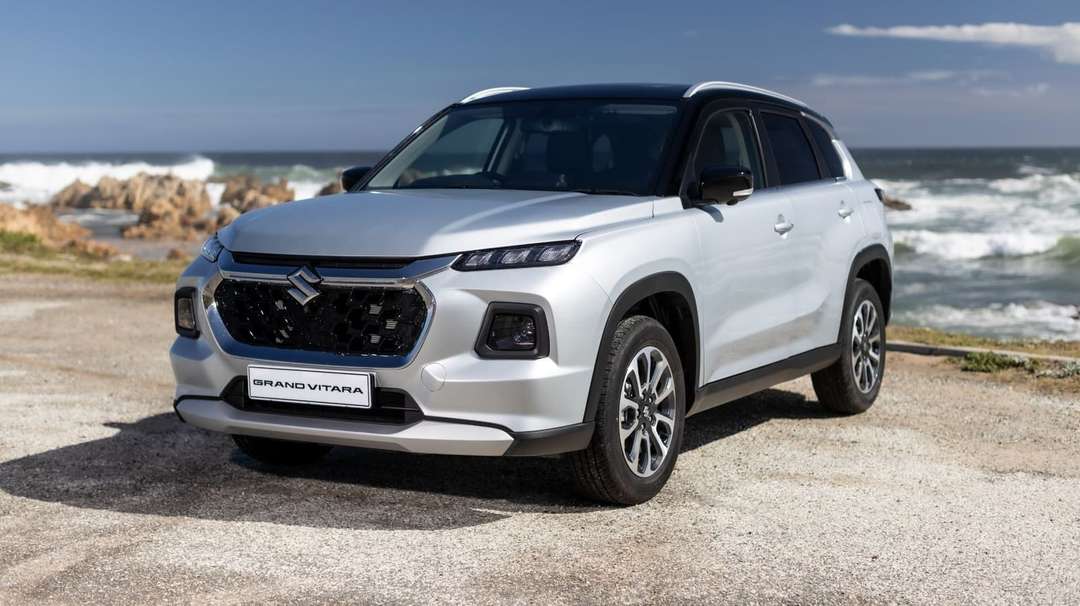
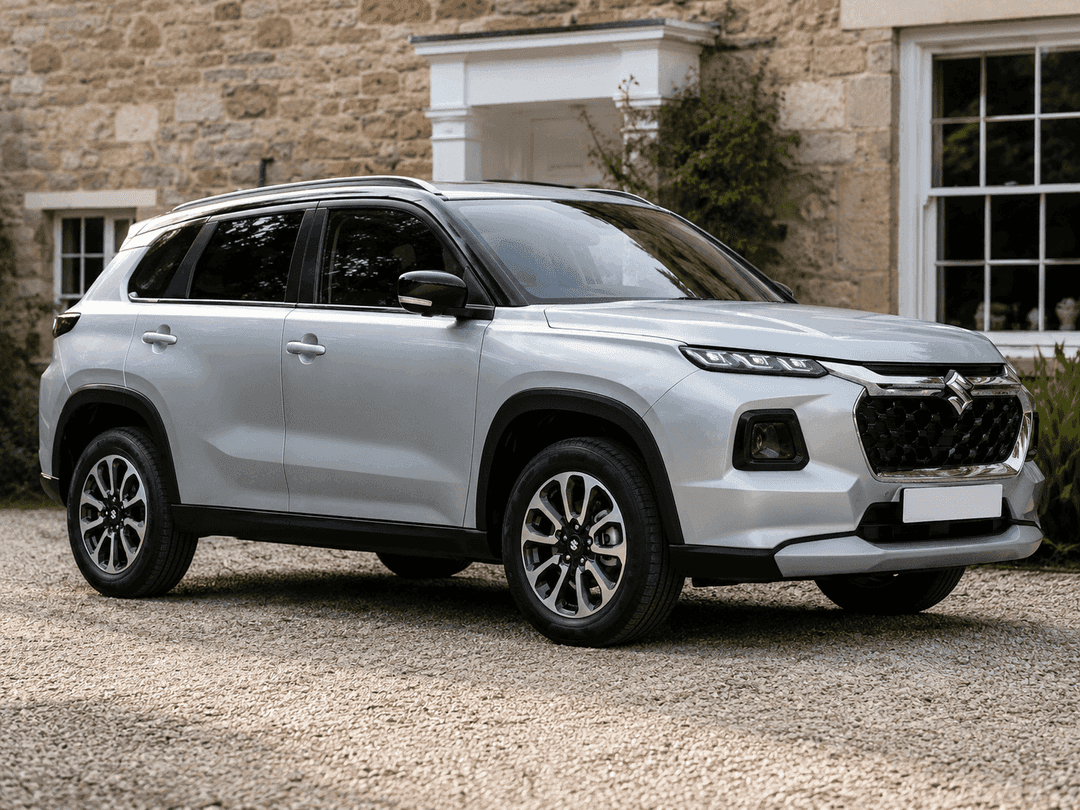
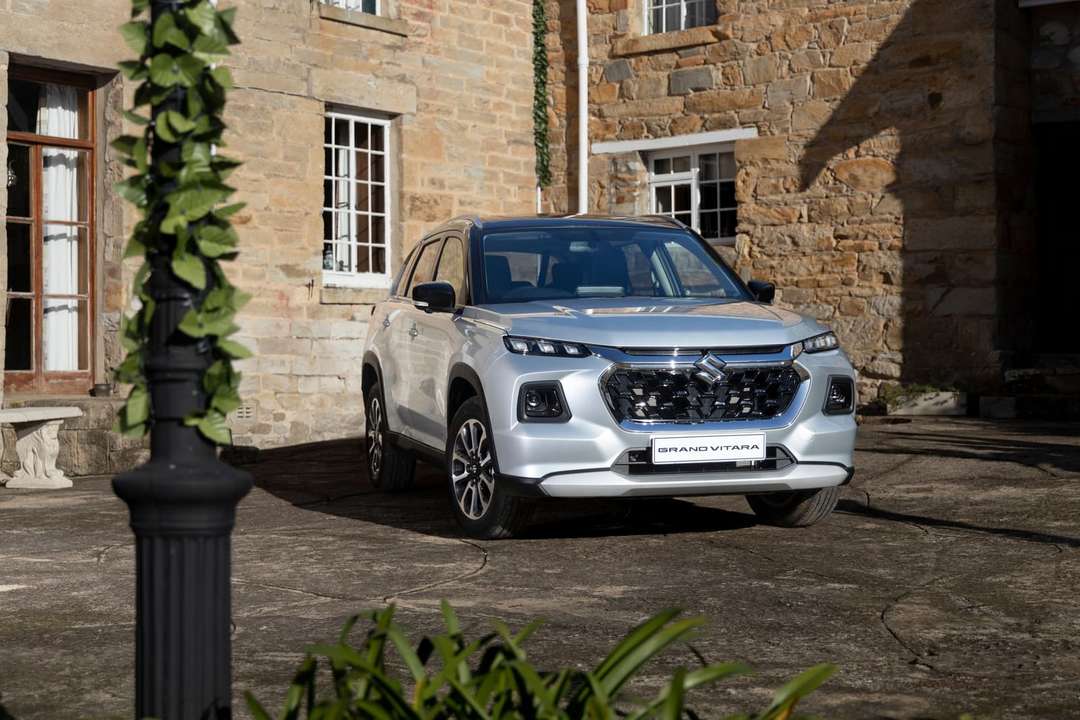
Square shoulders and an upright nose suit the Grand Vitara. It looks like an SUV, rather than another melted-jellybean crossover with black cladding pasted around its wheel arches.
With 210 mm of ground clearance, there’s useful space beneath the car when a gravel road develops a raised centre strip. Thick, unfussy arch protection should also survive farm gates and wayward supermarket trolleys.
GLX specification brings LED lighting, alloys and a two-tone roof on some builds. Handsome, but restrained. Across the range, from the base GL to this hybrid GLX, the flagship looks expensive without carrying a silly price.
Cabin & Practicality
Materials and controls
Suzuki gets the important cabin details right. Physical climate dials, proper drive-mode buttons and a real volume knob remove the irritation that comes with touchscreen-only controls.
Equipment is generous: a 9-inch touchscreen, head-up display, 360-degree camera and panoramic sunroof are standard. Some plastics feel hard and budget-minded, especially lower down, but the main touchpoints feel solid enough for family duty.
Space and boot
Five seats and five doors make it straightforward, while two adults can handle an N3 run to Durban without grumbling about rear legroom. The boot is less convincing.
Capacity is roughly 310 litres against the Toyota twin’s approximately 353 litres. That real 43-litre gap becomes obvious with a pram and weekly shopping, though it remains manageable if you pack smart.
- Boot capacity: approximately 310 litres (Toyota twin: approximately 353 litres)
- Head-up display and 360-degree camera standard on GLX
- Physical climate and drive-mode controls, not menu-buried
- Panoramic sunroof and 9-inch touchscreen included
On the Road
The powertrain reality
Call it a hybrid, but understand the limits. Suzuki’s SHVS mild-hybrid system uses a small battery for start-stop operation and light assistance, rather than meaningful electric-only driving.
No buyer-selectable battery size, charging port or DC charging speed exists here. You won’t glide silently away from home or worry about load-shedding interrupting a recharge. The 1462cc engine makes 103 hp and 138 Nm, and it still handles the real work.
Suzuki claims 0-100 km/h in 13.5 seconds, while independent testing of the AllGrip variant recorded roughly 13.3 seconds. Our own estimate was 13.4 seconds. Honest, then, but properly slow. Top speed is a stated 180 km/h.
Merging from a short R21 on-ramp requires planning, and the engine becomes vocal under load. Sound insulation could be better, especially when the gearbox holds revs during an overtake.
Ride and handling
Comfort restores the goodwill. Joburg’s broken suburban tar rarely unsettles it, highway stability is reassuring, and the steering stays light without feeling vague.
Corrugated Free State gravel also suits the Grand Vitara. That 210 mm clearance provides useful breathing room, while AllGrip gives owners who regularly use district roads more confidence than the usual front-driven crossover.
Data & Comparison
Tested fuel: the whole story
Official figures are 6.0 L/100km, 142 g/km CO2 and a 45-litre tank. Our mixed-road logbook showed 6.8 L/100km over 412 km, including urban traffic and open-road cruising at altitude.
Real-world mild-hybrid data from India, where this platform sells in volume, points to roughly 16 to 18 km/l combined. That translates to around 5.6 to 6.2 L/100km only with gentle driving. In stop-start traffic, expect closer to 7. The saving is modest, not magical.
- Claimed economy: 6.0 L/100km
- Real-world expectation: mid-6s to low-7s in mixed SA driving
- Tank: 45 litres, giving a practical highway range near 700 km
Pricing and ownership
Across 83 listings, the average Grand Vitara sits at R341,837, spanning R262,500 to R453,900. The 2026 crop averages R363,534, putting it within reach of buyers shopping across new and nearly new stock.
Current data places a three-year residual near R304,817. Estimated five-year total cost of ownership lands around R230,000, helped by affordable, widely available K-series spares and dealer coverage through groups such as CMH Suzuki. The warranty runs 5 years/200,000 km.
| Model | Power | Claimed fuel | Drivetrain |
|---|---|---|---|
| Suzuki Grand Vitara 1.5 Hybrid GLX | 103 hp / 138 Nm | 6.0 L/100km | FWD (AllGrip optional) |
| Toyota Corolla Cross (full hybrid) | Full HEV | Lower than Suzuki | FWD |
| Chery Tiggo Cross 1.5T | 108 kW / 210 Nm | 7.2 L/100km | FWD |
Editorial Focus
The tested-fuel case, cost, and AllGrip
Plenty of coverage gets distracted by the badge. Here’s the plain version: the Grand Vitara’s mild-hybrid system assists the petrol engine, but it isn’t a full self-charging hybrid with useful electric propulsion.
A full-hybrid Corolla Cross or Haval Jolion HEV will use less fuel. Every time. Buyers searching for the most fuel efficient SUV South Africa can offer should start with those full hybrids.
Ownership costs shift the argument. The Grand Vitara hybrid price, strong residual near R304,817 and roughly R230,000 five-year running cost create a broader value case than one fuel receipt can show.
AllGrip and the Toyota twin
AllGrip is the genuine differentiator. Almost nothing near R540k in this class offers proper all-wheel-drive hardware, although the premium is roughly R89,000 over the front-wheel-drive GLX Auto.
Most urban owners won’t need it. Buyers who face wet grass, gravel or farm roads every week might, and for them the lineup makes sense. Everyone else should save the money and take the front-wheel-drive GLX.
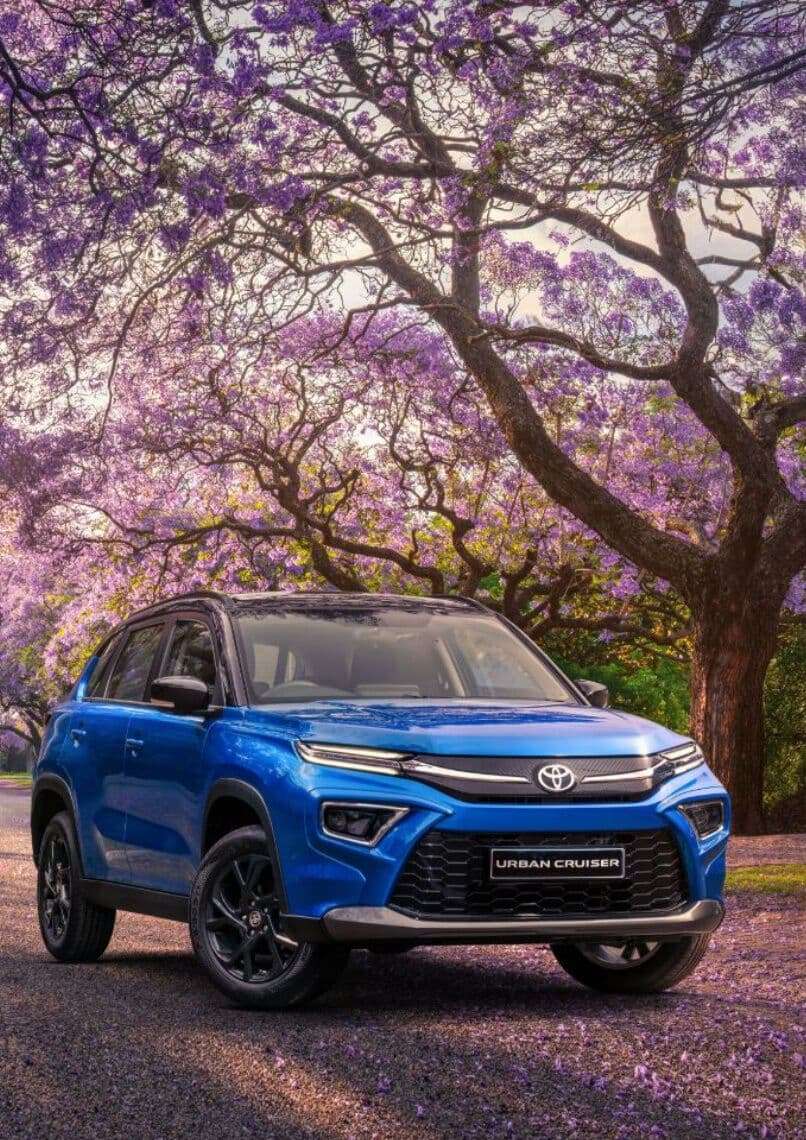
Against its Toyota twin, the ingredients are familiar: same engine, same platform. Suzuki generally charges less for automatics and includes more equipment, while Toyota counters with better boot space and stronger resale perception. Pick your priority.
Safety rating
ANCAP · tested 2006
★★★★☆ 4/5 adult occupant
Australian-market RHD rating — indicative for SA only where the SA derivative matches the tested safety spec (airbags/ESC/AEB). Official factsheet.
Verdict
Buy the Grand Vitara 1.5 Hybrid GLX for its equipment, low ownership costs and tough, honest character. Skip it if you want brisk performance, quiet acceleration or class-leading economy, as full-hybrid rivals do those jobs better.
One reason to wait remains. Should Suzuki introduce the overseas strong-hybrid version, which reaches roughly 23 to 25 km/l, the fuel argument changes completely.
I finished my week with it on a rain-soaked R59 back to Vereeniging. Its settled ride and useful 360-degree camera at a cramped fuel stop summed up the appeal: sensible features, sensibly delivered.
Summary
A full review of the 2026 Suzuki Grand Vitara 1.5 Hybrid GLX for South African buyers, covering real fuel use, five-year ownership costs, AllGrip all-wheel drive and its Toyota-built twin.