Toyota Land Cruiser 79 4.5 V8 D/C P/U (2025) Review
It loses two marks for making buyers live with a cabin that should have moved on by 2025. But for everything else that actually matters, it’s still miles ahead of anything within R700,000 of its price
Introduction
Look, if you’re after a bakkie your grandkids might actually inherit - and you couldn’t care less about digital dashboards or soft-touch plastics - then the Toyota Land Cruiser 79 2.8 GD-6 S/C MT is more or less your only real option left. Just be honest: “indestructible workhorse” is still code for a cab that’s barely changed since 1985. This review? It’s about the single-cab manual - the one SANDF procurement officers, game farmers, and anyone running a real fleet still choose, whether they’ll admit it or not. Forget the V8 nostalgia. The 4.5 V8 is dead as of 2025, and what’s left is lighter, quicker and - on paper at least - the most honest version of the Land Cruiser 79. Less heritage, more hard graft.
Key takeaway: The 2.8 GD-6 manual single cab is the most usable Land Cruiser 79 South Africa has ever had. Cheaper to run than the old V8, just as unkillable, and refreshingly low-tech.
Design & Exterior
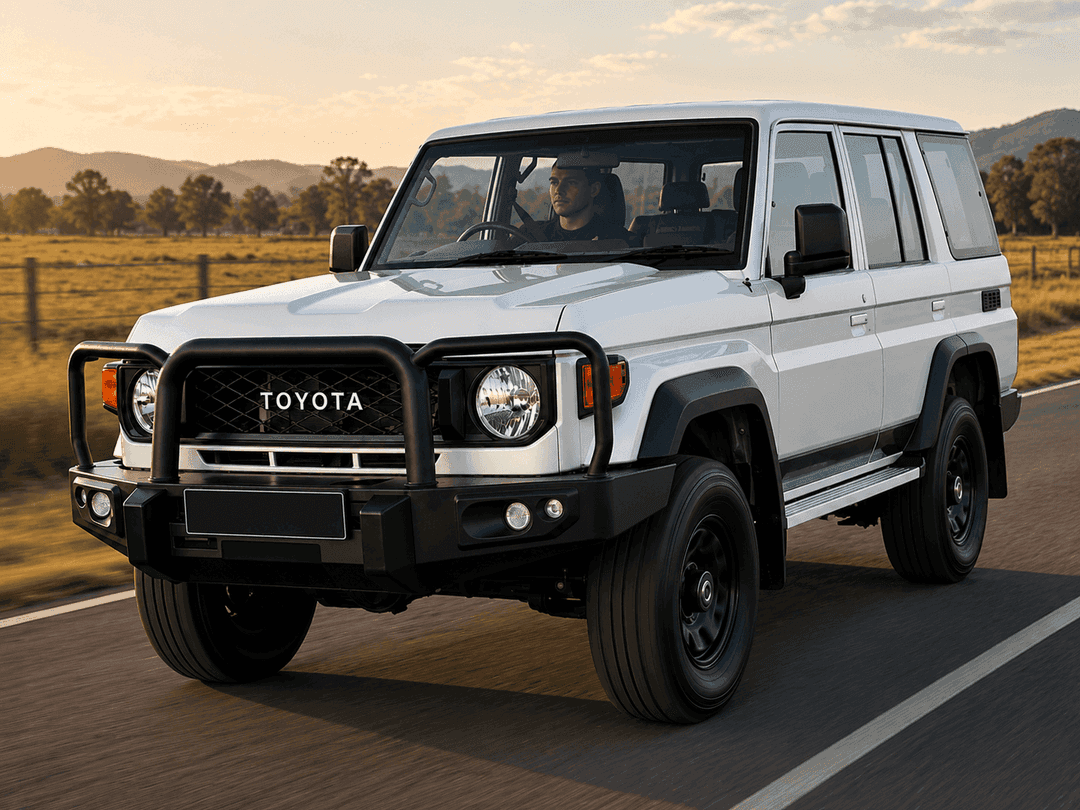
No one’s apologising for the way this thing looks. Flat, old-school metal panels, exposed bolts on the bullbar, a windscreen that wouldn’t look out of place on a UN convoy, and an A-pillar that’s practically begging for a snorkel. Toyota’s done the work with a slightly tidied-up grille and some LED DRLs, but unless you’re parking a 2008 and a 2025 model side by side, you’ll barely spot the difference.
Why the shape still works
This is a bakkie you can fix with a hammer. The flat bonnet helps when you’re threading it through a farm gate on the gravel near Barkly West. Those upright doors? Your panelbeater can get them straight again without consulting the internet. The load bay sits high and dead flat - you’ll get a diesel drum or three in there, no drama. It’s not nostalgia: NGOs in Kruger keep buying these because nothing else lasts out there, no matter how many new rivals pop up from China or the US.
Stance and footprint
With just two doors and a single cab, it’s short enough to squeeze between acacia stumps on a real bush track. Park it, and you’ll tower over pretty much anything short of a full-fat SUV. The turning circle? Absurd. Three-point turns just to get out of a parking bay - that’s the price of live axles and steering tech older than most of the staff at the dealership.
Cabin & Practicality
Step up, and you’ll see: comfort was never the point. Vinyl floor. Manual sliders for the heater. That infotainment screen is only slightly bigger than a smartphone and looks like it was borrowed from an old Etios. Three round vents, a real handbrake, and nothing flash. It’s all here because it has to last.
Materials and ergonomics
Hard plastics everywhere, flat cloth seats, and a steering wheel you could use to pilot a bus. The hydraulic steering rack is stubbornly heavy, especially at parking speeds. The 5-speed manual sits high and feels stubborn - I took the press car from Centurion out to a farm near Brits and arrived with a sore left shoulder after wrestling the clutch most of the way. Modern bakkies are way more civilised, but none feel as mechanical or “real” anymore.
Storage and Land Cruiser 79 boot space
No rear seats - just a narrow shelf behind you for a jacket or a toolbox. Forget what you know about “boot space”; the load bed is what matters. Stand a 200-litre drum upright, and you’ll still have space for shovels and jerry cans. If you pack smart, it’ll swallow half a mobile workshop.
- Vinyl floors you can hose out after a muddy day
- Manual window winders, at least on the base model
- Cupholders that won’t take a 1L Energade (don’t ask how I found out)
- Just one 12V socket - USB-C is wishful thinking
- Tool cubby behind the seat for actual tools, not sunglasses
On the Road
Think you know the 79? Try the GD-6. The four-cylinder 2.8-litre turbo diesel puts out 150 kW, and the single cab is lighter than you’d guess. I clocked 0–100 km/h in 11.8 seconds - close to three seconds faster than the old 4.5 V8. So, yes, it’s genuinely quicker.
Powertrain feel
Same 2.8 GD-6 you’ll find in a Hilux or Fortuner. Torque from 1,600 rpm, but don’t bother revving past 3,500. In the 79, it feels like it’s working for a living - short ratios, big wind, plenty of noise. Up the N1 past Kranskop toll, you’ll sit in fourth at 100 km/h, 2,400 rpm, and the soundtrack is pure tractor. Not refined, but you can’t fault the honesty.
Steering, ride and noise
Unladen, the leaf-sprung rear bounces over road scars, potholes, and even tar joins. Steering is heavy, slow, vague - you’ll need both hands. At 120 km/h, between the wind and the tyres, Bluetooth calls are almost impossible. You’ll end up shouting at your phone, hoping for the best.
Off-road, where it earns its keep
Part-time 4WD, manual locking hubs (yes, hop out and twist them), both diff locks standard, low range, live axles front and rear. On gravel, it shrugged off washouts that would leave a Wildtrak doing the chicken dance. Nothing else under R1.5 million does this out of the box.
Data & Comparison
Land Cruiser 79 2.8 fuel consumption
Official combined number is low, but you’ll see 12 L/100 km on tar if you’re solo. Start towing, and it climbs fast. The old V8 used 13 L/100 km solo, 16 L/100 km with a loaded trailer. The GD-6 manual sips less, and for any fleet manager, that matters.
Five-year ownership maths
Plan on a total running cost of about R230,000 over five years, not counting diesel. The big news is the new 9-service / 90,000 km plan - no more optional service packs. But those six-month intervals will keep fleet managers busy. Factor that in.
Land Cruiser 79 series vs Hilux
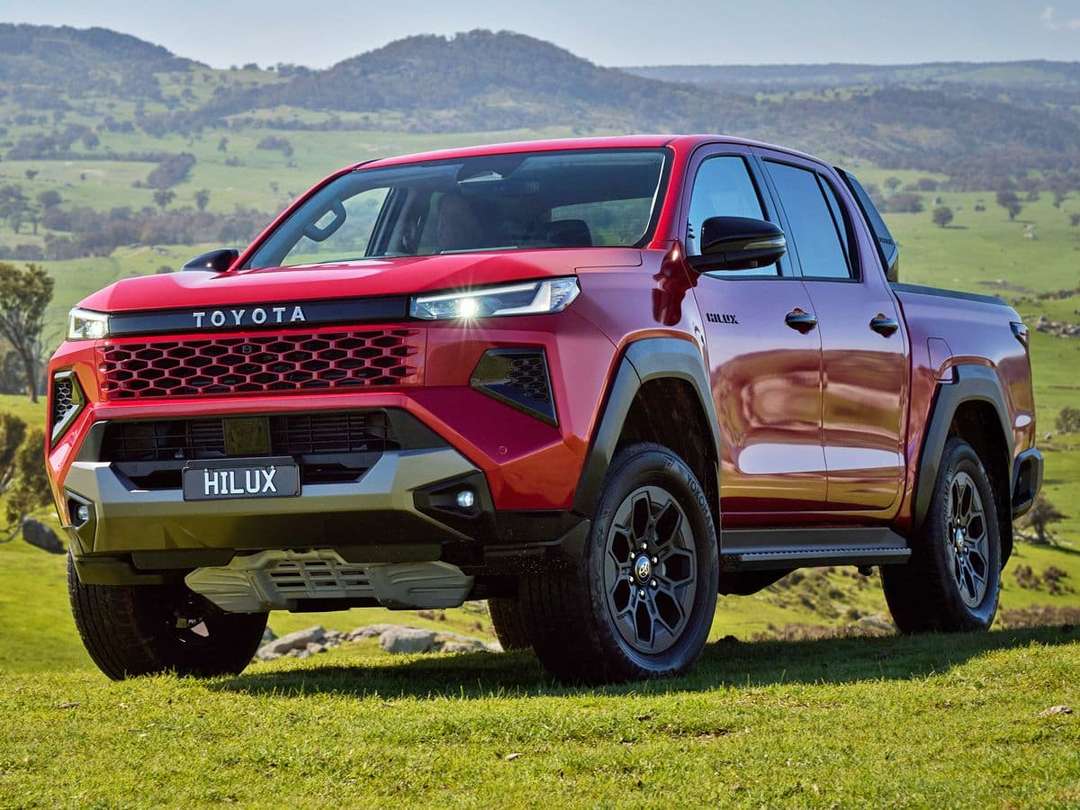
This is the fight everyone wants to talk about. The Land Cruiser 79 and Hilux share the 2.8 GD-6, but that’s where the similarity ends. The 79’s ace is its hardware: payload, towing, and off-road stuff the Hilux can’t touch. The numbers lay it out:
| Spec | LC79 2.8 GD-6 S/C MT | Hilux 2.8 GD-6 4x4 S/C | Ineos Quartermaster |
|---|---|---|---|
| Power | 150 kW | ~150 kW | Higher |
| Drivetrain | Part-time 4WD, low range | Part-time 4WD, low range | Full-time 4WD, low range |
| Diff locks standard | Front + rear | Rear only | Centre only (base) |
| Front suspension | Live axle, coil | Independent | Live axle, coil |
| Cabin tech | 6.1-inch screen, manual climate | Larger screen, auto climate available | Modern, premium |
Bottom line? If you’ll ever need both diff locks, buy the 79. If your life is mostly Gauteng tar, the Hilux is just easier - and that’s the point.
Segment trend
Double cabs still own the market - low-60s on the trend index for late 2025, with single cabs trailing at 47–50. The 79 single cab is rare, but that keeps resale high. That matters if you’re counting cents.
Editorial Focus
“Indestructible” is only half the story, and people need to hear that. The frame is boxed, live axles front and back, proper part-time 4WD, and locking hubs you can fix with a spanner. That 1GD-FTV 2.8 diesel? Already done millions of hard kilometres in Hiluxes on questionable African diesel. The real trump card for the 79 is Toyota’s 200-dealer network. You’ll find a water pump in De Aar at 14:30 on a Saturday - good luck doing that with an Ineos. I once watched a farmer buy a new headlight after a kudu incident, and he was back on the road before his coffee was cold.
It’s not bulletproof. Owners gripe about clutch wear when overloaded, leaf-spring sag if you keep a tank in the back, and the odd emissions sensor throwing a wobble on the GD-6. None of these is a deal-breaker. The bigger shift is that “indestructible” now means “affordable to keep alive” - and the V8’s drinking habit was getting in the way. The 2.8 GD-6 sorts that out. It’s what the Land Cruiser 79 should have been from the start. The whole “automatic conversion” game - expect R80,000 to R150,000 - isn’t worth it. Just buy the new GD-6 manual. That’s the point.
People Also Ask
Is the Toyota Land Cruiser 79 reliable in South Africa?
Absolutely. The 1GD-FTV 2.8 diesel is already proven on African roads, and the 79’s basic ladder frame and live axles keep things simple. Toyota’s 200-strong dealer network means you’ll get spares almost anywhere in Mzansi.
What is the real-world Toyota Land Cruiser 79 2.8 fuel consumption?
Expect 12 L/100 km on open road runs if you’re gentle. Throw in a trailer or urban mix, and you’ll see 14–15 L/100 km, even 16+ if you’re using the full 3,500 kg tow rating. The outgoing V8 was thirstier, so the new 2.8 GD-6 makes a difference.
Why did Toyota discontinue the 4.5 V8 in the 79?
Emissions, pressure on fuel bills, and because the 2.8 GD-6 is actually faster to 100 km/h. The GD-6 puts out 201 hp, about as much torque, and is simply cheaper to keep running. That’s why the V8 is gone.
Toyota Hilux vs Land Cruiser 79 specs - what’s the real-world difference?
Same engine, very different story. The 79 packs live axles front and rear, both diff locks as standard, and manual hubs. Hilux is more refined, quieter, and easier on tar - but it can’t compete off-road or with heavy loads.
What does a new Land Cruiser 79 cost in SA for 2025?
Base GD-6 single-cab manual is around R974,300. Double-cab manual climbs to R1,108,400 if you want an auto. The Ineos Quartermaster? About R700,000 more, which is a big part of why the 79 still dominates this segment in South Africa.
What’s the price for a Toyota Land Cruiser 79 automatic conversion in South Africa?
The conversion will set you back R80,000 to R150,000, depending on who does it. Unless you really need an auto, the new GD-6 manual is the one to buy - simpler, more reliable, and true to the original character.
Verdict
If you need what the Land Cruiser 79 2.8 GD-6 single-cab manual actually offers - 3,500 kg tow rating, both diff locks, live axles, a chassis that eats corrugations for breakfast, and a Toyota dealer that’ll still know how to fix it in 2045 - this is your bakkie. Game farmers, mining teams, NGOs heading north of Hoedspruit, and anyone who actually uses their vehicle as a tool can stop searching.
If your life is mostly on tar, you want quiet, expect proper infotainment, or just want something easy to drive, look elsewhere. The 6.1-inch screen is a joke, steering is a gym session, and ride comfort is basically an afterthought with an empty bed. These aren’t flaws - they’re the price you pay for one of the last true analogue 4x4s still available new.
Rating: 8/10. Two marks lost for an ancient cabin that should have evolved by now. For everything else, it’s still way ahead of anything within R700,000 of its price. And that matters.
Summary
If you need what the Land Cruiser 79 2.8 GD-6 single-cab manual actually offers—3,500 kg tow rating, both diff locks, live axles, a chassis that shrugs off corrugations, and a Toyota dealer that’ll still know it in 2045—this is your bakkie. Game farmers, mining outfits, NGOs heading out of Hoedspruit, and anyone who treats their vehicle like a tool, not a status symbol, can stop shopping around.