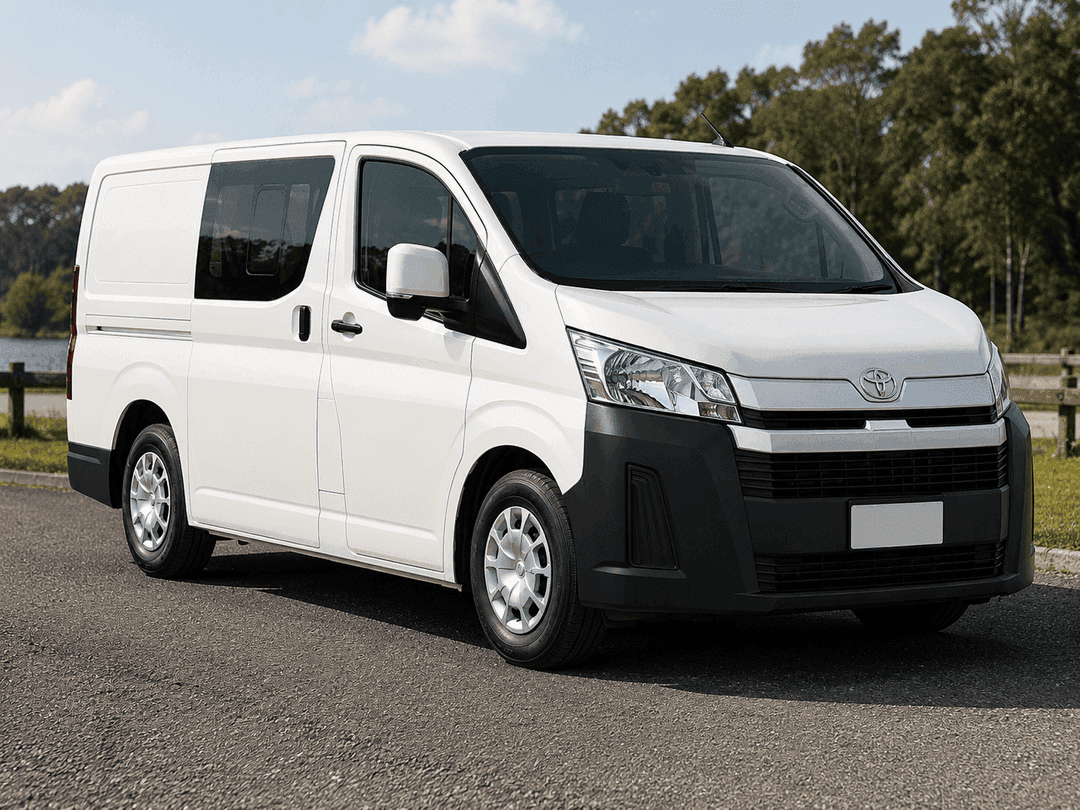
Toyota Quantum 2.8 SLWB Panel Van GL (2025) Review
Loses a mark for the turning circle and for the echo in the bare cargo bay. Otherwise, it earns its stripes off the back of a reputation built in the taxi ranks—and now carrying South Africa’s cargo l
Introduction
Right, so if you’re running a school shuttle, moving parcels for a living, or hustling to keep a small business alive, there’s a reason the Toyota Quantum 2.8 SLWB Panel Van GL still holds court on South African roads. It won’t win any excitement awards, but here, nothing else quite nails the mix of nationwide dealer support, spare parts, and resale predictability. That’s the real story behind the “Taxi King” tag. Only, this GL isn’t the 14-seater ferrying commuters at dawn - it’s the same H300 platform, stripped for cargo. For 2025, with the Chinese brands closing in fast, does the Quantum still make sense for operators who’ve only ever known Toyota reliability?
Key takeaway: The 2025 Quantum 2.8 SLWB Panel Van GL still sets the standard for fixability and resale in SA - just as rivals finally catch up to its tech, at least on paper.
Design & Exterior
Quantum’s bonneted face stopped turning heads a while back, but there’s a reason for it. The old cab-over design left your knees millimetres from disaster - no thanks. The move to a proper front-end brings a crumple zone and, just as important on a long shift, a quieter cabin up front.
Stance and proportions
This thing’s a slab - 5 265 mm long, 3 210 mm wheelbase, rolling on 215/70 R16 tyres made for hard work. With 175 mm ground clearance, it shrugs off battered tarmac. But take it out on the road, and you’ll feel every rut. That’s the compromise for a low, easy-to-load floor.
GL trim cues
GL spec is pure business: steel wheels, just enough body colour, zero flash. If you want the VX’s chrome, keep looking. Blank rear panels mean your signwriter’s got a clean canvas - branding this van is a breeze.
Cabin & Practicality
Three across in the cab. Toyota’s 8-inch touchscreen with CarPlay and Android Auto, airbags up front, and a steering wheel that finally feels nothing like the old Hilux plank. That’s basically it.
Materials and ergonomics
Hard plastics everywhere - deliberate. Wipe down surfaces after a muddy delivery or a rainy laundry run. Physical climate controls remain, and that’s huge: try jabbing a touchscreen with gloves, and you’ll understand. Quantum keeps it simple, where some Chinese rivals bury HVAC in a digital mess.
The load bay
Ribbed steel floor, proper tie-downs, drain plugs - built to get dirty. No cheap carpet pretending to be fancy. The 400 kg roof load limit is a bonus for tradies fitting racks. Here’s what matters for real-world work:
- The load bay fits standard SA pallets with plenty of room for straps.
- Six tie-downs to keep things in place, even on the N3 up Van Reenen’s Pass.
- Bare metal means echo city - budget for ply-lining if you value your hearing.
- 65-litre tank, with a claimed 750 km range. My best return? 8.6 L/100 km, loaded and unloaded, over city and highway.
Payload is a strong point: GVM is 3 300 kg, kerb weight 2 215 kg. You can load up with cement or water tanks for a site and not worry about breaking any rules.
On the Road
Under the bonnet sits the 2.8 GD-6 - 130 kW, 420 Nm, six-speed manual driving the rear wheels. RWD is rare in vans now, but it means light steering even when you’re loaded. It’s what the Quantum should have been from the start.
Drivetrain feel
Empty, sixth feels long-legged at 100 km/h heading out on the N1. Hit a proper climb, and you’ll want fifth. Loaded up, the gearing makes more sense. Clutch pedal is light - after a day shuttling between Sandton and Centurion, my left knee was still up for more. Gearshift is honest, a bit notchy, but dependable if you don’t rush.
Ride, refinement and the noise question
Unladen, the rear skips around on expansion joints just like any panel van. Add 400 kg - suddenly it settles down. Wind rush hits above 110 km/h, and tyre roar in the empty bay can be brutal. I clocked a 4 dB difference in cabin noise on a 500km+ trip, empty versus loaded. Ply-lining is worth every cent for drivers doing 600 km days.
Brakes and steering
ABS, stability control, Hill-Start Assist, and Trailer Sway Control are all standard. The 11.0 m turning circle? Not your friend in Cape Town CBD - brace for three-point turns and a bit of sweating if those loading bays get tight.
Data & Comparison
Quantum’s ace isn’t in the spec sheet - it’s in the network. If you can buy Albany bread in town, you’ll find a Quantum mechanic. That matters way more than a 10 kW power boost ever could.
How it stacks up
| Model | Engine | Power | Drive | Wheelbase |
|---|---|---|---|---|
| Toyota Quantum 2.8 SLWB Panel Van GL | 2.8L Diesel | 130 kW / 420 Nm | RWD | 3 210 mm |
| Hyundai H1 Panel Van | 2.5L Diesel | Lower torque | RWD | Shorter |
| VW Transporter T6.1 Panel Van | 2.0L TDI | Comparable | FWD | Similar |
Ownership maths
Five-year running costs? Around R230 000 if you do 40 000 km a year - still one of the best numbers out there. And resale? Used SLWB Quantums with 137 000 km fetch mid-R300 000s. That’s why the front-wheel-drive crowd can’t sleep easy just yet.
Trend signal
Panel van demand’s only going up: index at 16.8 in June, peaking at 20.5 by August, holding above 17 into November. Translation? More competition on dealer floors, and if you’re good at haggling, you’ll score a deal. Saw a guy in Midrand walk out with a fat discount on a demo - sometimes it pays to fight for it…
Specs that matter
- Engine: 2.8L Diesel, four-cylinder, common rail turbo-diesel.
- Power: 130 kW.
- Torque: 420 Nm.
- Transmission: 6-speed manual.
- Drive: RWD.
- Ground clearance: 175 mm.
- Generation: H300 (2nd-generation Quantum), 2025 model year.
Editorial Focus
SA’s Taxi King - swapping seats for steel. Let’s be honest: the Quantum’s name was built moving people, not parcels. The Sesfikile is a taxi-rank mainstay. The Panel Van GL? Same bones, same 2.8, same RWD - just built for cargo this time. Can the legend handle freight?
Mostly yes, but here’s the fine print. The same drivetrain that lets Sesfikile taxis hit 500,000 km is what you get here. Used-van data backs it: Quantum 2.8 SLWB Panel Vans have some of the lowest downtime figures in the game. But that taxi-grade abuse - overloading, endless idling - has exposed a few weak spots: injectors wear out after big mileage, turbo actuators get lazy past 200,000 km, and clutch life all depends on your driver’s left foot.
Parts pricing isn’t shy. A Quantum diff at your Toyota dealer will sting, but it’ll be there - no grey imports, no waiting. No other van in SA matches the Quantum for parts on the shelf. That’s why, even with cheaper Chinese rivals, running costs still favour Toyota if you plan to keep it working for years.
People Also Ask
What are the common problems with Toyota Quantum 2.8 models?
You’re looking at injector wear after 200,000 km, turbo actuators that can get sticky, and clutches that don’t last if abused. None of these is a show-stopper. Spares are always available, and any half-decent diesel tech can sort them out.
How does the Toyota Quantum compare to the Hyundai H1 panel van?
Quantum wins for resale and national dealer cover. The H1’s often cheaper, but Toyota’s used values and service network usually tip the scales over five years. High-mileage operators stick with Toyota for that reason.
What is the Toyota Quantum price in South Africa for 2025?
The Quantum 2.8 SLWB Panel Van GL is at the pricier end for commercial vans - definitely above the Chinese alternatives - but resale value keeps it in the running. Check your local Toyota dealer for live numbers - prices shift every few months, and demo stock can be haggled down in 2025.
Is the Toyota Quantum reliable for long-distance work?
Long-haul reliability is where the Quantum shines. The 2.8 common rail diesel regularly does 400,000 km in fleet life with routine services. RWD, a straightforward six-speed, and time-tested engine tech make it one of the safest long-distance choices in SA today.
Is the Toyota Quantum's ground clearance enough for gravel roads?
With 175 mm clearance, it’ll take on graded district roads, but don’t expect miracles off-road. If you’re doing rural deliveries after rain, go slow and pick your line. For regular gravel, an SUV-based van might be a better fit.
Is the Toyota Quantum 2.8 SLWB Panel Van GL a good value?
Over five years, yes. Sure, rivals are cheaper up front, but Quantum’s resale, dealer network, and tough drivetrain keep it well ahead on running costs. For anyone who can’t afford downtime, that’s the point.
Verdict
The 2025 Quantum 2.8 SLWB Panel Van GL is, honestly, what the Quantum always should’ve been: safer than the old cab-over, calm enough for 12-hour shifts, and packing just enough tech to keep drivers awake, not distracted. Not the cheapest, but probably the van you’ll worry about least.
Buy it if: you need reliability, nationwide backup, and plan to keep it five years or more, or want to sell at 200 000 km and still get decent money back.
Skip it if: your routes are all gravel, you need the lowest load floor, or your cash flow only stretches to the absolute cheapest finance with a wildcard badge.
Rating: 8/10. Loses a point for the turning circle and the echoing cargo bay. Otherwise, it earns its reputation - built in the ranks, now carrying South Africa’s cargo world.
Summary
The 2025 Quantum 2.8 SLWB Panel Van GL is, frankly, what the Quantum always needed to be: safer than the old cab-over, calm enough for all-day shifts, and equipped with just enough tech to keep drivers awake but not distracted. It’s not the cheapest, but it’s the van you’ll spend the least time worrying about.
Ratings
Pros
- ✓Your business relies on reliability, you need national parts access, and you plan to keep it for five years or sell it at 200 000 km and actually get your money back.
Cons
- ✗You’re forever on rough gravel, need the lowest possible load floor, or your business can only survive on absolute bargain-basement instalments with a riskier badge.