2026 Toyota RAV4 Review: 142km Without Petrol — Is It Worth R1.04m?

A genuinely efficient, solidly built family SUV hampered by ambitious pricing and a PHEV whose appeal depends entirely on charging access many South Africans still don’t have.
Introduction
Look, the new Toyota RAV4 comes down to two numbers: the plug-in hybrid’s claimed 142km electric range and its R1,043,900 price. My verdict is simple. The self-charging 2.5 HEV is the rational buy, while the PHEV only really makes sense if you have reliable charging and can plug in regularly. A nearly-new fifth-generation Hybrid VX with the balance of its plan can also make a compelling case against much of the new range.
Key takeaway: The 2.5 self-charging Hybrid is the sensible heart of the range. The R1m PHEV requires dependable daily charging, while a used Hybrid VX could be the smartest deal.
Design & Exterior
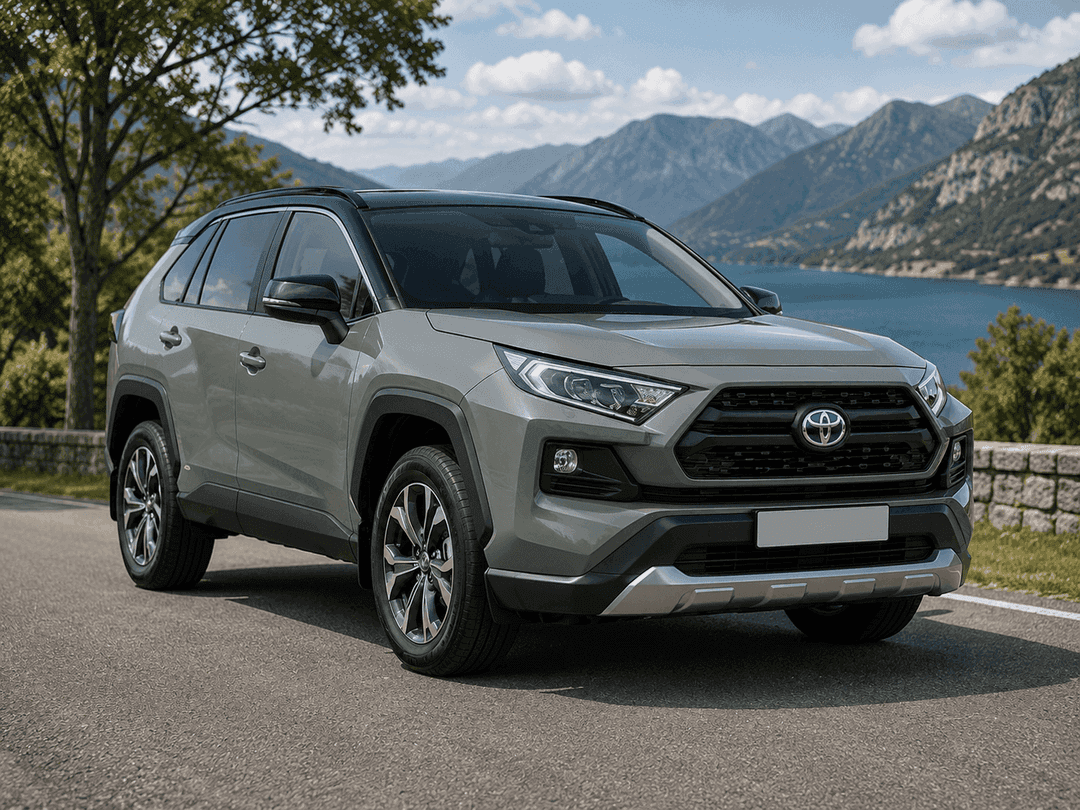
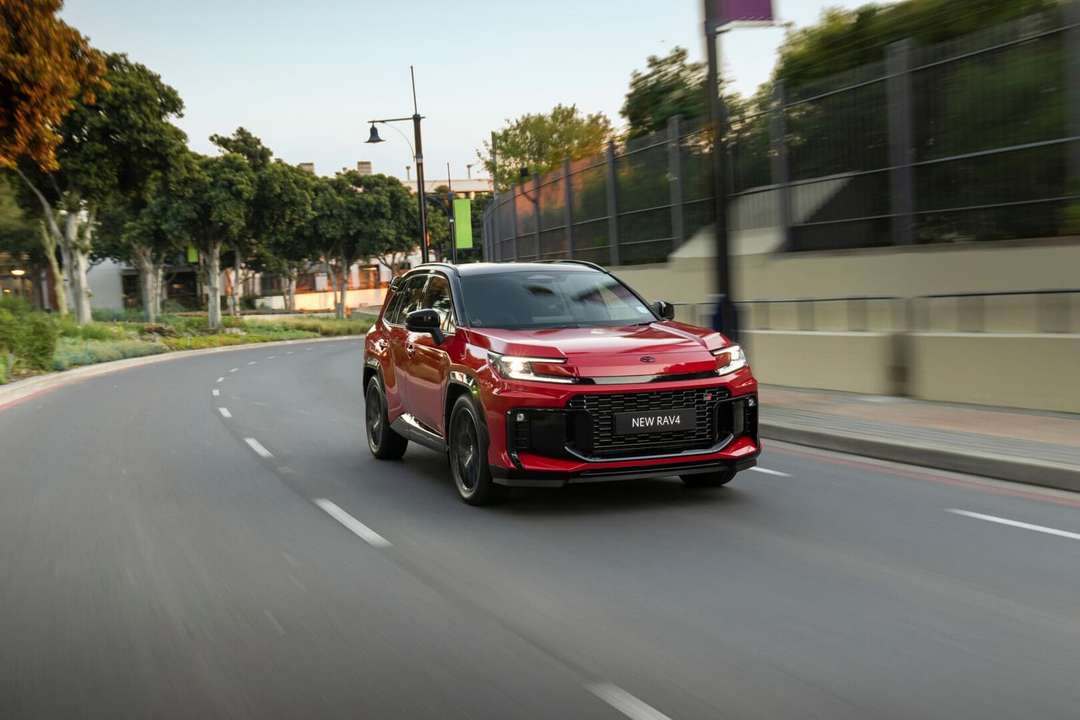
Toyota has toughened the RAV4’s face. Its blockier nose, upright stance and squared wheel arches borrow some attitude from the Hilux without turning this family SUV into a cartoon. Beside softer Chinese crossovers, it looks purposeful rather than needlessly aggressive.
Beneath it is an evolution of the outgoing fifth-generation architecture, not a clean-sheet replacement, with a claimed rigidity gain of roughly 9.7 percent. Dimensions barely change. Ground clearance remains 200 mm, enough for corrugated gravel or a rutted farm track without pretending it’s a Land Cruiser.
GR-Sport models receive worthwhile visual and mechanical changes, including a wider track, revised steering and reworked suspension. Good. It’s more than badges and bumpers.
Where it sits in the segment
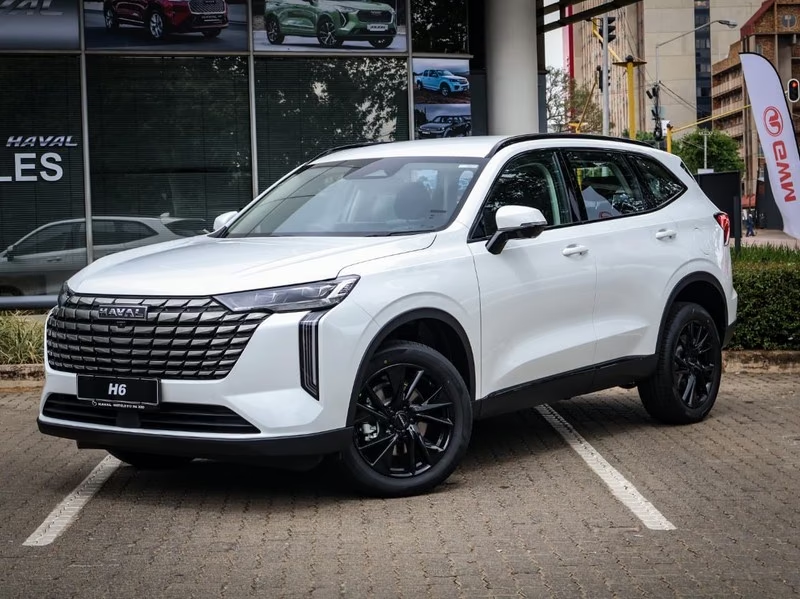
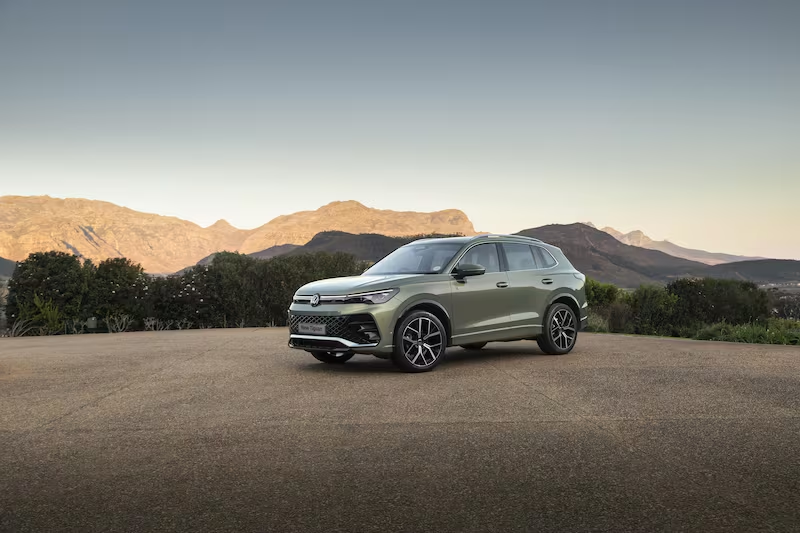
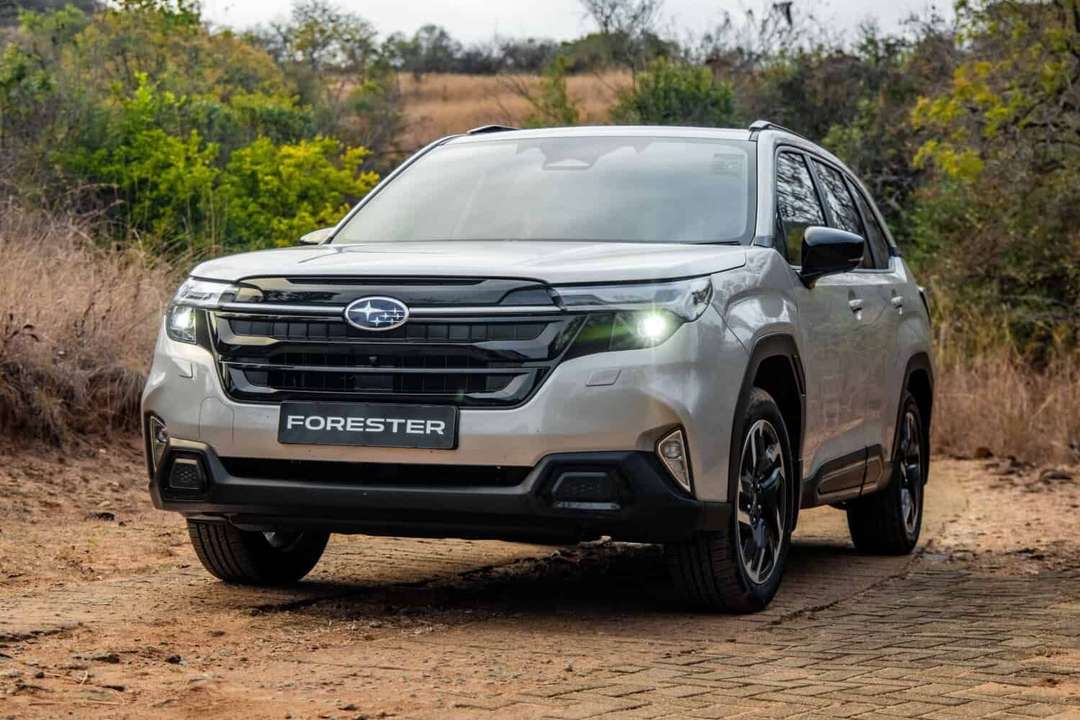
Park it beside a Haval H6, Kia Sportage or VW Tiguan and the RAV4 appears tougher, yet less fussy. Toyota understands local buyers, particularly those leaving the Hilux or Ranger but still wanting some visual muscle.
Cabin & Practicality
Cabin technology finally feels current. Higher trims get a 12.9-inch central touchscreen and a 12.3-inch digital cluster, plus JBL audio, a 360-degree camera, head-up display and wireless smartphone mirroring. None feels revolutionary. Still, the old car badly needed this update.
One concern remains. Connected navigation needs a live data connection, which becomes irritating through the N3’s Van Reenen dead zones or farther into the Karoo. I saw the map hesitate as the signal vanished, just when the next turn mattered.
Materials and controls
Soft-touch dashboard sections sit above harder lower plastics, which is acceptable rather than lavish at these prices. Toyota has wisely retained physical climate controls. Try changing the temperature through a touchscreen in Joburg stop-start traffic and you’ll understand why that matters.
Space and family duty
Five adults fit without much negotiation, while the wide, flat boot and accessible outer-seat ISOFIX points simplify family duty. Rear legroom is generous. Our luggage check fitted 2 full-size suitcases and a folded pram beneath the parcel shelf. Paired with the hybrid drivetrain, the 55-litre tank is the practical star.
On the Road
Right, so the RAV4 behaves exactly as a Toyota family SUV should. It’s unfussy, planted and predictable, while the self-charging Hybrid moves between petrol and electric power without drama around town. At parking speeds, it’s genuinely quiet.
My gripe is familiar: CVT drone. Floor the accelerator to clear a truck on the R21 and the engine flares into a monotone that lingers. It won’t spoil ownership, but you’ll hear it during every committed uphill merge.
The PHEV's party trick
Properly quick. A 225 kW system and immediate electric torque help the plug-in reach 100 km/h in around 5.7 seconds during independent testing. With a full battery, it leaves a robot ahead of much pricier machinery. Once depleted, a capable hybrid system takes over, so range anxiety isn’t part of the deal.
Ride and refinement
Extra body stiffness pays off on broken tar outside many SA towns, where the RAV4 settles quickly rather than crashing through sharp edges. The GR-Sport’s firmer tune is obvious but never punishing. Cabin noise measured 68 dB at 120 km/h on smooth N1 tar, respectable for this class.
Data & Comparison
Pricing tells most of the story, so here’s the range without brochure gloss.
- 2.5 HEV GX: R770,500 - the cheapest route into the new RAV4, with hybrid power included.
- 2.0 VX petrol: R799,900 - petrol-only, but better equipped than the base hybrid.
- 2.5 HEV VX: R927,800 - my pick of the new range.
- 2.5 HEV GR-Sport 2026: R941,800 - for buyers wanting a sharper chassis.
- 2.5 PHEV: R1,043,900 - Toyota’s seven-figure flagship.
Keep these consumption figures handy:
- Self-charging HEV claims 4.5 L/100km and roughly 1,200 km of touring range from the 55-litre tank.
- The PHEV claims a headline 0.7 L/100km and up to 142 km of EV range from its 25.4 kWh battery.
- The 2.0 petrol sits around 6.3 L/100km.
Toyota RAV4 2026 vs Haval H6 and other rivals
| Model | Price (from) | Powertrain | Claimed economy |
|---|---|---|---|
| Toyota RAV4 2.5 HEV VX | R927,800 | Self-charging hybrid | 4.5 L/100km |
| Haval H6 (2.0T) | ~R500,000 | Turbo-petrol | ~8.0 L/100km |
| Kia Sportage | ~R620,000 | Petrol/diesel | ~6.5-7.5 L/100km |
| VW Tiguan | ~R760,000 | Turbo-petrol | ~7.5 L/100km |
On paper at least, the RAV4’s economy leads this group. Chinese rivals cost substantially less and arrive packed with equipment, leaving Toyota to counter with resale value and a broad dealer network, including Halfway Toyota. Those advantages deserve scrutiny, not blind faith.
Depreciation and the used case
Used listings on auto.co.za strengthen the argument. Late fifth-generation RAV4s retain value well, with typical asking prices split by model year below:
| Model year | Typical asking price |
|---|---|
| 2024 | R556,567 |
| 2023 | R541,120 |
| 2022 | R449,942 |
| 2021 | R406,418 |
| 2020 | R362,534 |
| 2019 | R337,114 |
A three-year-old RAV4 typically changes hands around R541,120, while five-year ownership costs sit near R230,000. Because the new platform develops an existing base, a tidy 2023/24 Hybrid VX isn’t mechanically stranded in another era. And that’s the point.
Editorial Focus
Now for the R273,400 question: which derivative makes sense, and should you buy new? The PHEV needs an honest audit. Its 0.7 L/100km figure and 142 km EV range demand a full daily charge and mostly urban use. Our N3 run produced observed EV range well below the claim, with blended highway consumption several times the official number after depletion. Charging support includes 11 kW AC plus 50 kW DC, and Toyota supplies a wallbox and cables. Useful, yes, but the RAV4 hybrid vs plug-in hybrid decision is shaped by South Africa’s electricity reality.
Solar owners who recharge daily can cut the PHEV’s running costs and start justifying its premium. Buyers facing load shedding without a home charger will carry a 25.4 kWh battery they seldom fill, after spending R1,043,900 on something that behaves much like the R927,800 HEV and drinks more once depleted. The self-charging Hybrid needs no lifestyle adjustment to chase 4.5 L/100km and 1,200 km between fills. Add insurance for a seven-figure SUV and potentially steeper depreciation, and the plug-in suits a narrow group of disciplined, solar-equipped owners. Most buyers should choose the HEV VX or shop used.
Verdict
Better than before, yes, but the RAV4’s price ladder punishes careless shopping. Here’s the range across four honest tiers:
- What's brilliant: the self-charging Hybrid’s efficiency, with a claimed 4.5 L/100km and 1,200 km range achieved without changing your routine. It’s what the RAV4 should have been from the start.
- What's good: the 12.9-inch screen, improved body stiffness and meaningful GR-Sport chassis changes for buyers wanting extra bite.
- What's annoying: CVT drone under hard acceleration, connected navigation that depends on signal and a base GX without Safety Sense 4.
- What's a deal-breaker: the R1,043,900 PHEV calculation for households without home charging. Load shedding can turn its headline economy into fiction.
Match the derivative to your circumstances:
- Buy it (HEV VX buyer): the R927,800 self-charging Hybrid is the rational centre of the range, combining efficiency, simplicity and strong resale prospects.
- Shortlist (solar household): consider the PHEV only if nightly charging from your own panels is realistic.
- Wait: buyers prioritising crash-test performance should hold off for the late-2026 NCAP result, because the current range remains unrated.
- Walk away (badge-conscious buyer): forget the flagship and find a used Hybrid VX around R541,120 with balance of plan.
Value your trade-in and check live RAV4 listings on auto.co.za before committing to a new-car finance agreement.
Summary
Here’s the value-first review South African buyers need. We unpack the all-new 2026 Toyota RAV4’s five-derivative petrol, hybrid, GR-Sport and plug-in hybrid range, test the PHEV’s economy claims against local charging reality, then compare every price rung with nearly-new RAV4 stock and key rivals.
Ratings
Pros
- ✓The R927,800 self-charging Hybrid is the rational centre of the range, combining efficiency, simplicity and strong resale prospects.