Volvo EX90 Review – The R2.65-million Electric Flagship That Plays the Long Game

A deeply refined and genuinely useful seven-seat electric SUV with a class-leading ownership package, marked down for detached steering and real-world range below its claim.
Introduction
Look, a genuine seven-seat luxury EV still takes some explaining in South Africa. For buyers searching for a Volvo EX90, my answer is fairly simple: buy it if you can charge at home and intend keeping it, but skip it if resale value keeps you awake at night. As of 2026, Volvo has become one of the more intriguing premium brands on our shores, and the EX90 is its grand electric statement. It costs R2 650 000. During my test tenure, I drove it through traffic, over suburban speed bumps, across broken tar and along gravel. What emerged was more complicated, and more interesting, than the brochure promises.
Key takeaway: A composed and deeply refined seven-seat electric SUV with an exceptional ownership package, offset by remote steering and real-world range below the claim.
Design & Exterior
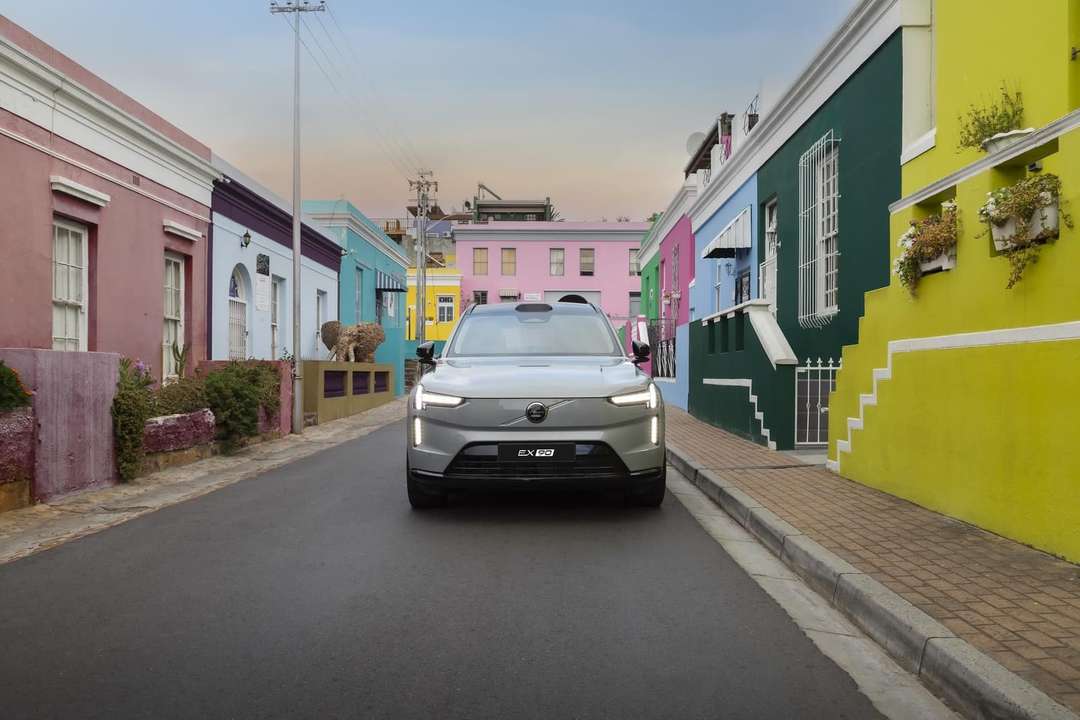
Volvo has spent the past decade carefully rebuilding its image, with the EX90 giving that comeback a very large physical presence. At 5037 mm long with a 2985 mm wheelbase, it occupies most of a Sandton City parking bay and makes the neighbouring Hilux look almost tidy. Yet, to be honest, it never appears overstyled.
Restrained rather than shouty
No fake-vent pantomime here. You won't find oversized pretend exhausts or bodywork begging strangers to stare, either. Familiar Thor's-hammer daytime lights provide the Volvo identity, while the clean surfacing feels confident without becoming cold. A small roof-mounted bump houses the lidar sensor, part of the standard safety equipment. It's a rare piece of visible technology that doesn't shout about itself.
Sized for the segment
Beside the established German three-row machines, the EX90 feels like the adult at the table. Its size is impossible to hide, but the proportions remain honest, while flush door handles and a slim glasshouse lend visual balance to something weighing close to 2.7 tonnes.
Cabin & Practicality
Climb aboard and that familiar Scandinavian restraint takes charge. Material quality feels genuinely expensive, the seats support without squeezing, and the airy layout avoids the visual clutter found in several rivals.
Seven real seats
Family usefulness is the heart of its appeal. The EX90 benefits from being conceived around a battery rather than adapted later. There's no transmission tunnel stealing foot room, the floor is flat and the third row accommodates people rather than emergency luggage. For school runs followed by the annual December haul down the N3, that flexibility counts.
The screen-heavy trade-off
Here's my honest niggle. Nearly every function lives inside the central touchscreen, including controls you'd rather adjust without looking away from the road. Google built-in works well, Maps is clear, voice commands are dependable and the Bowers & Wilkins audio system ranks among the finest I've heard at any price. Still, hiding climate settings and other everyday functions behind menus creates a small irritation every time you drive.
- Materials: Soft, natural-feeling finishes paired with restrained metal accents.
- Audio: Bowers & Wilkins sound with genuine depth, detail and clarity.
- Infotainment: Google built-in, easy to understand after a short familiarisation period.
- Roof: Fixed panoramic glass admits plenty of heat, which matters during a South African summer.
On the Road
Heavy luxury EVs can become clumsy once smooth launch roads give way to South African tar. It is in these conditions that a vehicle's true character is exposed. The EX90 mostly did not disappoint.
Ride and refinement
Air suspension is the quiet hero here. Across pockmarked sections of the R21 and a badly neglected suburban road near my home, the body remained settled and the cabin remarkably calm. Impacts that would hammer through a lesser SUV arrived as distant thuds. Refinement stays impressive at N1 speeds too, with tyre roar and wind noise kept well outside the conversation.
Composed, not thrilling
With 380 kW and 910 Nm, the EX90 is properly quick. Volvo claims 4.9 seconds to 100 km/h, and repeated runs suggest that figure is entirely achievable. Power arrives with deliberate smoothness rather than the neck-snapping violence some electric cars use as a party trick. That approach suits its bulk. It surges, gathers itself and goes.
The steering question
Steering feel produced my only serious dynamic reservation. At times the wheel seemed strangely detached from the front tyres, an odd trait in a vehicle that otherwise feels predictable and composed. I once heard an unexplained noise from the steering rack while turning into a driveway. Volvo can address plenty through over-the-air fixes, and early production cars often improve, but details matter at this price. Take a thorough test drive before signing.
Across gravel, the EX90 remained planted and untroubled, with its low centre of gravity showing exactly why a purpose-built EV platform matters.
Data & Comparison
Right, so let's discuss the figures plainly, because usable range remains the question every prospective South African EV owner asks first.
Real-world range
Volvo quotes around 600 km from the 111 kWh battery (107 kWh usable). Local roads, speeds and conditions tell another story.
- Claimed range: 600 km.
- volvo ex90 range real world: 400 to 450 km in SA conditions, as tested in 2026.
- Observed consumption: Around 22 kWh/100 km on my mixed test route.
- Max DC charging: 250 kW, although local public chargers seldom provide that output.
Such a gap isn't peculiar to Volvo, but buyers must account for it. Plan a Durban run around 400 km hops rather than banking on 600, especially with passengers, luggage, tolls and air conditioning involved.
Pricing and ownership
Your volvo ex90 price is R2 650 000. That's undeniably steep. Yet Volvo counters with one of the strongest ownership bundles in this market, covering far more than routine dealer promises:
- 5-year/100,000 km warranty.
- 8-year/160,000 km battery cover.
- 3-year/60,000 km maintenance plan.
- 5-year unlimited-km roadside assistance.
- 2 years of free public charging.
- Home wallbox including installation.
- 3 years of in-car data.
Given that roughly 90% of SA EV owners charge at home, an installed wallbox is a useful benefit rather than a showroom trinket. Volvo has quietly out-executed its old reputation for costly premium ownership. Estimated five-year total cost of ownership sits near R230 000, helped considerably by home electricity costing less than petrol at current pump prices. Support through Volvo Cars dealerships also gives cautious buyers a familiar retail network.
How it compares
| Spec | Volvo EX90 Ultra | Premium 7-seat EV rivals | Combustion/PHEV alternative |
|---|---|---|---|
| Seats | 7 | Often 5-7 | 7 |
| Power | 380 kW | Varies | Varies |
| Real-world range | 400-450 km | Varies by battery | Long, quick refuel |
| Home charging | Wallbox included | Usually optional | N/A |
| Price | R2 650 000 | R2.5m+ | Often less |
Among premium SUVs, the EX90 fills a genuine opening: a purpose-built, seven-seat electric flagship backed by an ownership package few competitors can equal. Depreciation remains the warning label. Early luxury EVs tend to lose value quickly, so the sensible case depends on keeping the vehicle and using its bundled benefits rather than trading soon.
Verdict
Volvo's EX90 makes a persuasive case without being flawless. Fine details matter as much as headline specifications at this level, and most have been handled with care while a couple remain unresolved. Refinement is outstanding. So are the seven-seat packaging and ownership benefits. Remote steering and the range shortfall can't be ignored. Here's where each buyer stands:
- Buy it: Families able to charge at home, seeking serene long-distance comfort and planning to keep the car long enough to benefit from the warranty, free charging and wallbox.
- Shortlist it: Premium SUV shoppers ready to switch fully electric, provided the steering feels acceptable during a proper test drive.
- Wait: Buyers dependent on public charging beyond major metros, or anyone wanting proof that over-the-air updates can address early software and steering-rack niggles.
- Walk away: Drivers prioritising resale value, or those regularly needing more than 400 km between charges without lengthy stops.
Volvo has built a mature, quietly impressive flagship and supported it with benefits that soften the formidable sticker price. Against familiar segment stalwarts, and even mainstream favourites such as the Ranger or the Hilux in the broader family-adventure conversation, its appeal is different but convincing. Keep it, charge at home and use what you've paid for...
Summary
A first-hand South African drive of the 2026 Volvo EX90 Ultra Twin Performance, covering usable range, comfort on battered roads, ownership costs and its credentials as a seven-seat electric flagship.
Ratings
Pros
- ✓Families able to charge at home, seeking serene long-distance comfort and planning to keep the car long enough to benefit from the warranty, free charging and wallbox.