Hyundai Venue 1.0 TGDI Motion DCT (2021) Review
– a sensible, frugal, and genuinely easy-to-own small SUV, but let down by a spec sheet that asks you to give up too much for the price.
Summary
Full Hyundai Venue 1.0 TGDI Motion DCT review, written for South Africans who want the bare facts. We’ll see how that three-pot turbo handles Jozi traffic, where the Motion spec pinches pennies, whether it’s worth your R230k, and how it stands up to the Creta - or even a used Polo. Spoiler: it’s not the obvious pick, but it does have an angle. This is the Hyundai Venue review South African buyers actually need.
Introduction
Here’s the reality: if you want a compact, fuel-sipping turbo SUV from a dealer you’ll find in places like Upington or Mthatha, and you’re content living without a touchscreen, the Hyundai Venue 1.0 TGDI Motion DCT lands squarely in your sights. That’s the headline. The nuance? On the used lot, the 2021 Motion spec is a strange beast - too plain for badge snobs, too expensive for first-car territory, but it quietly makes sense for a young professional chasing a proper warranty and low running costs. I’m thinking of the buyer who needs something honest, not flashy.
Key takeaway: Frugal, easy to live with, and refreshingly unpretentious - if you’re realistic about the spec. Only buy if the price is right. That’s the point.
Design & Exterior
Sub-four-metre proportions
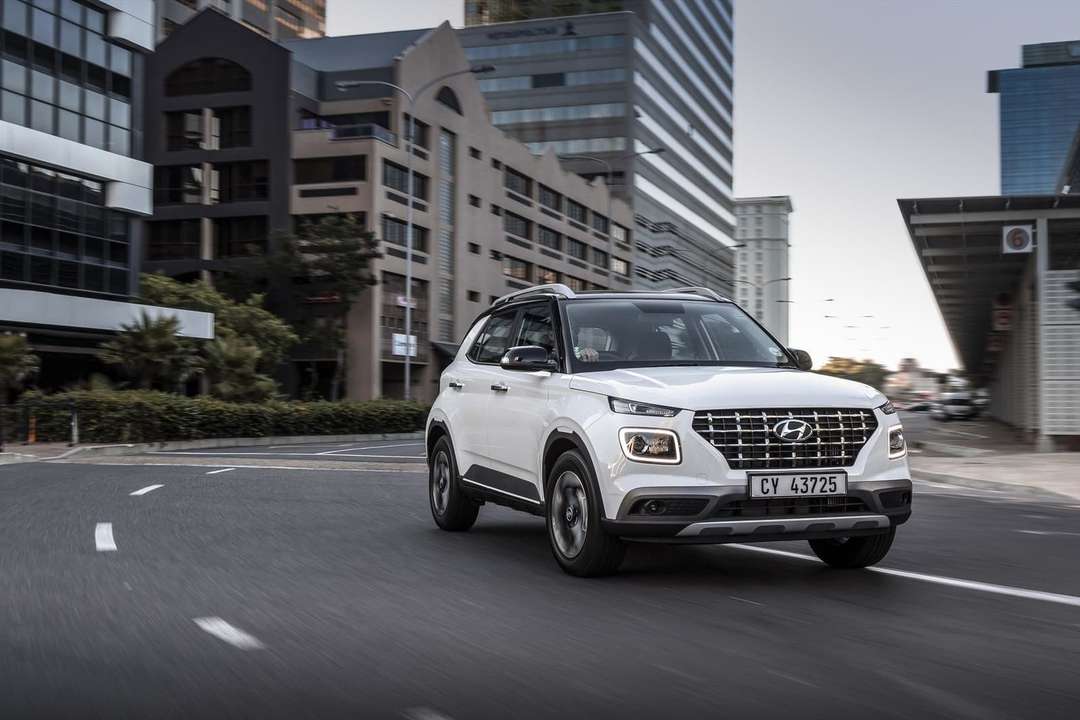
The Venue is a compact thing. At 3995 mm, it’s dwarfed by a Corolla Cross or VW T-Cross, and that’s on purpose - designed to dodge India’s tax rules. In real life, you’ll be grateful when squeezing into the parking at Menlyn or negotiating the tight ramps at Gateway. The 2500 mm wheelbase creates a stubby look, but the upright 1605 mm height gives it a genuine mini-SUV vibe - less “hatch on stilts,” more “baby Tucson.”
Motion trim cues
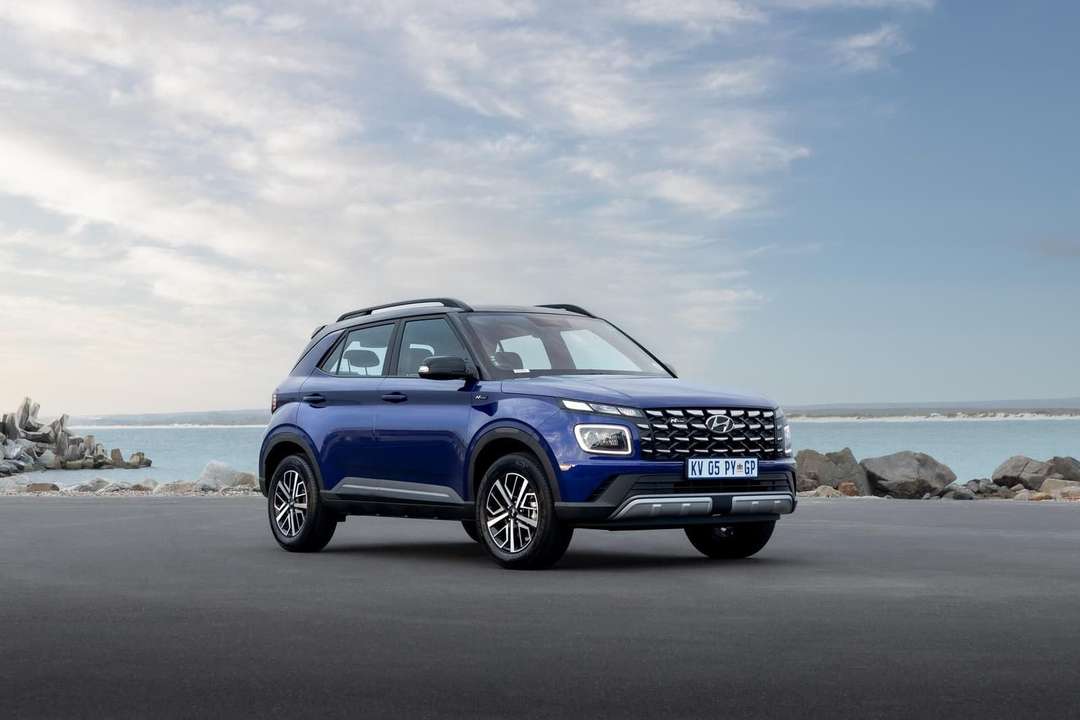
Motion is the “don’t show off” version. Steelies with plastic covers, halogen lights, and black door mirrors. From afar, especially in white, nobody notices. Up close, the covers are a giveaway. I’ll say this: the original cascading grille actually has presence - more so than the new facelift’s Lego-face.
- Length: 3995 mm – shorter than most rivals
- Width: 1770 mm
- Height: 1605 mm
- Wheelbase: 2500 mm
- Doors / seats: 5 / 5
Cabin & Practicality
What you get, and what you don’t
This is where Motion cuts corners. No touchscreen - just a basic Bluetooth head unit, manual aircon, electric front windows, and a tiny black-and-white display for the driver. No reverse camera. Early 2021s had no cruise control, no rear park sensors either. For a car that cost R305,000 new, that stings. Hard plastics everywhere, but at least they’re honest. The layout is clear, and the physical dials are exactly what you want when you’re defogging the windscreen in morning N1 mist as a taxi swoops in. No screen-hunting - just twist and go.
Space and Hyundai Venue boot space
Front seats? Decent for two adults. Rear legroom exposes the short wheelbase - if you’re tall up front, the back gets tight. Three across is a school-run squeeze. Boot space is officially 350 litres - enough to edge the Suzuki Fronx, not quite Creta numbers. Fold the 60:40 bench and you’ll get close to flat space for a bike (with the front wheel off). If you pack smart, two can do a long weekend to the mountains without skimping on essentials. I once stuffed a week’s groceries and a compact pram in there - not pretty, but it fit. Hyundai Venue boot space isn’t class-leading, but it’s usable.
On the Road
The 1.0 three-cylinder
The 1.0 Kappa Turbo GDI puts down 89 kW and 172 Nm. On paper, at least, that’s right there with the punchier little turbos. In practice, it’s got a split personality. Below 2000 rpm, it’s sluggish and a bit tractor-ish, like a diesel waiting to wake up. Once the turbo’s spinning, it pulls with real enthusiasm and the three-pot thrum almost sounds playful.
My week in Gauteng saw a real-world average of 7.4 L/100 km - best was 6.1 L/100 km on a cautious cruise between Pretoria and Polokwane. Not ground-breaking, but reasonable. Gentle driving nets you well over 500 km per tank. That matters when fuel’s over R25/litre.
The seven-speed dual-clutch
The 7-speed DCT is a mixed bag. On the open road, it’s quick and crisp. In stop-start - picture Rivonia Road at rush hour - it’s hesitant off the line. That half-second pause before the clutch grabs is the main Hyundai Venue problem buyers notice, and after a few days behind the wheel, I found myself feathering the throttle to pre-empt it. You adapt. But it’s not perfect.
Ride and steering
Short wheelbase and 16-inch wheels mean the Venue fidgets on patchy tar, but never gets harsh. On gravel outside Dullstroom, the 195 mm ground clearance is actually useful, and the suspension absorbs most rough stuff, though the steering can’t always keep up. The rack is light and vague on-centre, so at 120 km/h on the N3, it’s less settled than a T-Cross. Not scary, just a bit nervous.
Data & Comparison
Numbers that matter
- Engine: 1.0 Kappa Turbo GDI, 3-cyl, 120 hp / 89 kW
- Torque: 172 Nm
- Gearbox: 7-speed DCT auto
- Drive: FWD
- Length/wheelbase: 3995 mm / 2500 mm
- Production: 2019-2022 (pre-facelift)
Spec callout: power versus the segment
The Venue’s 89 kW falls 36.4% shy of the segment’s 140 kW median - though that figure’s skewed by bigger 1.5 turbos like the Creta and T-Roc. In its price bracket, the Venue’s power is about average.
How it stacks up against the rivals dataset
| Model | Power (kW) | Avg used price (R) | Drivetrain |
|---|---|---|---|
| Hyundai Venue 1.0 TGDI Motion DCT | 88 | ~238 000 | 1.0T 7DCT FWD |
| Hyundai Creta 1.6 Auto (2015-2019) | 123 | 237 833 | 1.6 6AT FWD |
| Hyundai Creta 1.4 TGDI DCT (2020-2024) | 103 | 238 890 | 1.4T 7DCT FWD |
The real twist? For less than a grand more, a used Creta 1.4 TGDI gets you more space and a brawnier engine. The Venue hits back with lower running costs and easier city parking. No knockout, but a fair trade for some buyers.
Ownership, finance and the service plan
Total five-year running costs hover around R230 000 - interest, fuel at current prices, insurance, tyres, and the bits outside the Hyundai Venue service plan South Africa covers. The plan itself runs 3 years/45 000 km, with a 5-year/150 000 km warranty. That’s not as strong as the Sonet or the Chery Tiggo 4 Pro. Worth checking before signing. Hyundai Venue finance South Africa? Expect about R4 700 a month (before insurance) for a clean 2021 Motion DCT at R235 000, 10% deposit, 60 months. At that figure, most families will swing Creta if they can.
Segment trend
Small SUVs are where the traffic sits. From June to November 2025, search interest ranged between 73 and 78 points - only luxury and hybrids pulled more. Dealers say B-segment SUVs like Venue and Sonet keep the lights on (even during load-shedding), so the Hyundai Venue price in South Africa holds firm in the used market.
People Also Ask
What are the common problems of the 2020 Hyundai Venue?
Top Hyundai Venue problems? The DCT’s slow engagement from standstill, higher-trim infotainment glitches, and clutch-pack wear if it’s been stuck in M1 traffic for years. The 1.6 NA is less fussy. Always insist on a cold start and check for shuddering.
Is the Hyundai Venue reliable in South Africa?
Hyundai Venue reliability? Actually solid. The 1.0 T-GDI engine is shared with Kia and built in numbers for India, so spares and expertise are everywhere. Stick to the service intervals, use 95, and 150 000 km is totally realistic. Hyundai Venue review: South African owners report few major issues.
What is the Hyundai Venue price in South Africa?
A good 2021 Hyundai Venue 1.0 TGDI Motion DCT sits between R230 000 and R245 000, depending on mileage and service stamps. Brand-new, the facelifted Motion starts at R294 900. That’s a 20% used-car saving, which is real money.
How much is the Hyundai Venue's boot space?
The boot space is 350 litres with seats up, stretching to roughly 903 litres with the back bench folded. That’s better than most B-segment hatches. I once crammed in a folded mountain bike, a duffel, and a cooler for a quick trip up the R21 - tight, but no Tetris degree required.
Is the Hyundai Venue 1.0 TGDI Motion DCT worth buying?
Yes - with some caveats. The Venue 1.0 TGDI Motion DCT makes sense as a low-stress city runabout for singles or young couples. Need rear space or a touchscreen? Look elsewhere. The Fluid spec is a much better deal if you can stretch for it.
What rivals should I cross-shop?
Add the Kia Sonet 1.0T (same engine, better spec), Suzuki Fronx (cheaper to run), Mahindra XUV300 (beefier, longer warranty), and Chery Tiggo 4 Pro (loads of kit). But honestly, the used Creta 1.4 TGDI is the real curveball - more space and grunt for about the same money.
Verdict
Who should buy it
The Venue works for buyers wanting the Hyundai badge, familiar tech, dealer support in out-of-the-way towns, and a predictable monthly fuel bill. Single-car homes, retirees downsizing, or young professionals doing 25 000 km a year will get exactly what they expect.
Who should skip it
Give it a miss if you’ve got two car seats and a dog, do regular Durban runs on the N3, or can’t live without Apple CarPlay - the Motion spec leaves those out. The Fluid sorts most of that.
The wait scenario
Second-gen Venue is coming in 2026. If you can hold out, you’ll get a fresher cabin, better materials, and probably a touchscreen as standard. For the current Motion, the basic spec is the biggest letdown... and that’s the point.
Rating
6.5 / 10 – Frugal, honest, and easy to own, but the Motion’s bare-bones spec asks you to give up a bit too much for what you pay.
Summary
This is a full review of the Hyundai Venue 1.0 TGDI Motion DCT as it lands for South African buyers. We’ll get into how the three-cylinder turbo behaves in real life, where the Motion grade cuts corners on spec, what your bank account will look like after ownership, and whether it stands a chance ne
Ratings
Pros
- ✓This Venue is for buyers who want the Hyundai badge, a familiar engine, dealer support in out-of-the-way places, and a fuel bill that won’t keep you up at night.
- ✓Single-car households, retirees coming down from a Tucson, or young professionals clocking 25 000 km a year in the city will be happy here.
Cons
- ✗Skip it if you have two car seats and a Labrador, drive the N3 coast-to-coast every quarter, or can’t do without Apple CarPlay—the Motion simply doesn’t offer it on the pre-facelift car.
- ✗The Fluid trim sorts out most gripes and is worth stretching for.