Toyota Starlet 2026 Review: Starlet vs Suzuki Baleno — Which Should You Buy?

A frugal, uncomplicated city hatch with reassuring resale. Hard plastics, an ageing automatic and a meaningful badge premium stop it scoring higher, especially while the identical Baleno sits across the showroom divide.
Introduction
Buy the 2026 Toyota Starlet if you want an affordable city hatchback, low running costs and the reassurance of Toyota’s extensive dealer network. Resale matters here, arguably more than saving every rand upfront. That’s the blunt answer.
Our Toyota Starlet review focuses on the figure many launch reports gloss over: the badge premium over its mechanically identical Suzuki Baleno. The 2026 updates matter, too. Since September 2025, every grade has gained six airbags and ESC as standard, while the service plan now stretches to 60,000km.
With roughly 1,100 buyers choosing one each month, the Starlet clearly has a strong following. But those buyers deserve to know exactly what they’re paying for rather than simply following the Toyota badge.
Key takeaway: Frugal, uncomplicated and easy to own. The Toyota badge costs proper money new, but dealer reach and resale return some of that premium.
Design & Exterior
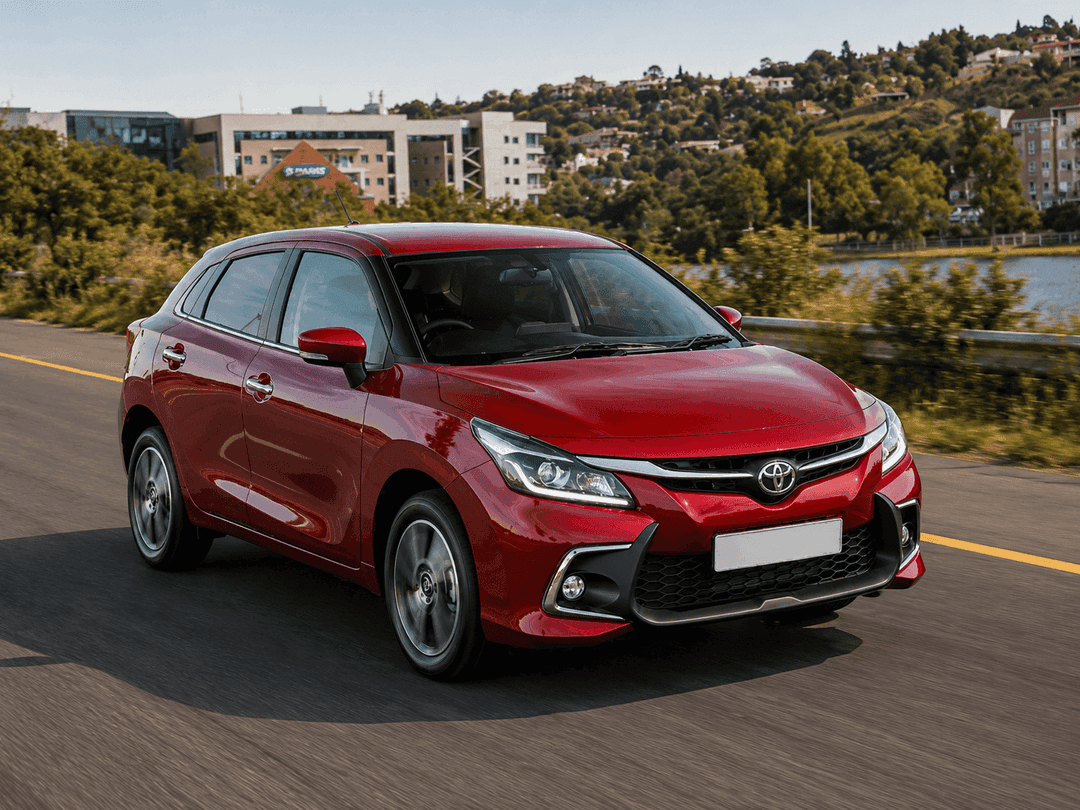
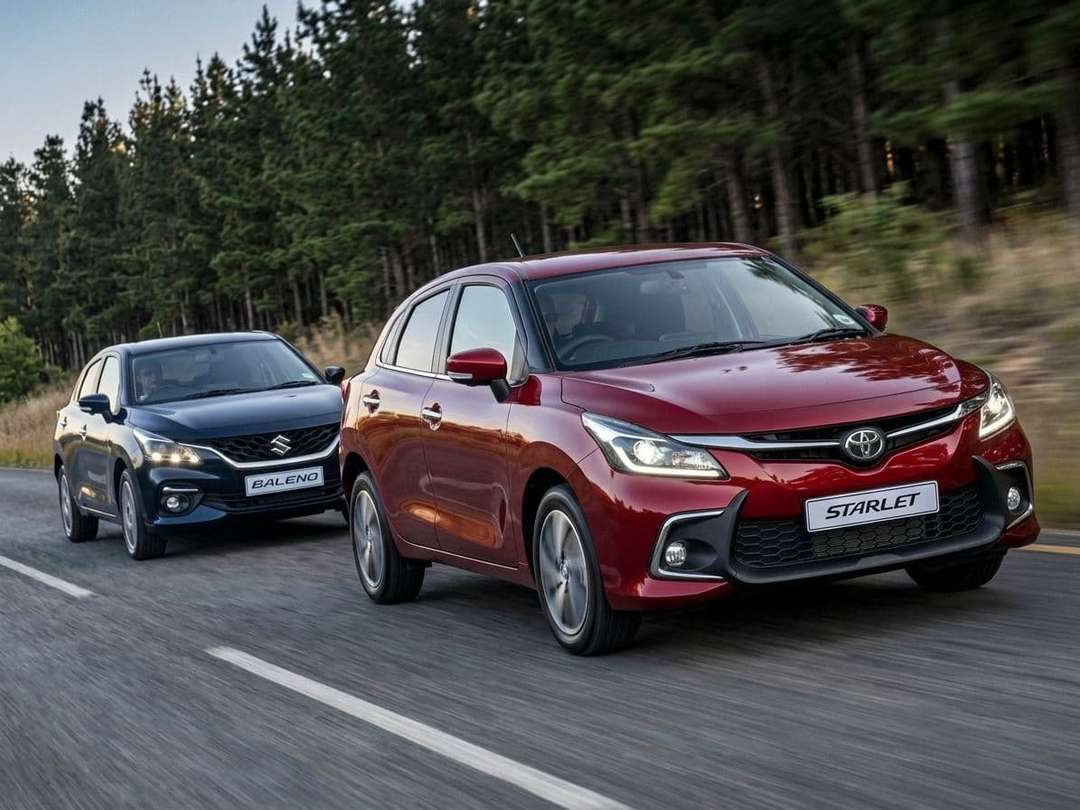
Nobody buys a Toyota Starlet to stop traffic. Toyota knows that. Its current shape is essentially a lightly restyled Suzuki Baleno, favouring tidy proportions over visual drama. Toyota’s grille and lower bumper add the family resemblance, although the Suzuki underneath is still easy to spot.
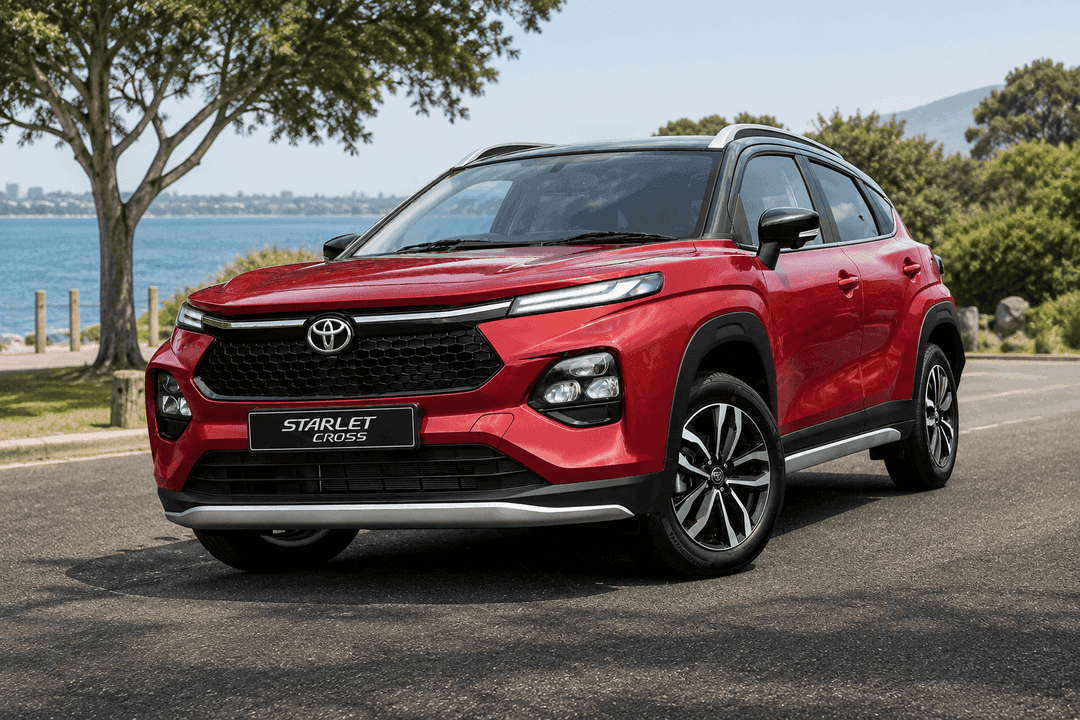
The Starlet XR rides on 16-inch alloys, filling the arches without looking overdone. Ground clearance is 150mm, which is enough for steep Joburg speed humps and rutted Eastern Cape gravel without scraping over every second rise. Buyers wanting a more SUV-inspired look can step up to the Starlet Cross, which adds cladding and a slightly raised stance without straying too far from its hatchback roots.
Good design doesn’t need fireworks. This is the sort of shape that should age quietly, which suits owners who plan to keep their cars for five or six years. Not looking dated after a few years also helps the resale argument — and with a Starlet, that matters.
Cabin & Practicality
Space and boot
Cabin space is generous by B-segment standards. You get five seats, five doors and a 314-litre boot, depending on how the parcel shelf fits into your packing. If you pack smart, luggage for two and a folded pram fit without a roadside repack.
Rear legroom suits average-height adults, while the relatively flat floor makes the centre position tolerable on short trips. ISOFIX points are fitted for the child seats many first-time parents will soon wrestle into place.
Materials and controls
Now for the bit polite reviews often soften. Several cabin plastics feel hard and hollow, particularly across the door tops and lower dashboard, and the price makes them difficult to ignore. Yet the layout nails the basics: physical climate dials, proper buttons for key functions and a touchscreen that doesn’t bury fan settings inside menus. I once adjusted the temperature on a dark R21 run without looking away from the road. Simple controls win.
- Physical climate controls, with no screen menus required for fan speed
- Six airbags and ESC standard throughout the 2026 range
- Boot around 314 litres, placing it firmly among the class contenders
- ISOFIX anchors fitted for child seats
On the Road
Engine and gearbox
Power comes from a 1.5-litre four-cylinder engine producing 77kW and 138Nm. On paper, those figures sit around the segment average. In everyday driving, the Starlet feels willing enough, but the engine likes to work for its performance. Ask it to climb Van Reenen’s Pass with four people aboard, and it gets noisy as it fights to maintain momentum.
My bigger gripe is the four-speed automatic fitted to automatic derivatives. It feels old-fashioned in 2026. Four ratios leave the engine revving harder on the highway than it would with a modern CVT or six-speed automatic. Anyone searching for a Toyota Starlet automatic review should drive one at 120km/h on the N3 before signing — sustained cruising exposes the gearbox’s age. The manual is the sweeter, more economical choice.
Ride and refinement
Ride comfort ranks among the Starlet’s best traits. Even on 16-inch wheels, it remains settled over broken suburban tar rather than fidgeting across every patch and repair. Corrugated district-road gravel doesn’t trouble it much either, while the 150 mm clearance provides breathing room over deeper ridges.
Road noise is restrained for the money, and light steering makes parking in a busy Gateway lot painless. No stress. No unnecessary heft. Most owners will value that ease far more than sporting pretensions.
Data & Comparison
Real-world fuel consumption
Toyota claims 5.4 l/100km for the automatic and 5.1 l/100km for the manual, with CO₂ emissions of around 131g/km. For anyone checking Toyota Starlet fuel consumption, independent town and mixed-use testing has returned figures in the region of 5.6 to 5.8 l/100km.
That makes Toyota’s claim look fairly credible. In real-world use, the Starlet is genuinely frugal rather than merely economical on a spec sheet, which is exactly what many buyers in this class are looking for.
- Claimed: 5.4 L/100 km (auto), 5.1 L/100 km (manual)
- Independent town/mixed test: roughly 5.6-5.8 L/100 km
- Fuel tank: 37 litres, giving a real-world range near 600 km
Pair a 37-litre tank with consumption in the high-5s and Engen visits become less frequent. That leaves more room for insurance, tolls and the other monthly costs facing a first-time buyer.
The badge tax versus the Baleno
Here’s the issue that should decide the sale. Comparing the Toyota Starlet vs Suzuki Baleno isn’t really about driving, since they share their mechanical package and much of the same parts basket. It’s about paying for Toyota branding. Historically, the Starlet has carried a premium of roughly R10,000 to R15,000 in comparable trims, while Suzuki has supplied longer warranty and service cover. Your money buys broader dealer access and stronger resale, not lower maintenance costs.
Used pricing and resale
Across 222 recent Starlet listings on auto.co.za, the depreciation pattern is clear. Buyers researching Toyota Starlet resale value will find three-year-old examples averaging around R238,000, representing strong retention for an affordable hatch. Here, the badge premium begins earning back its keep.
| Model year | Typical average asking price | Listings |
|---|---|---|
| 2020 | R216,567 | 3 |
| 2021 | R201,370 | 35 |
| 2022 | R214,666 | 34 |
| 2023 | R238,104 | 32 |
| 2024 | R254,732 | 66 |
| 2025 | R290,843 | 71 |
| 2026 | R293,612 | 19 |
Searches for Toyota Starlet 2026 price reveal listings from about R233,000 to R359,000, with the 2026 average near R293,600. New retail starts from around R261,000 upward, depending on grade.
Cross-shop and rivals
Against the Toyota Starlet vs Polo Vivo, the Vivo counters with deep South African badge heritage and a more substantial cabin feel. Starlet running costs are lower, though, while used prices can favour the Toyota. Here’s the basic choice.
| Model | Power | Claimed economy | Key attraction |
|---|---|---|---|
| Toyota Starlet 1.5 | 77 kW | 5.4 L/100 km | Dealer network and resale |
| Suzuki Baleno 1.5 | 77 kW | 5.4 L/100 km | Same car for less money |
| VW Polo Vivo 1.4 | Lower | Higher | Cabin quality and badge appeal |
Five-year total cost of ownership works out at around R230,000, including fuel, servicing and depreciation. For a first car, that remains approachable.
Editorial Focus
Does the badge tax pay for itself?
Let’s settle this with numbers. New, the Starlet costs roughly R10,000-R15,000 more than the identical Baleno. Three years later, it averages R238,104 on auto.co.za. Strong retention and Toyota’s parts and dealer coverage, from Polokwane to Plettenberg Bay, support paying extra. Buyers in smaller towns without a nearby Suzuki outlet can justify it easily. Metro shoppers with both brands available should negotiate hard and cross-shop the Baleno.
The safety caveat you must respect
Safety history dominates any discussion about Toyota Starlet problems. The outgoing two-airbag Starlet scored zero stars for adult occupant protection and three stars for child protection in Global NCAP’s May 2026 Africa test. Crucially, that result applies to pre-September 2025 Xi and XS models, not the current 2026 range, which now has six airbags as standard but remains unrated pending a Global NCAP retest.
Toyota disputed aspects of how the result was presented, while no structural changes reportedly accompanied the additional airbags. So, until the updated car is independently retested, a stronger safety rating shouldn’t be assumed.
For used buyers, physically check the airbag count and build date. There is still plenty of older, lower-safety stock around, including ex-rental cars. Lesser complaints include uneven front-tyre wear when alignment is neglected, heavy brake dust and occasional suspension creaks.
Safety rating
Global NCAP Africa · tested 2026
☆☆☆☆☆ 0/5 adult occupant
★★★☆☆ 3/5 child occupant
Applies to pre-September-2025 Xi and XS derivatives (dual front airbags only) still in dealer stock or on the used market. Official factsheet.
Verdict
Right, so the Starlet is sensible, inexpensive to run and refreshingly honest. Its strengths are the ones owners use daily, while its flaws are easy to spot before buying. For a first-time owner, it’s what a budget hatch should be, provided older safety specifications and the Toyota premium are understood.
- Buy it - first-car buyers: frugal, easy to park, insurance-friendly and now fitted with six airbags as standard. Choose a current 2026 unit, and you’ll have a smart, low-stress first car.
- Shortlist it - resale maximisers: strong retention (R238k at three years) returns much of the badge premium. It makes sense if you plan to sell through Toyota’s broad network.
- Consider something else - highway commuters: the four-speed auto works hard at 120 km/h. Try the manual, or consider a Polo Vivo if long-distance cabin comfort matters more.
- Avoid it - spec-per-rand hunters: the identical Suzuki Baleno costs thousands less new and includes longer cover. With a Suzuki dealer nearby, that saving deserves serious consideration.
Summary
A South African buyer’s guide to the 2026 Toyota Starlet, covering the September 2025 six-airbag upgrade, everyday fuel use, the premium over its Suzuki Baleno twin, live used pricing from auto.co.za listings, and the grades that best suit new drivers, commuters and resale-conscious owners.
Ratings
Pros
- ✓Frugal, easy to park, insurance-friendly and now fitted with six airbags as standard.
- ✓Choose a current 2026 unit and you’ll have a smart, low-stress first car.
Cons
- ✗The identical Suzuki Baleno costs thousands less new and includes longer cover.
- ✗With a Suzuki dealer nearby, that saving deserves serious consideration.