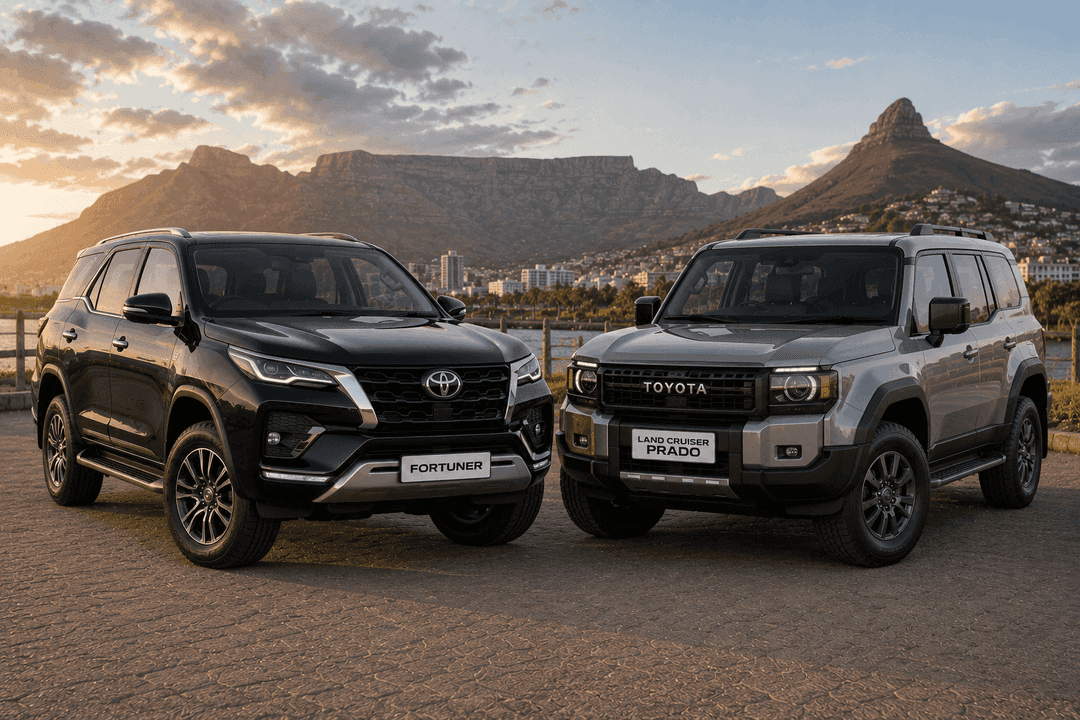
Toyota Prado 150 vs 250: Buy a Used 150 or a New 250?

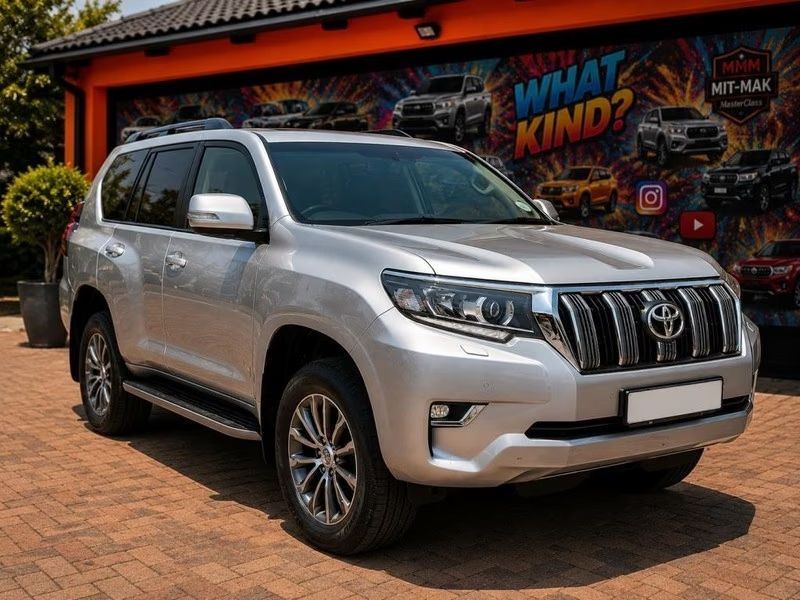
Buy the used 2023 Prado 150 VX-L if value and touring range come first. Its 87 plus 63-litre dual-tank arrangement enables properly long legs, while the tailgate-mounted spare keeps the underbody clear. KDSS limits body roll without spoiling articulation, and the known fault list makes inspection ea
Buy the used 2023 Prado 150 VX-L if value and touring range come first.
Toyota Prado 150 vs 250: Would I Buy the Older VX-L or the New TX?
Buying the latest model is always tempting, particularly when it looks as good as the new Toyota Prado. The squared-off styling gives it plenty of presence, and the newer cabin makes the previous generation look its age. But when the price difference runs into several hundred thousand rand, I think the older Prado deserves more than a passing glance.
For me, this comparison comes down to a used 2023 J150 2.8 GD-6 VX-L and a new J250 TX. One offers the equipment of a former flagship at a lower purchase price. The other brings newer engineering, a higher towing capacity and the reassurance of starting its ownership history yourself.
I would happily consider either. Which one makes more sense depends on what you expect your Prado to do.
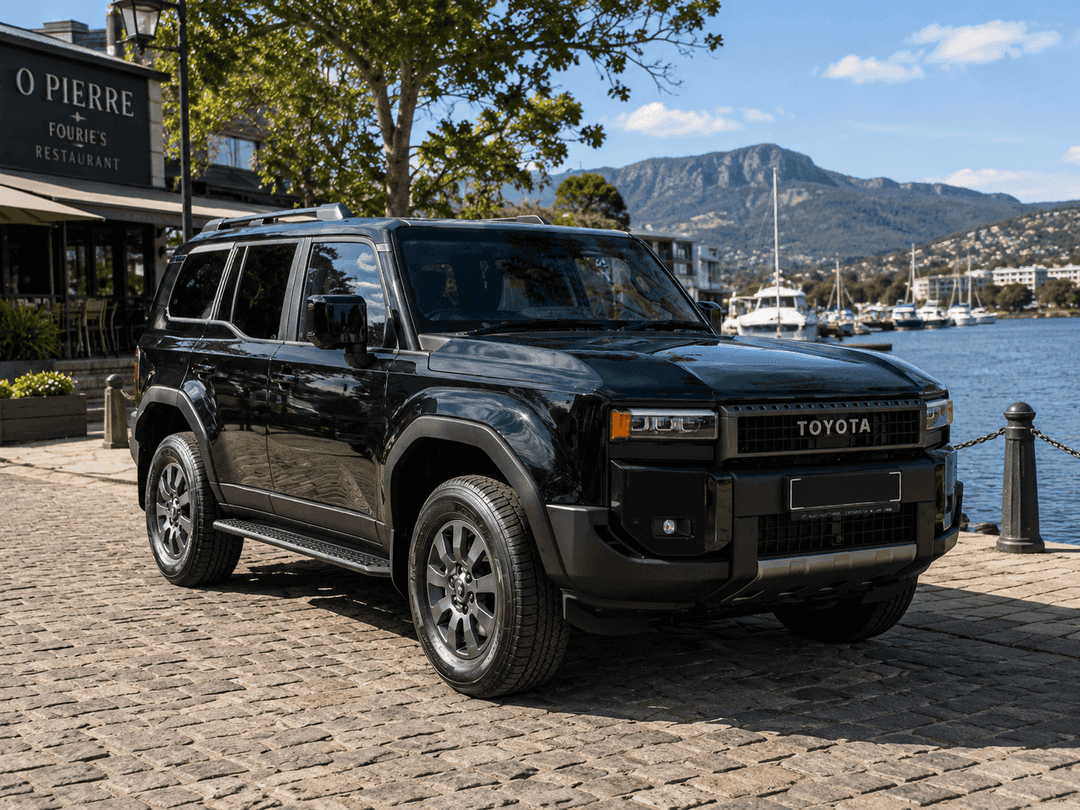
The J150 still looks purposeful. Its upright proportions and rear-mounted spare wheel give it the familiar appearance that many buyers associate with the Prado name. In VX-L specification, there is enough detailing to give it a premium feel without making it look excessive.
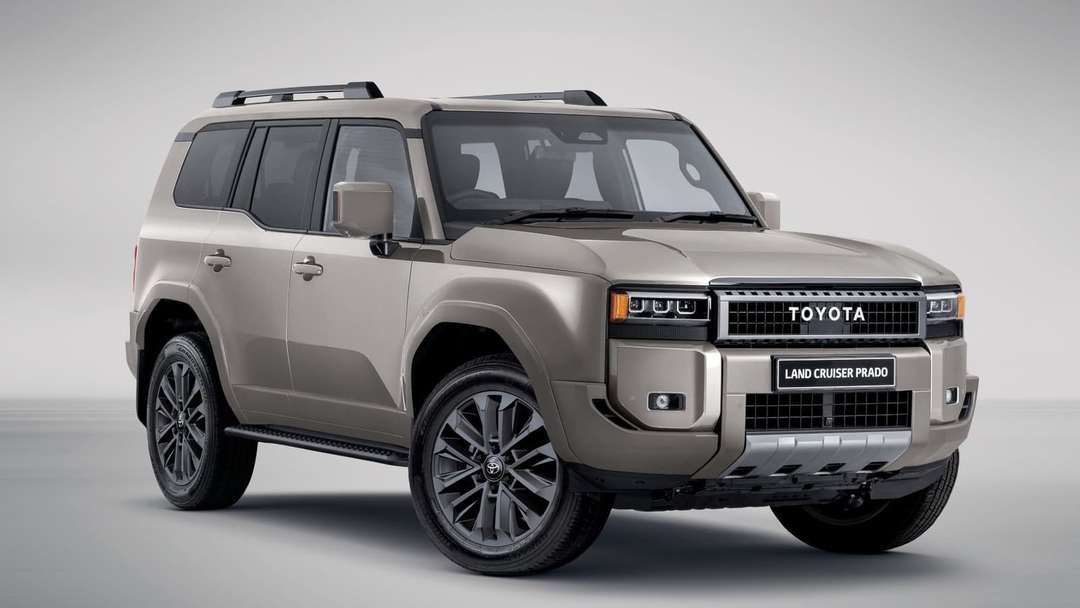
The J250 takes a different approach. Its more angular shape has plenty of character, and I can understand why buyers would be drawn to it before even looking at the specifications.
My preference would not be decided by appearance alone, though. A vehicle intended for family holidays, towing and gravel-road travel needs to justify itself beyond how it looks outside the house.
The main differences are straightforward:
| Consideration | Used 2023 J150 VX-L | New J250 TX |
|---|---|---|
| Engine output | 150 kW and 500 Nm | 150 kW and 500 Nm |
| Automatic gearbox | Six-speed | Eight-speed |
| Maximum braked towing capacity | 3,000 kg | 3,500 kg |
| Fuel capacity | 150 litres | 110 litres |
| Purchase price | Depends on mileage, condition and history | From R1,369,200 at the time of checking |
| Warranty and service cover | Confirm remaining or extended cover | New-car warranty and service plan |
The shared power and torque figures are worth considering. Moving to the newer Prado does not bring a dramatic increase in engine output. What changes is the transmission and the vehicle around it.
The J250’s eight-speed automatic provides more ratios to work with than the J150’s six-speed. That is a meaningful mechanical improvement, although I would want to drive them back-to-back before claiming how much smoother or more responsive one feels in particular conditions.
The older Prado’s appeal remains its suitability for relaxed touring. If your priorities are carrying the family, luggage and perhaps a caravan, the 2.8 GD-6 has the figures to make it worth considering. Neither vehicle needs to deliver sports-car acceleration to fulfil that role.
Towing is where the newer model establishes a clearer advantage. Its 3,500 kg braked rating gives it an additional 500 kg over the older 2.8 GD-6.
For someone whose loaded caravan or trailer approaches the J150’s limit, that difference could settle the comparison. However, I would still check the permissible combination mass, towball limit and available payload. A headline towing figure does not tell you how much luggage and equipment you can carry at the same time.
The J150 answers with fuel capacity. Its 87-litre main tank and 63-litre supplementary tank provide 150 litres in total, compared with the J250’s 110 litres.
For long-distance travel, that additional 40 litres is useful. At an assumed consumption of 10 L/100 km, it represents approximately 400 km of additional theoretical range. Actual range will depend on load, speed, terrain and towing, and a sensible fuel reserve still needs to be allowed.
I would appreciate that flexibility on a longer holiday. It gives you more choice about where to stop and refuel, particularly when travelling beyond the usual national-road routes.
Fuel capacity should not be confused with lower running costs, though. Carrying more diesel allows you to travel farther between stops; it does not automatically make each kilometre cheaper.
For budgeting, consider a simple example. At 10 L/100 km, travelling 2,000 km uses 200 litres. If diesel costs R21 per litre, the fuel bill would be R4,200. That is an illustration rather than a current pump-price quotation or a measured result from either vehicle.
The cabins introduce another consideration. The J150 VX-L offers an appealing level of equipment, including heated and ventilated front seats and a refrigerated centre console. Its layout is familiar and relatively straightforward, which I appreciate in a vehicle intended for extended journeys.
Its infotainment and overall presentation show their age, but the later J150’s Apple CarPlay and Android Auto compatibility help keep it useful.
The J250 has the more contemporary cabin. Buyers who place greater importance on the newer dashboard, displays and controls may feel the difference is worth paying for. I would spend time using both before deciding, particularly because this comparison puts a previous flagship against the newer range’s entry derivative.
Both offer seven seats, but I would check their practicality with the family present. Third-row access, seating comfort and luggage space matter more than simply being able to say the vehicle seats seven. If you regularly fill every seat, check where the holiday bags will go.
The same applies to parking. These are substantial SUVs. Cameras and sensors are useful, but they do not make a narrow garage wider. I would check the available space at home and remember to allow room for the J150’s side-opening rear door.
Underneath, the older VX-L brings KDSS and Adaptive Variable Suspension. Those systems contribute to its appeal, but they also deserve attention during a used-car inspection.
I would have the hydraulic components checked for leaks, inspect the dampers and look for uneven ride height or evidence of poorly executed suspension modifications. Off-road accessories would not automatically add value in my eyes. Their quality, installation and effect on the vehicle matter far more.
Tyres deserve the same scrutiny. Check the actual wheel and tyre specification fitted to the vehicle, rather than assuming every VX-L uses the same size. Obtain replacement quotes and inspect the spare. A mismatched or ageing set can quickly add to the purchase bill.
This is also where the difference between buying used and buying new becomes important.
A 2023 J150 could have substantial mileage, limited service-plan cover remaining or an expired original warranty. I would verify everything in writing. A stamped service book would be useful, but invoices and a consistent maintenance record would give me more confidence.
The new J250 comes with a three-year/100,000 km warranty and a nine-service/90,000 km service plan. That provides a clearer starting point for ownership, although a service plan does not cover every expense.
For either vehicle, I would obtain an insurance quotation before committing. The premium, excess and any tracking requirements belong in the comparison alongside the instalment and fuel budget.
Purchase price remains the older Prado’s strongest argument. Using R950,000 as an example for a used VX-L against R1,369,200 for the new TX gives a difference of R419,200 before fees, accessories and finance costs.
That saving is difficult to ignore. It could leave room for maintenance and travel, provided the buyer does not spend the entire budget on the vehicle itself.
I would be careful about declaring a guaranteed five-year winner, however. Depreciation, interest, insurance, repairs and eventual resale value all affect the outcome. The J150 starts with a lower purchase price, but an expensive repair can change the calculation.
Would I choose the older VX-L? For my money, a well-maintained example makes a convincing case for family touring. The equipment, fuel capacity and lower entry price are substantial attractions. I would accept the older cabin if the vehicle’s condition and history justified the purchase.
I would choose the J250 TX if I needed its additional towing capacity, preferred the newer cabin and transmission, or valued having full factory cover from the start.
The important part is buying for the journeys you actually take. A clean J150 VX-L could leave considerably more money available to enjoy those journeys. The J250 asks for more upfront, but brings improvements that will matter to the right buyer.
Compare both on Auto.co.za, check the specifications of individual vehicles and arrange a proper inspection of any used example. My choice would come down to the condition of the older Prado, the weight of the trailer and how much I was comfortable spending.
Summary
Buy the used 2023 Prado 150 VX-L if value and touring range come first. Its 87 plus 63-litre dual-tank arrangement enables properly long legs, while the tailgate-mounted spare keeps the underbody clear. KDSS limits body roll without spoiling articulation, and the known fault list makes inspection easier. Its part-used service plan is the compromise.