Hyundai Grand i10 1.0 Premium M/T (2026) Review
Good fuel economy, honest controls, and Hyundai’s warranty muscle keep it relevant. But the Premium’s lack of safety features — when the Executive fixes that for a small premium — means I can’t recomm
Introduction
Right, so if you want the lowest-priced ticket onto the Hyundai new-car ladder in 2026, the Grand i10 1.0 Premium M/T is your entry point - but only if you’re happy treating it as SA's Budget City Car and nothing more. For families, for big drives across the Free State, or if you want more than just basic safety features, look elsewhere or budget for the next rung up. As tested here in MY24 spec, this Premium sits at the intersection of spreadsheet logic and real-world compromise - and the sums only work if your needs are very specific.
Key takeaway: The Grand i10 1.0 Premium M/T makes sense as an affordable city runabout for solo commuters trying to stretch every rand, but its safety features and modest 65 hp triple really limit its usefulness outside the suburbs.
Design & Exterior
The facelift that quietly grew up
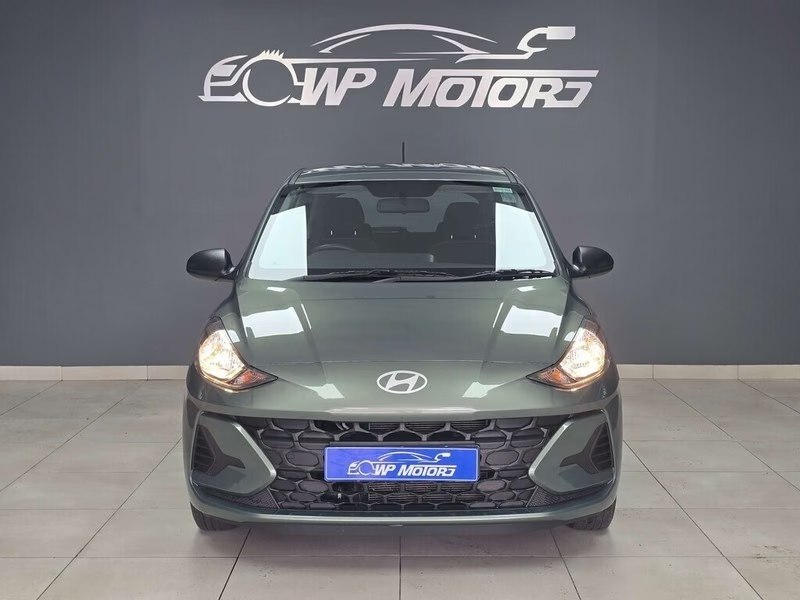
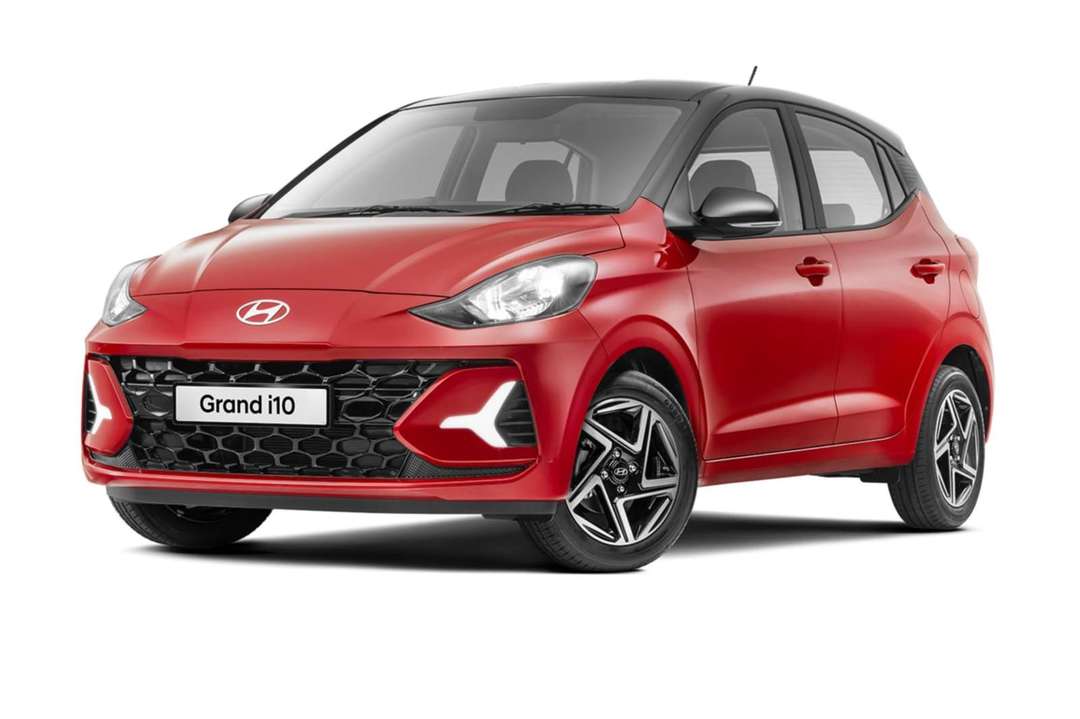
Hyundai’s AI3 Grand i10 finally ditched the cartoonish face. The new Y-shaped DRLs, chunkier hexagonal grille, and a neater tailgate mean it won’t look sheepish in the company of a Creta at your local Hyundai dealer. For a small car, it’s surprisingly grown-up in Premium trim - proof that affordable doesn’t have to mean embarrassing.
Where it sits in the segment
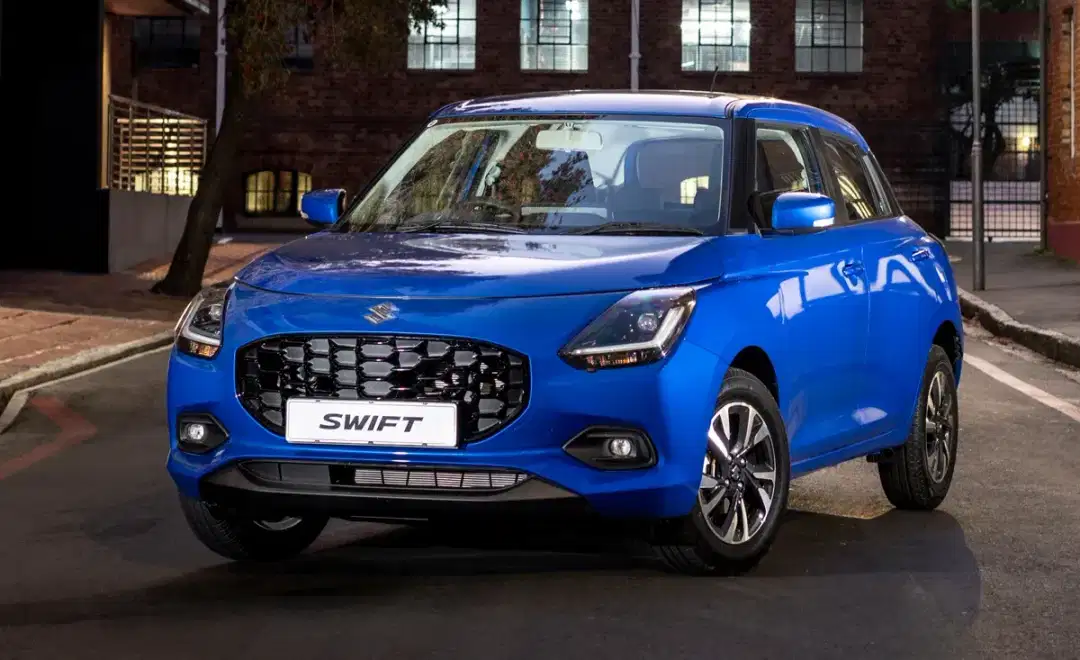
Five doors, five seats, and a B-segment badge - but here, price is king. Next to a Suzuki Swift, the Hyundai looks more refined; next to a Renault Kwid Evolution, it feels a bit upmarket. Trouble is, the Grand i10’s no longer a regular on the “cheapest new cars” list in South Africa. That shift matters, because the gap to rivals has closed and the pricing floor has moved right under its wheels.
Wheels, stance, presence
The Premium wears basic alloys that mimic steelies and sits high enough to handle the worst of Joburg’s battered kerbs and speed bumps. There’s no official off-road clearance figure, but it’s enough for the cratered edges of inner-city tar and hopping a pavement when parking gets tight.
Cabin & Practicality
Materials and ergonomics
Here’s honesty for you. The interior is mostly hard plastics, but they’re textured well enough that it doesn’t feel like a penalty box. And - crucial for me - Hyundai stuck with real climate dials and proper buttons for hazards and demist. After a week of battling touchscreens in other test cars, getting back to physical controls felt like a win. The 8-inch touchscreen covers Apple CarPlay and Android Auto, and there’s a USB-C port up front. On paper at least, that’s more future-proof than the rivals still clinging to micro-USB.
Space and seating
Two adults in the back will handle a 20 km urban slog without complaint. Three? No thanks. Up front, the seats are softer than I expected - after four hours down the N1, I realised I hadn’t complained about my back. For this segment, that’s rare.
Boot and family duty
Boot space? The Grand i10 offers the expected 260 litres with the back seats up, expandable by folding the 60/40 split bench. It’ll handle a weekly grocery haul with ease. Two carry-ons stack flat, but a third needs the parcel shelf out. If you pack smart, it’s workable.
- 5 doors, 5 seats, 60/40 split-fold rear bench
- 8-inch touchscreen with Apple CarPlay and Android Auto
- USB-C front charging port
- Physical climate and hazard controls remain
- Dual front airbags and ABS standard; no ESC, no curtain airbags on Premium grade
On the Road
The 1.0 triple at Highveld altitude
This is where things get tricky. The 1.0-litre three-pot puts out 49 kW to the front wheels via a 5-speed manual. Down at sea level, it just manages. Up on the Reef, 1 753 metres above sea level, you’re reminded that naturally aspirated engines lose around 17% of their puff.
Gearbox, ride, refinement
The 5-speed manual is light and forgiving. First-time drivers will have the clutch figured out by lunchtime, which matters because plenty of these will go to learners or new drivers. Ride comfort over battered tar and potholes is surprisingly good, thanks to small wheels and chunky tyres. Push past 4 500 rpm, though, and things get noisy fast. At highway speeds, the engine is working overtime, and the cabin starts to shout back.
Real-world fuel return
Hyundai says you’ll see under 6.0 L/100 km. Testing the bigger 1.2, I got 5.1 L/100 km in mixed use. The 1.0 should match - or better - that in pure city traffic. My own week saw an indicated 5.4 L/100 km, mostly crawling in stop-start conditions. That’s the number that matters when petrol is north of R21 per litre.
Data & Comparison
Key specs at a glance
- Engine: 1.0L naturally aspirated petrol, 3-cylinder
- Power: 49 kW
- Gearbox: 5-speed manual
- Drive: Front-wheel drive
- Doors/seats: 5 / 5
- Generation: AI3 (third-generation Grand i10)
- Indicated real-world fuel: 5.4 L/100 km on test
Pricing and ownership
Grand i10 1.0 Premium M/T pricing sits at R224 900 for the 2026 model year - that’s your answer if you Googled “Hyundai Grand i10 1.0 Premium M/T price in South Africa”. Step up to Executive for about R11 000 more, and you get ESC, six airbags, and cruise control. I’ll spell out what that means for buyers in a moment.
The service plan covers 1 year or 15 000 km, with a 5-year/150 000 km vehicle warranty and a 7-year/200 000 km powertrain warranty. Expect a five-year total cost of ownership around R230 000, which is sharp but no longer best in class.
Rivals on paper
| Model | Power | Claimed L/100 km | ESC standard | Approx. price |
|---|---|---|---|---|
| Hyundai Grand i10 1.0 Premium M/T | 49 kW | under 6.0 | No | R224 900 |
| Suzuki Swift 1.2 GL M/T | 60 kW | 4.4 | Yes | ~R228 900 |
| Suzuki Celerio 1.0 GA M/T | 49 kW | 4.6 | Yes | ~R188 900 |
| Tata Tiago 1.2 XT M/T | 63 kW | 5.0 | Varies | ~R209 900 |
Used-market reality
Here’s the secret weapon: Hyundai’s badge holds its value better than Tata or Renault, and a clean, low-mileage facelift Grand i10 trades strongly. If you’re cross-shopping a two-year-old Premium against a new Celerio, the Hyundai’s slower depreciation is a proper argument in its favour.
Editorial Focus
Does it actually earn the "SA's Budget City Car" crown?
I’ve got to level with you. To earn the city-car crown in 2026, you need three things: a low sticker, low running costs, and just enough safety to trust it with people you care about. The Grand i10 1.0 Premium ticks the first two. On safety, it really doesn’t.
Global NCAP’s December 2025 test handed this car zero stars for adult protection - unstable footwell, high risk of nasty injuries in a side hit. No ESC and no curtain airbags on Premium; both Suzuki Swift and Celerio offer them at similar prices. That’s not a feeling, it’s the spec sheet in black and white.
Then there’s Hyundai’s own line-up. For R11 000 more - about R200 per month on a typical finance deal - the Executive grade adds all the missing safety bits plus cruise control and auto headlamps. So the Premium is, frankly, a false economy. My take? If you’re a solo commuter on a razor-thin budget, never carrying passengers and never leaving the city, the Premium does the job. For anyone else, the Executive is where you start. And that’s the point.
Safety rating
Global NCAP #SaferCarsForAfrica · tested 2025
☆☆☆☆☆ 0/5 adult occupant
★★★☆☆ 3/5 child occupant
SA-market test (Test valid for: South Africa). Official factsheet.
Verdict
Who should not
Families, anyone making regular N1 or N3 runs at altitude, or those often carrying a full load. If you can stretch to the Executive, do it. And if you’re looking at a Suzuki Swift 1.2 GL, remember you’re getting ESC as standard and a more complete package for similar money.
Summary
Single, city-based buyers on a tight budget who value Hyundai’s dealer network and resale strength. If your trip is 15 km each way on suburban tarmac, you rarely use the back seat, and you can live with less safety kit than a Swift or Celerio, it’ll work.
Ratings
Pros
- ✓Single, city-based buyers on a tight budget who value Hyundai’s dealer network and resale strength.
- ✓If your trip is 15 km each way on suburban tarmac, you rarely use the back seat, and you can live with less safety kit than a Swift or Celerio, it’ll work.