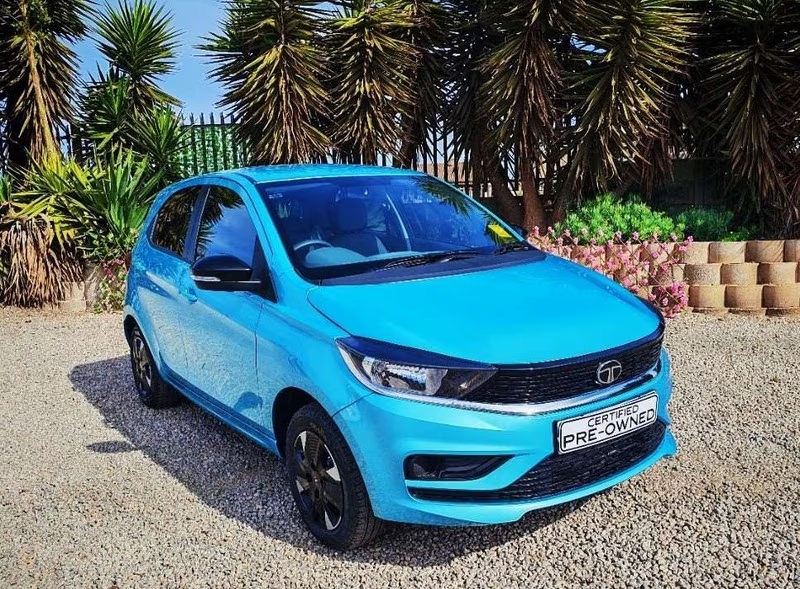
Tata Punch 1.2 Adventure +S (2026) Review

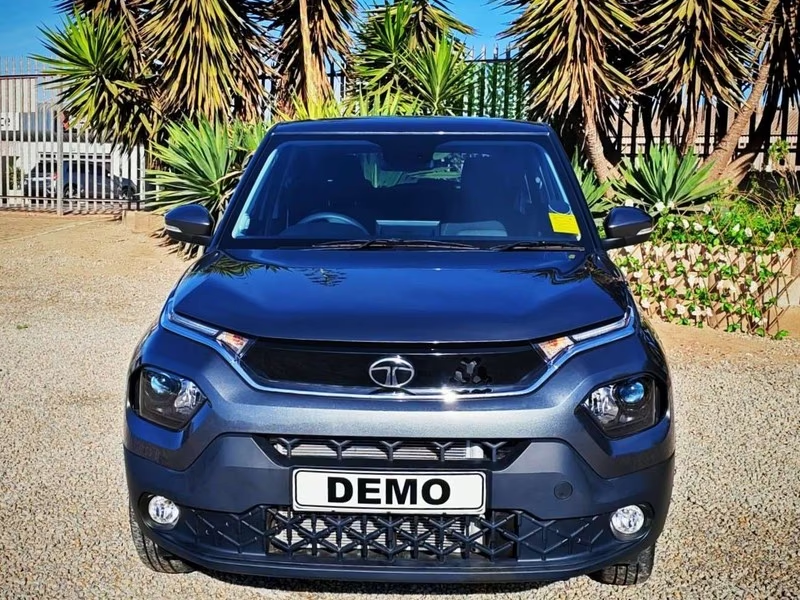
A likeable and keenly priced first-car crossover, held back chiefly by its reduced local airbag count and limited fuel capacity.
Introduction
The Tata Punch makes a lot of sense if you want a high-riding crossover without moving too far beyond traditional hatchback money.
It is not a car you buy to make a statement. It is a practical first-car option, a useful second family vehicle and, importantly, something that gives buyers the raised seating position and crossover look they increasingly want without demanding a much bigger budget.
As of 2025, the market has shifted considerably in this direction. Buyers who may once have chosen a conventional hatchback are now gravitating towards small crossovers, and Tata has judged that change well.
With around 187 mm of ground clearance, a higher driving position and SUV-inspired styling, the Punch feels more substantial than its price suggests.
The bigger question is whether Tata, as a returning passenger-car brand in South Africa, can build enough trust around the ownership experience.
Key takeaway: The Punch combines useful ground clearance, easy city manners and hatchback-level pricing, while a strong warranty package helps reduce some of the uncertainty around buying into a returning brand.
Design & Exterior
Tata has a good habit of making affordable cars look more expensive than they actually are, and the Punch follows that approach.
It is short, upright and slightly chunky, with squared-off wheel arches and lower-body cladding that give it enough crossover character without turning the design into a caricature.
Park it beside something like a Renault Kiger or Nissan Magnite and it does not look like the cheaper alternative.
That matters at this end of the market.
Crossover height that actually helps
One of the Punch's biggest appeals is the seating position.
Instead of dropping down into a conventional hatchback, you step into it, and for many buyers that makes the car immediately feel easier to live with.
Higher-specification derivatives gain 16-inch wheels, which suit the proportions without looking oversized.
The approximately 187 mm of ground clearance is also genuinely useful on South African roads.
Between potholes, poorly designed speed humps and the occasional gravel road, there is a practical benefit to having a little more clearance underneath you.
This is not just styling for the sake of styling.
Cabin & Practicality
Materials and layout
Cabin expectations need to remain realistic.
There are plenty of hard plastics, which is unsurprising at this price point, but Tata has made enough effort with the dashboard design, seat fabrics and colour combinations to prevent the interior from feeling cheap or joyless.
Adventure+ S specification adds features such as a touchscreen, keyless start, an armrest and additional speakers.
More importantly, the cabin feels deliberately equipped rather than like a stripped-out entry model created purely to advertise a low starting price.
That distinction matters.
Space and boot
The Punch makes surprisingly good use of its compact footprint.
The 366-litre boot is useful enough for everyday family duty, and during my test I managed to load two compact folding prams without removing the parcel shelf.
That gives a better idea of what the space can actually handle than the brochure number alone.
- Boot capacity: 366 litres, competitive for this class.
- Ground clearance: Approximately 187 mm, giving it a meaningful advantage over many conventional hatchbacks.
- Seating: Five doors, five seats and an upright driving position that should suit a wide range of drivers.
Rear accommodation is best suited to two adults on shorter trips, while children and school bags fit without much difficulty.
Where the Punch really works is in town.
It is easy to place in tight parking spaces, simple to manoeuvre through older shopping centres and small enough to deal with narrow suburban roads without becoming tiring.
It feels smaller from behind the wheel than the crossover styling suggests.
On the Road
The engine and gearbox
Power comes from a 1.2-litre three-cylinder petrol engine producing approximately 64 kW, driving the front wheels through a five-speed manual transmission.
An AMT version is also available for buyers who prefer two pedals.
Personally, I would take the manual.
The clutch is light, the gearshift is easy enough to use and neither should intimidate a newer driver in heavy traffic.
Once moving, the three-cylinder engine feels more willing than the numbers may suggest.
It is not fast, though.
My indicated 0-100 km/h run took around 14.6 seconds with one occupant aboard, while overtaking at highway speeds requires planning.
That is especially true on the N1 where altitude and faster traffic quickly expose the limits of a small naturally aspirated engine.
The AMT is less convincing.
It hesitates during harder acceleration and does not deliver the smoothness of a conventional torque-converter automatic.
Drive both before deciding.
Ride and refinement
The ride is one of the Punch's better qualities.
Across broken tar and light gravel outside Magaliesburg, the suspension dealt with sharp imperfections more comfortably than some lower-riding hatchbacks.
That extra ride height does not turn it into an off-roader, but it does make the car feel more suited to the realities of local roads.
The steering is light and a little vague, so enthusiastic drivers will not find much involvement.
That is unlikely to bother the intended buyer.
During my test, one deeper washaway produced a firm suspension thump, but the cabin settled immediately afterwards.
At an indicated 120 km/h, I measured around 71 dB inside.
For a car operating at this end of the market, that is respectable.
Data & Comparison
Pricing and the Tata Punch price ladder
Price is central to the Punch's appeal.
The Tata Punch price places it among the more affordable new crossovers in South Africa, with the range stretching from the mid-R240 000s towards the mid-R330 000s depending on derivative.
For me, the middle and upper trims make the most sense.
That is where features such as the larger screen, automatic lighting and additional convenience equipment arrive without pushing the Punch too far away from its original value brief.
Running costs
- Five-year total cost of ownership: Estimated at around R230 000 based on the supplied modelling.
- Real-world fuel use: Independent testing has returned roughly 6.5 L/100 km.
- Fuel tank: Approximately 35 litres.
The small tank is worth keeping in mind.
Even if consumption remains reasonable, overall range will never be one of the Punch's strongest attributes.
On a longer Free State run, particularly with altitude changes, inclines and highway speeds working against the engine, fuel stops will come around sooner than they would in some rivals with larger tanks.
The engine also needs to work harder on hills, which can narrow some of the economy advantage buyers might expect from a small-capacity petrol engine.
Cheap to run, yes.
A miracle on fuel, no.
How it stacks up
| Model | Segment position | Power | Boot |
|---|---|---|---|
| Tata Punch 1.2 | Budget crossover | ~64 kW | 366 litres |
| Hyundai Exter | Budget crossover | ~62 kW | ~391 litres |
| Nissan Magnite | Budget crossover | ~74 kW turbo | ~336 litres |
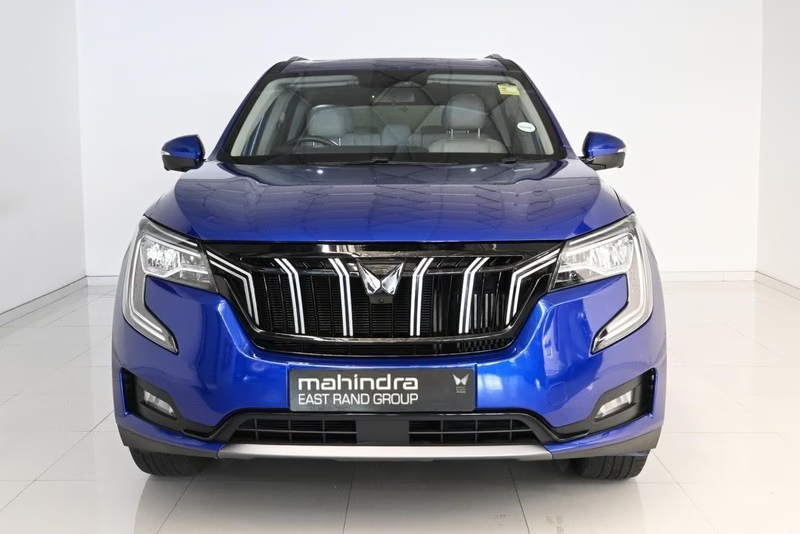
| Mahindra XUV 3X0 | Compact SUV | ~82 kW+ turbo | ~364 litres |
The honest reading is that the Punch is competitive rather than dominant.
Turbocharged rivals such as the Magnite and Mahindra XUV 3X0 offer more performance, while some competitors also provide slightly more space.
The Punch counters by keeping the purchase price low while still offering a useful amount of equipment.
That makes it good value, but not an automatic winner.
Warranty and the trust question
Tata's ownership package is one of its strongest arguments.
Every derivative includes a 5-year/125 000 km warranty and a 3-year/45 000 km service plan, which helps reduce some of the uncertainty surrounding a brand rebuilding its passenger-car presence locally.
Motus dealer backing should also provide reassurance for buyers concerned about servicing and parts availability.
The bigger question will be consistency over time.
A long warranty can persuade buyers to walk through the showroom door, but strong dealer support and reliable parts supply are what build trust over several years.
Resale is also still difficult to judge because there is not enough local long-term data yet.
That uncertainty remains part of the Punch ownership equation.
Editorial Focus
Micro-SUV on a hatch budget - does the Punch deliver?
Strip away the marketing and the idea is straightforward.
The Punch gives buyers the stance and seating position of a small SUV at pricing that would once have bought a fairly ordinary hatchback.
In that respect, it delivers.
You sit higher, have more confidence over speed humps and rough roads, and get styling that feels more adventurous than economical.
For a first-time buyer, that can make the car feel like a meaningful step up without requiring a major financial stretch.
There is, however, one important safety consideration.
The internationally publicised five-star crash result applies to a specification that may not match the South African car exactly.
If the locally sold derivative carries only two airbags while the tested overseas vehicle had additional safety equipment, the rating cannot simply be transferred across without qualification.
That matters, particularly for younger or inexperienced drivers.
The correct approach is to compare the exact local safety specification rather than relying on an overseas headline.
With that understood, the Punch still makes a strong value argument through its ride height, warranty, purchase price and easy manual gearbox.
Just buy it with a clear understanding of the equipment fitted to the South African derivative.
Verdict
The Tata Punch understands its role particularly well.
It sits higher than a conventional hatchback, costs relatively little, carries a useful warranty and asks very little of the person driving it.
For a new driver or someone simply looking for an affordable daily runabout, that combination has plenty of appeal.
The compromises are straightforward.
Performance is modest, the fuel tank is small and the safety specification needs to be considered carefully against the overseas crash-test result.
As an everyday city car, though, the Punch did not disappoint.
- Buy it - first-car and city buyers: If you want easy driving manners, useful ground clearance and crossover styling without moving too far beyond hatchback money.
- Shortlist it - value-focused families: The warranty, practical boot and compact dimensions make it worth comparing directly with the Hyundai Exter, Renault Kiger and Nissan Magnite.
- Wait - safety-first buyers: If a more comprehensive airbag package is non-negotiable, confirm the latest South African specification before committing.
- Walk away - performance seekers: If strong overtaking performance matters, a turbocharged Magnite or Mahindra XUV 3X0 will suit you better.
Summary
For South African buyers, the Tata Punch 1.2 makes a convincing first car, pairing sensible running costs and useful cabin space with a long warranty. Its toughest opposition comes from the Hyundai Exter, Renault Kiger and Nissan Magnite, while the local safety specification warrants a closer look.
Ratings
Pros
- ✓Crossover height, easy manual driving and low ownership risk make this a persuasive hatch-budget choice.