Toyota Land Cruiser FJ 2.7 4x4 VX (2026) Review
Genuine off-road credibility and Land Cruiser resale carry the FJ, but its strained petrol and no-diesel launch specification keep it from top marks for SA buyers.
Introduction
If your idea of a proper SUV still involves a ladder-frame chassis, low-range gearing and the confidence to disappear down a gravel road without a second thought, then the Land Cruiser FJ will make plenty of sense. It's not the most powerful thing out there, and Toyota knows it. But power has never really been the point of a Land Cruiser.
In 2026, that's a bold approach. Chinese rivals are arriving with massive touchscreens, ventilated massage seats and enough technology to make a luxury SUV blush. Toyota has gone in the opposite direction. Instead of chasing gadgets, it's leaning on decades of off-road heritage, proven mechanicals and a badge that still carries enormous weight in South Africa. Whether that's enough to justify the asking price is another question entirely.
Key takeaway: The FJ offers genuine Land Cruiser ability and likely strong resale, but its naturally aspirated petrol engine and no-diesel launch line-up will frustrate serious SA touring buyers.
Design & Exterior
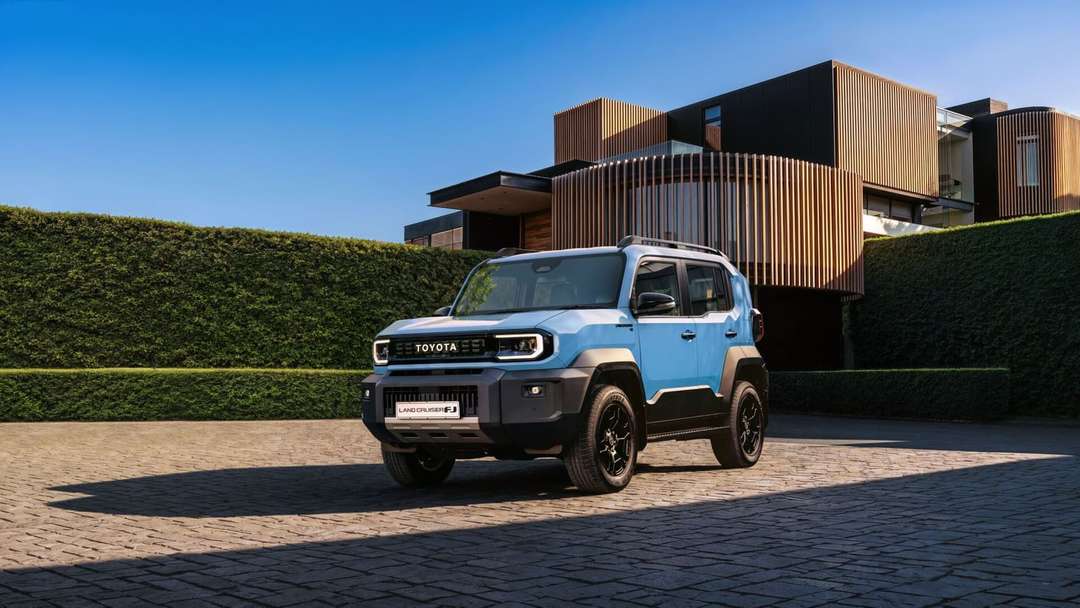
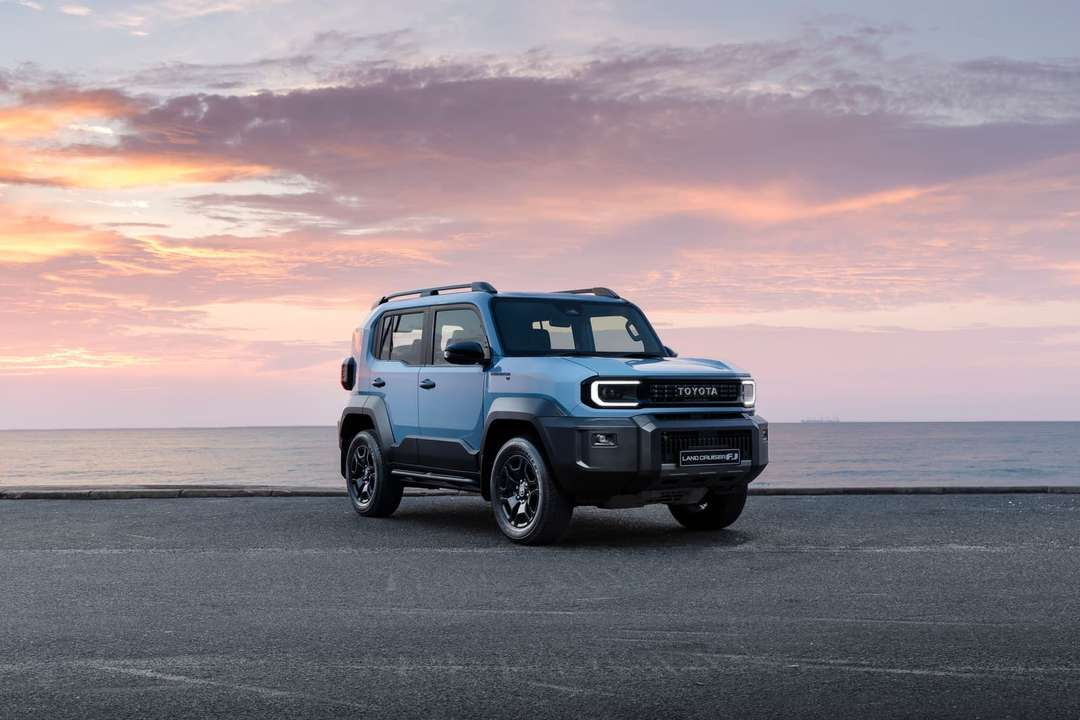
One look at it, and the FJ40 bloodline is impossible to miss. The upright windscreen, round LED headlamps and flat body panels are a clear nod to Toyota's off-road icon. More importantly, it doesn't look like the kind of SUV you'll be afraid to scratch. It looks happiest with a layer of Karoo dust on its flanks, and I think that's exactly how a Land Cruiser should be.
Retro cues that mean something
The low window line and tall glasshouse aren't there to chase nostalgia. They make a real difference once you leave the tar behind. Visibility is excellent, and being able to see exactly where you're placing the wheels gives you a lot more confidence when the trail gets rocky. Around the back, the side-hinged tailgate carries a full-size spare wheel, which feels reassuring knowing the state of some of our district roads. One badly hidden pothole is all it takes to ruin a sidewall, and when that happens, you'll be glad Toyota didn't tuck a space-saver under the boot floor.
Where it sits in the segment
Compared with the Prado, the FJ is deliberately smaller and occupies the accessible rung of the Land Cruiser family. It looks substantial beside the Jimny 5-door, yet restrained next to the flashier Tank 300. Chrome and cabin theatrics aren't part of the pitch. Quiet purpose is.
Cabin & Practicality
Climb aboard, and the cabin feels one clear step above its workmanlike Hilux and Fortuner relatives. Soft-touch trim covers common contact points, while tougher plastics should survive children, dogs, camping equipment and plenty of river sand.
Controls and layout
Better still, the off-road interface uses proper dials and buttons. Nobody wants to search through three touchscreen menus for a diff lock while the vehicle is balancing on a climb. Physical controls matter. The larger 12.3-inch infotainment display remains a paid accessory rather than standard, though, which lifts the on-the-road price.
Space and seating
Five seats fit within a 2,580 mm-ish wheelbase footprint, although useful off-road angles claim some cargo room. If you pack smart, it's workable.
- Five seats, five doors and an upright cabin that simplifies loading
- Full-size spare mounted to the side-opening tailgate
- 80-litre fuel tank for longer gaps between farm-town filling stations
- 216 mm of ground clearance for ruts, rocks and rough gravel
Rear visibility is less convincing. Chunky C-pillars create a serious diagonal blind spot when reversing from a tight bay, leaving the cameras to do more work than they should.
On the Road
Here's the honest bit: the FJ feels settled and comfortable, but it's slower than those square shoulders suggest.
The engine reality
SA specification pairs a 2.7-litre four making 122kW and 245Nm with an automatic, all-wheel drive, claimed consumption of 7.9 l/100km and a 0-100 km/h time of 9.9 seconds. On paper at least, that's respectable. Our loaded 0-100 estimate was 11.4 seconds, while the petrol became vocal during kickdown overtakes on the N3 near Harrismith, where altitude also dulls naturally aspirated performance. It holds motorway speed. Properly quick, it isn't.
Ride and composure
One of the biggest surprises is the rear coil-spring suspension. It soaks up corrugations far better than the Suzuki Jimny, which always seems to fidget over rough surfaces thanks to its short wheelbase. The FJ, by comparison, feels more settled, giving you the confidence to carry a bit more speed on gravel without the body constantly bouncing around.
It's not flawless, mind you. Hit a mid-corner bump and you'll notice a slight shimmy from the rear, but it's never enough to knock your confidence. On the open road, the claimed 175km/h top speed tells you everything you need to know about this SUV's priorities. It's built to cover long distances comfortably, not to win drag races. And while it's never going to match the refinement of a Prado, it's composed enough to make long N1 slogs feel effortless.
Off the tar
The moment the tar disappears, the FJ starts to make complete sense. This is the environment it was built for. With high and low range, a locking rear differential and all-terrain tyres fitted as standard, it feels properly at home on loose surfaces. I watched one tackle a steep gravel climb without even bothering to air down the tyres. It scrabbled for grip for a moment, hooked up and simply carried on. No wheelspin, no theatrics, no drama. Just a quiet reminder that Toyota still knows how to build a proper off-roader.
Data & Comparison
Money complicates this Land Cruiser FJ review, particularly around the crowded R700k mark.
Pricing in context
Toyota launched the range around R714,000 for the GX and R761,400 for the VX at introduction. A Prado sits north of R1.3m in this Land Cruiser data set, so the FJ retains much of the family character while substantially undercutting it. That gap feels even wider once N3 tolls, insurance and accessories join the monthly calculation.
- Launch pricing: roughly R714,000 (GX) to R761,400 (VX)
- Prado territory in the same range: R1,330,262
- Estimated 5-year total cost of ownership: around R230,000
- Fuel capacity: 80 litres for genuine long-haul legs
Our mixed-road return was 11.8 l/100 km, giving a sensible real-world range near 640 km rather than the far rosier distance implied by the claim. There are no battery-size choices or DC charging speeds to compare here, of course. For remote touring, the 80 litres of petrol remain easier to replenish than an EV battery beyond the main N1 and N3 corridors, particularly during load-shedding.
How it stacks up
Ownership costs, durability and resale now count for more than the sticker alone, because almost every serious boxy 4x4 has gathered around similar money.
| Model | Approx. SA price | Drivetrain | Off-road hardware | Cabin tech |
|---|---|---|---|---|
| Toyota Land Cruiser FJ VX | ~R761,400 | 4x4, low range | Lockable rear diff, A/T tyres standard | Functional, screen optional |
| Suzuki Jimny 5-door | From ~R450,000 | 4x4, low range | Excellent but tiny, budget touring | Basic |
| GWM Tank 300 | From ~R700,000 | 4x4, lockers | Serious hardware, heavier | Feature-loaded, big screens |
The diesel question
The only thing that really surprised me was Toyota's decision to launch the FJ without a turbodiesel or a manual gearbox. In a country where diesel-powered SUVs are still the go-to choice for long-distance touring, that feels like an odd call. The 2.8 GD-6 is widely expected to join the range later on, and if it does, I reckon it'll be the pick of the bunch. More torque, better towing ability and improved long-haul cruising would suit the FJ's character perfectly.
That said, there's plenty of peace of mind knowing it's underpinned by the same platform as the Hilux and Fortuner. That means proven mechanicals, familiar servicing and the backing of Toyota's extensive dealer network. When you're planning to keep a vehicle for years and rack up serious mileage, that kind of reassurance counts for a lot.
Editorial Focus
Hype surrounded this compact Land Cruiser, but local buyers need straight answers about gravel ability, useful hardware and the Land Cruiser FJ price South Africa receives.
Start on dirt. Rooftop tents, remote camps and farm two-tracks expose weak equipment quickly, yet the rear locker, low range and all-terrain rubber earn their keep. It cleared rough obstacles without lowered tyre pressures, although 216 mm means careful wheel placement still matters across rocky Sani Pass sections.
Quirks? Plenty. The spare-carrying side-hinged tailgate is charmingly old-school, while the upright windscreen provides excellent forward visibility. Retro round dials and tactile off-road switches also reject the touchscreen obsession, which is refreshing. Gigantic C-pillars remain the obvious demerit.
Against the field, the Jimny 5-door is cheaper and endearing but considerably smaller and cruder at highway speed. A Tank 300 smothers the FJ with cabin equipment, panoramic roofs and massaging seats. Toyota counters with resale, a broad dealer network and a reputation that tends to survive the classified listing. Choose the FJ for long ownership; choose the Tank for showroom spectacle.
Verdict
The FJ isn't trying to win the features war, and I don't think Toyota ever intended it to. Instead, it's aimed at buyers who still value proven off-road ability, long-term durability and the confidence that comes with one of the country's biggest dealer networks. If your weekends involve campsites, gravel passes and places where Google Maps starts to lose signal, the FJ makes a compelling case for itself.
That said, if your priority is getting the most equipment for your money, the GWM Tank 300 is difficult to ignore. It offers more luxury, more technology and a stronger value proposition on paper. Personally, though, I'd hold out for the rumoured 2.8 GD-6. I genuinely think that's the engine the FJ deserves in South Africa. During one particularly committed overtake near Harrismith, the petrol engine had to work so hard that it drowned out our conversation inside the cabin. It got the job done, but it also reminded me that while character is important, effortless performance is something you appreciate every time you hit the open road.
Summary
Our 2026 Toyota Land Cruiser FJ 2.7 4x4 VX review covers the hardware, daily usability, Prado pricing gap and rivalry with the Suzuki Jimny 5-door and GWM Tank 300.