Toyota Starlet Cross 1.5 XS (2026) Review
A comfortable, economical and thoughtfully judged crossover. It earns its place among South Africa’s best budget options, but its identical Suzuki twin offers a considerably stronger warranty.
Introduction
Right, so this Toyota Starlet Cross review boils down to one question. Is Toyota’s vast dealer network worth paying extra for? As of the 2025 model year, the Starlet Cross offers proven mechanicals below R400k, but its Suzuki Fronx twin delivers much the same package for less. Calling either car a value king isn’t unreasonable, though the Toyota’s case needs closer inspection. During my test tenure, I kept returning to that badge premium and what it actually gives South African owners.
Key takeaway: The Starlet Cross is an uncomplicated budget crossover, but its premium pays for Toyota’s network and resale confidence rather than extra hardware.
Design & Exterior
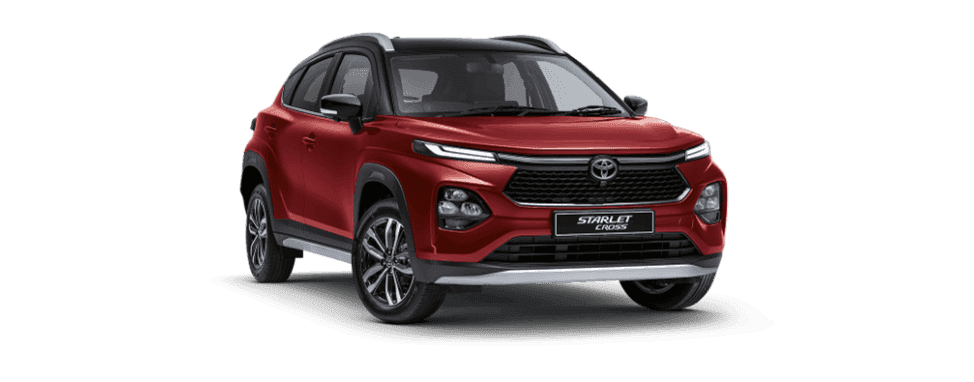
Reinvention wasn’t on Toyota’s agenda, and I’m comfortable with that. The Starlet Cross retains the Fronx’s coupe-crossover profile, including a sloping roofline that looks more urban than adventurous. Measuring 3,995 mm long with a 2,520 mm wheelbase, it fits the compact B-SUV brief and slips into cramped Joburg parking bays without drama.
More important is the honest 170 mm ground clearance. It gives useful breathing room over broken tar, steep driveway entrances and corrugated gravel, rather than merely decorating the brochure. Sixteen-inch alloys suit the proportions, while Toyota-specific detailing around the grille and nose provides enough distinction in a CFAO Mobility showroom. Underneath, of course, the resemblance is complete.
Restraint works in its favour. Many newcomers seem determined to add another crease or fake vent, whereas the Starlet Cross should still look tidy several years from now.
Cabin & Practicality
Cabin equipment sharpens the value debate. The entry-level Toyota Starlet Cross interior includes a 7-inch touchscreen, while the XR upgrades to a 9-inch unit, head-up display, wireless charging, 360-degree camera and cruise control. Choose carefully because that technology split materially affects the price.
Materials and layout
Hard plastics dominate, but they don’t pretend to be anything grander. Controls sit where expected, physical buttons handle basic climate duties, and routine tasks don’t require a frustrating hunt through touchscreen menus. Built for use, not showroom applause.
Space and boot
Adults fit reasonably well in the rear, given the compact dimensions, and young families get ISOFIX mounting points. The boot takes around 304 litres, growing beyond 1,000 litres once the rear seats are folded flat.
- Boot capacity: approximately 304 litres, over 1,000 litres seats down
- Wheelbase: 2,520 mm, generous for the class
- Ground clearance: 170 mm for speed humps and rougher gravel
I packed a folded pram, two soft overnight bags and a cooler box without removing the parcel shelf. That 304-litre figure sounds modest, yet the square load area makes it more useful than expected.
On the Road
Beneath the bonnet is Suzuki’s familiar 1.5-litre naturally aspirated four-cylinder engine, producing 77 kW and driving the front wheels. My test car had the 5-speed manual, which remains my pick without hesitation.
Engine character
Quick? No. Around town, though, the engine responds willingly, the light clutch takes the sting out of stop-start driving and the gearbox has an easy action. Highway overtakes require commitment. Drop two gears, let the revs rise and leave a proper gap, especially on the uphill stretches of the N3 with passengers and luggage aboard. My hand-timed 0-100 km/h estimate was 12.4 seconds, which feels entirely believable from behind the wheel.
Ride and refinement
Ride comfort is where the Starlet Cross quietly outperforms expectations. Its compliant suspension and 170 mm clearance absorb patched secondary roads well, without allowing the body to float excessively through faster bends. A 23 km gravel section exposed no rattles, while the steering remained settled over corrugations. Wind and tyre noise become more obvious at 120 km/h, but neither grew tiring on a longer stint behind the wheel.
Economy is another strong point. Toyota claims around 5.6 L/100km for the manual, while my Highveld result settled nearer 6.0 L/100km. That included urban driving, highway work and gravel, making it properly frugal. Coastal owners should have an easier time matching the official number.
Data & Comparison
Ownership numbers matter in this corner of the market. The Starlet Cross carries an estimated five-year total cost of ownership of approximately R230,000, keeping it competitive among crossovers designed to run on modest household budgets.
Key specs
- Engine: 1.5-litre naturally aspirated petrol, 77 kW
- Gearbox: 5-speed manual, front-wheel drive
- Claimed economy: around 5.6 L/100km (manual)
- Real-world Highveld return: nearer 6.0 L/100km on test
- 5-year TCO estimate: approximately R230,000
How it compares
Its closest comparison is unavoidable: the Suzuki Fronx twin, followed by the growing pack of established compact crossovers.
| Model | Engine | Power | Claimed economy | Warranty |
|---|---|---|---|---|
| Toyota Starlet Cross 1.5 | 1.5 NA petrol | 77 kW | ~5.6 L/100km | 3yr/100,000 km |
| Suzuki Fronx 1.5 | 1.5 NA petrol | 77 kW | ~5.6 L/100km | 5yr/200,000 km |
| Typical sub-R400k rival crossover | 1.0-1.5 turbo/NA | ~67-82 kW | ~6.0-6.5 L/100km | varies |
Warranty cover creates the biggest separation. Toyota provides 3-year/100,000 km cover, whereas the mechanically identical Suzuki offers 5-year/200,000 km. That gap makes the more expensive badge harder to defend, particularly for owners covering long distances.
Segment demand
Local crossover demand remains strong, if unpredictable. The index moved between roughly 33 and 42 through the middle of 2025, while wider SUV interest held near 74 to 76. Buyers clearly still want this body style, and the Starlet Cross arrives with pricing and brand recognition firmly in its favour.
Editorial Focus
Does the Toyota premium earn its keep? Only for certain buyers. The Starlet Cross reportedly costs around R6,000 more than the equivalent Suzuki Fronx at both ends of the range, despite sharing Suzuki’s Heartect platform and Indian production line. Standard equipment includes six airbags, stability control, ABS, EBD, hill-hold and ISOFIX, so neither twin holds a meaningful safety advantage.
Your R6,000 instead buys access to Toyota’s extensive dealer footprint, stretching from the major metros to smaller towns where the nearest Suzuki outlet may be another hour away. That matters if you regularly travel between smaller towns or spend time on remote gravel roads. Higher trims also receive Toyota connected services with in-car WiFi, one genuine point of difference.
Here’s my caveat. Suzuki offers more than double the warranty term and mileage, and that carries serious weight for high-mileage owners. If you keep vehicles for years, the Fronx quietly beats its Toyota sibling on paper. The Starlet Cross price premium makes greater sense for buyers worried about dealer access, trade-in demand and resale strength. Toyota has earned that trust, but it still charges for it.
Safety rating
Global NCAP #SaferCarsForAfrica · tested 2026
★★☆☆☆ 2/5 adult occupant
★★★☆☆ 3/5 child occupant
SA-market test (Test valid for: South Africa). Official factsheet.
Verdict
Sensible describes the Starlet Cross better than exciting, and that isn’t criticism. It covers the fundamentals with low fuel consumption, an agreeable ride, simple controls and broad service support on our shores. Only the shorter warranty takes some shine off an otherwise convincing package.
- Buy it if dealer reach, resale strength and Toyota familiarity matter most, particularly if you live outside a major metro and expect to keep it for five years or less.
- Shortlist it if you’re shopping this segment, but drive the Suzuki Fronx on the same day and decide whether Toyota’s network justifies the R6,000 premium.
- Wait if a facelift or hybrid derivative may arrive during your buying cycle, because either could materially alter the efficiency and value equation.
- Walk away if you cover very high annual mileage and prioritise warranty protection, since the Fronx’s 5-year/200,000 km cover comfortably beats Toyota’s offering.
Summary
Here’s the short version for South African buyers: the Toyota Starlet Cross 1.5 is practical, frugal and easy to live with. Its cabin, road manners, ownership costs and warranty all make sense, although the Toyota badge carries a small premium over the mechanically identical Suzuki Fronx.
Ratings
Pros
- ✓If dealer reach, resale strength and Toyota familiarity matter most, particularly if you live outside a major metro and expect to keep it for five years or less.